Ghorbani Travertine Stone
Ghorbani Travertine, extracted from the Neymour quarries in Iran's Markazi province and processed at the Ghal'our industrial hub, is a premium natural...
Introducing Ghorbani Travertine
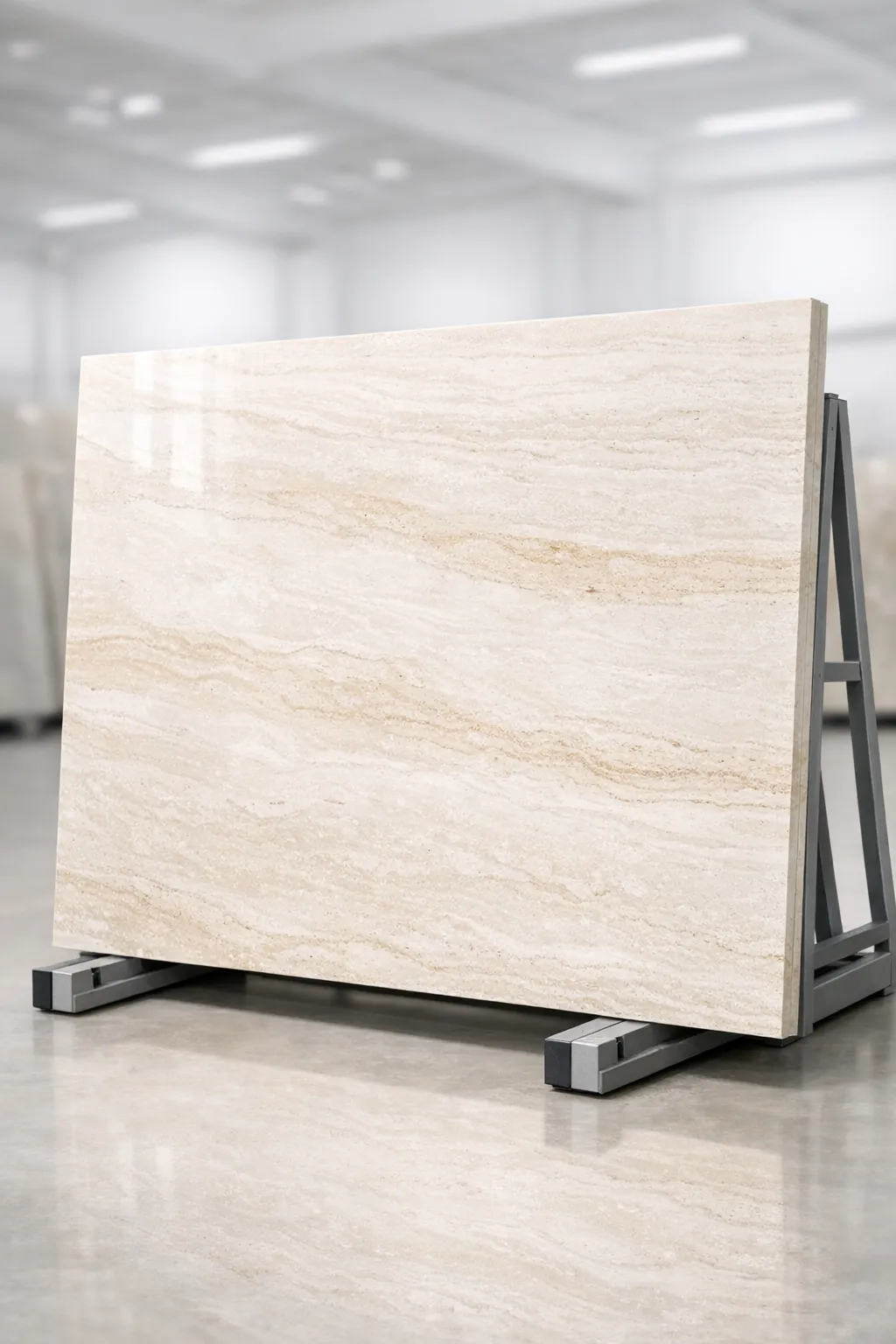
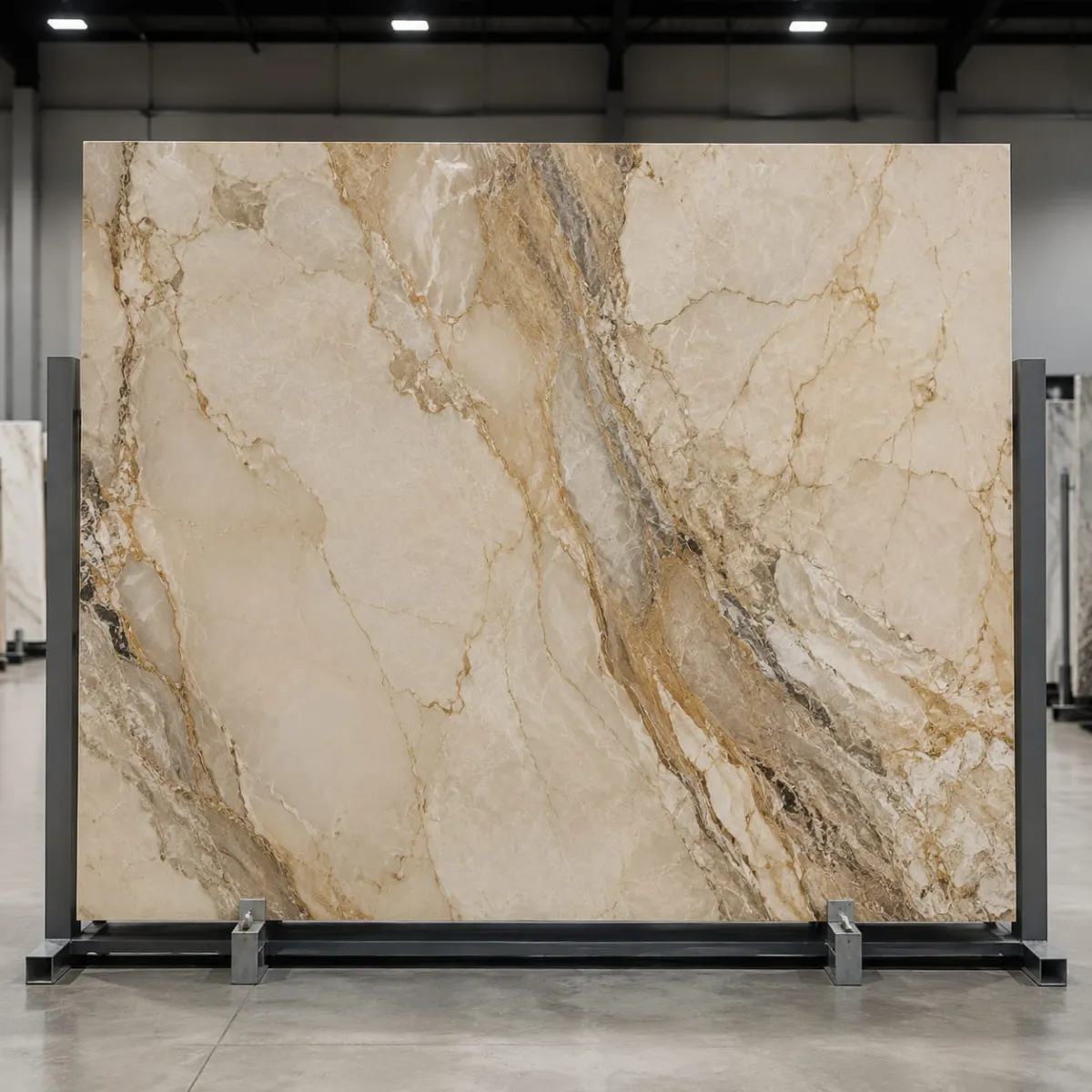
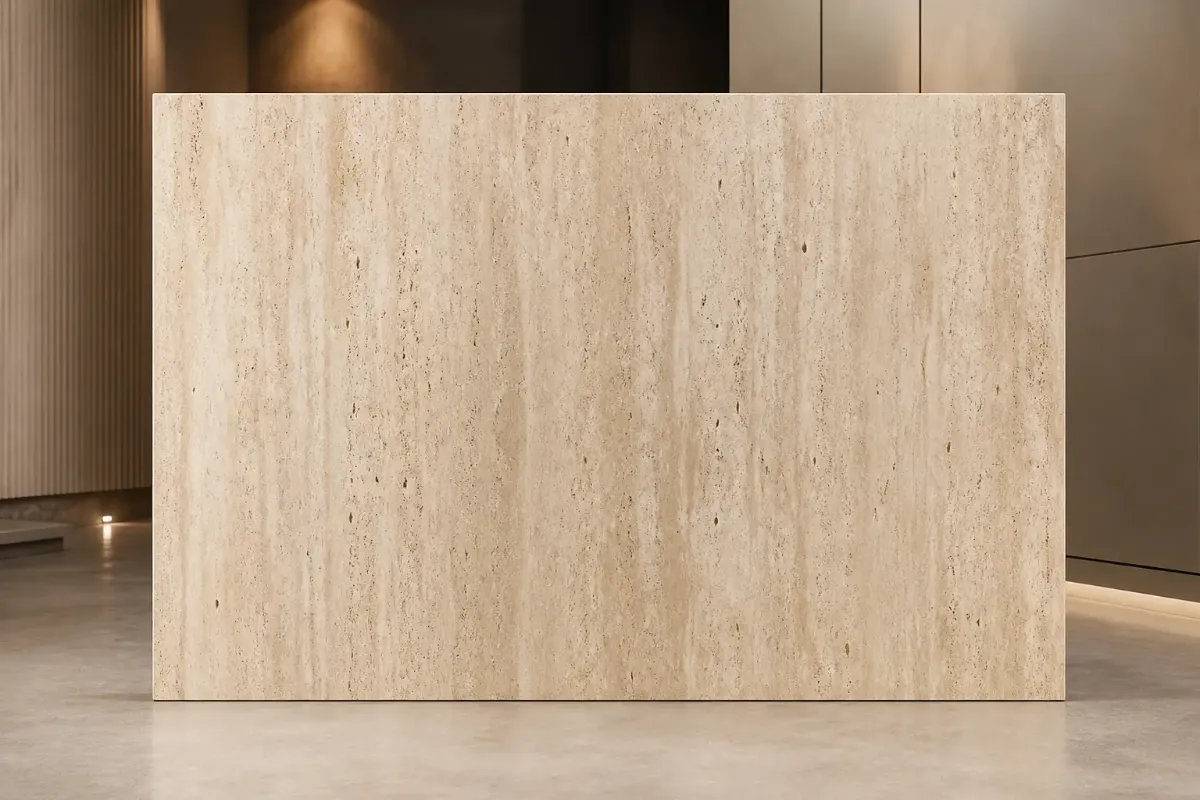
Ghorbani Travertine, extracted from the Neymour quarries in Iran's Markazi province and processed at the Ghal'our industrial hub, is a premium natural stone from a group with over five decades of experience in the industry . It features a distinctive wavy texture and a warm color palette ranging from cream to golden. Scientific studies on travertines from the Neymour region confirm very low radiation levels, with internal and external hazard indices ranging from 0.01 to 0.03, posing no health risk for construction use.
Key Technical Characteristics
The compressive strength of Ghorbani Travertine generally ranges between 80 and 120 MPa, with water absorption between 0.5% and 2.5% depending on the processing. Its natural porosity, typically between 5% and 15%, is a defining characteristic of travertine. This porosity, while contributing to its aesthetic appeal and good mortar adhesion, also makes it more susceptible to stains and requires appropriate sealing, especially in high-moisture areas . It is available in various finishes including polished, honed, and leather, and offered in grades such as Super, 1st, 2nd, and commercial, each suited for different project requirements.
Architectural Applications
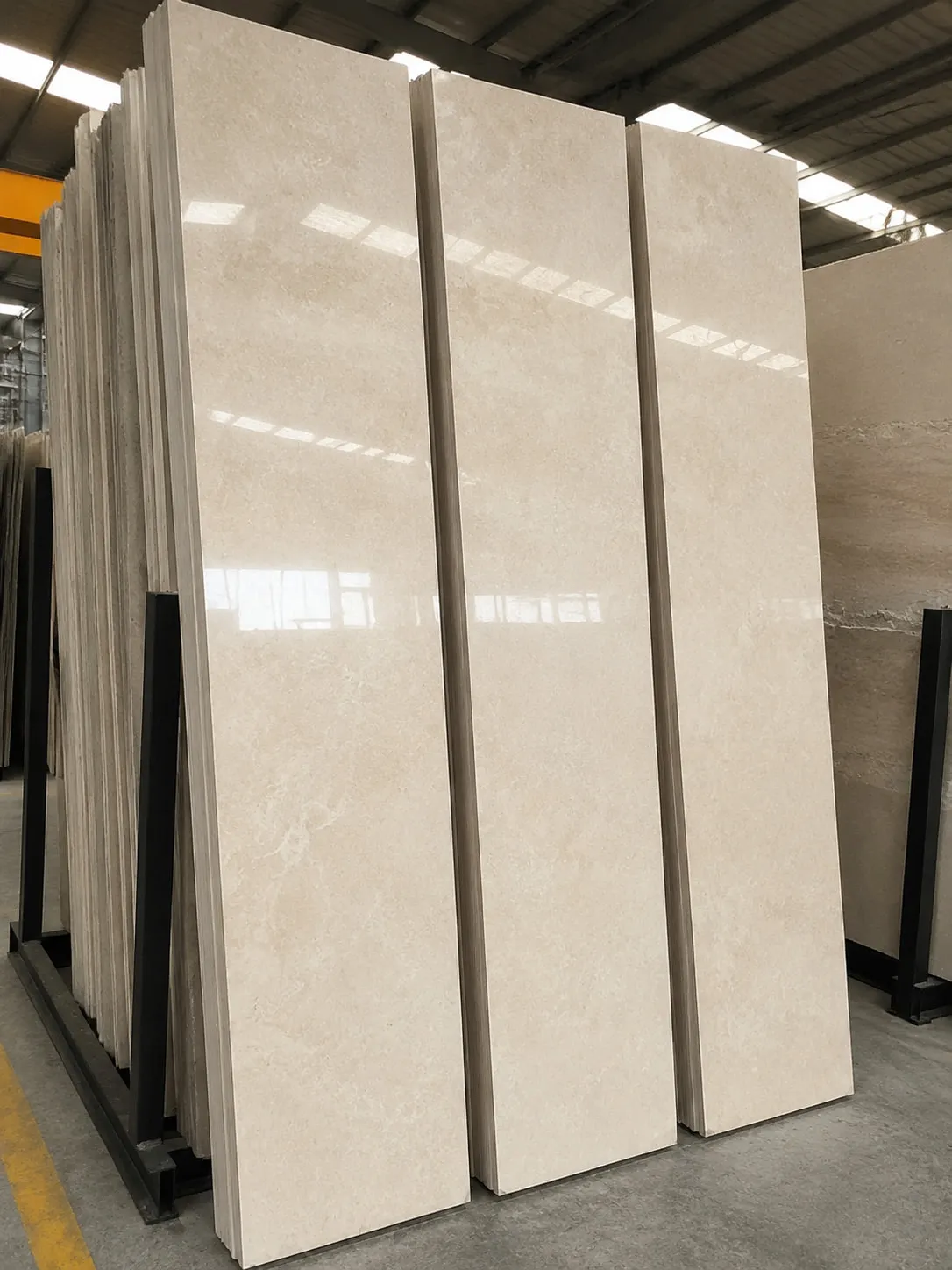
Thanks to its technical properties and aesthetic versatility, Ghorbani Travertine is suitable for a wide range of applications, including interior and exterior facades, lobby and common area walls, stairs, bathrooms, commercial flooring, and stone slabs. Its color and texture variations allow it to complement both classical Roman architectural styles and modern, minimalist designs.
Professional Comparison: Ghorbani vs. Hajiabad Travertine
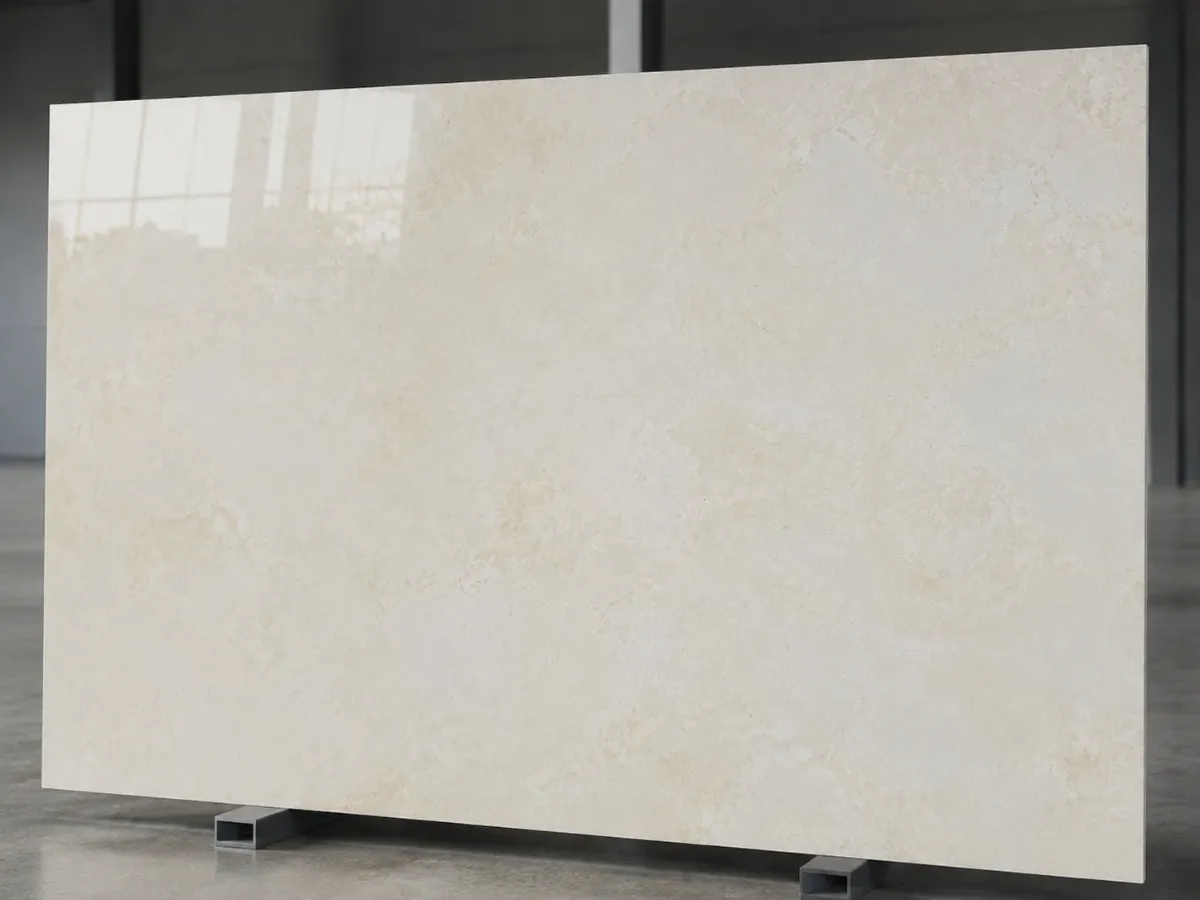
When compared to Hajiabad Travertine, another prominent stone from the same region, key differences emerge. While Ghorbani Travertine is characterized by its warm cream-to-golden hues and pronounced wavy veining, Hajiabad typically presents a more uniform, lighter beige-cream appearance with simpler patterns . In terms of performance, Hajiabad is often noted for its higher resistance to weather conditions, making it a robust choice for exterior facades in harsh climates. Conversely, Ghorbani's distinct visual appeal and brighter finish make it a preferred option for luxury interiors and high-end facades where aesthetics are paramount . The choice between them is not about one being absolutely better, but rather depends on the project's priorities: whether it values superior weather resistance and economy (Hajiabad) or striking appearance and luxurious brightness (Ghorbani) .
Selection and Installation Considerations
Given the natural porosity of travertine, for use in humid or high-traffic areas, it is strongly recommended to select Super grade material and ensure proper surface sealing. Additionally, it is advisable to inspect batches for color and pattern consistency, especially for large-scale projects. Ghorbani Stone Group, with its integrated supply chain, provides a reliable source for large projects with consistent quality .
In conclusion, Ghorbani Travertine stands as a sophisticated and reliable choice for architects and builders seeking a harmonious blend of visual appeal, technical performance, and a rich legacy of craftsmanship.
| Stone Type | Travertine |
| Suitable for | Indoor & Outdoor |
| Texture | Wavy |
| Mine | Nimvar, Markazi Province (Qalour Industrial Hub) |
| Colors | Cream، Gold، Brown |
| Qualities | Grade 1، Grade 2، Super، Commercial |
| Thicknesses | 2 cm، 3 cm، 1.5 cm |
| Compressive | About 80 to 120 MPa (per premium Nimvar travertine standards) |
| Abrasion | Medium to High (suitable for facades and semi-heavy flooring) |
| Water Abs. | Between 0.5 to 2.5 percent (depending on processing) |
| Porosity | About 5 to 15 percent (natural porous texture of travertine) |