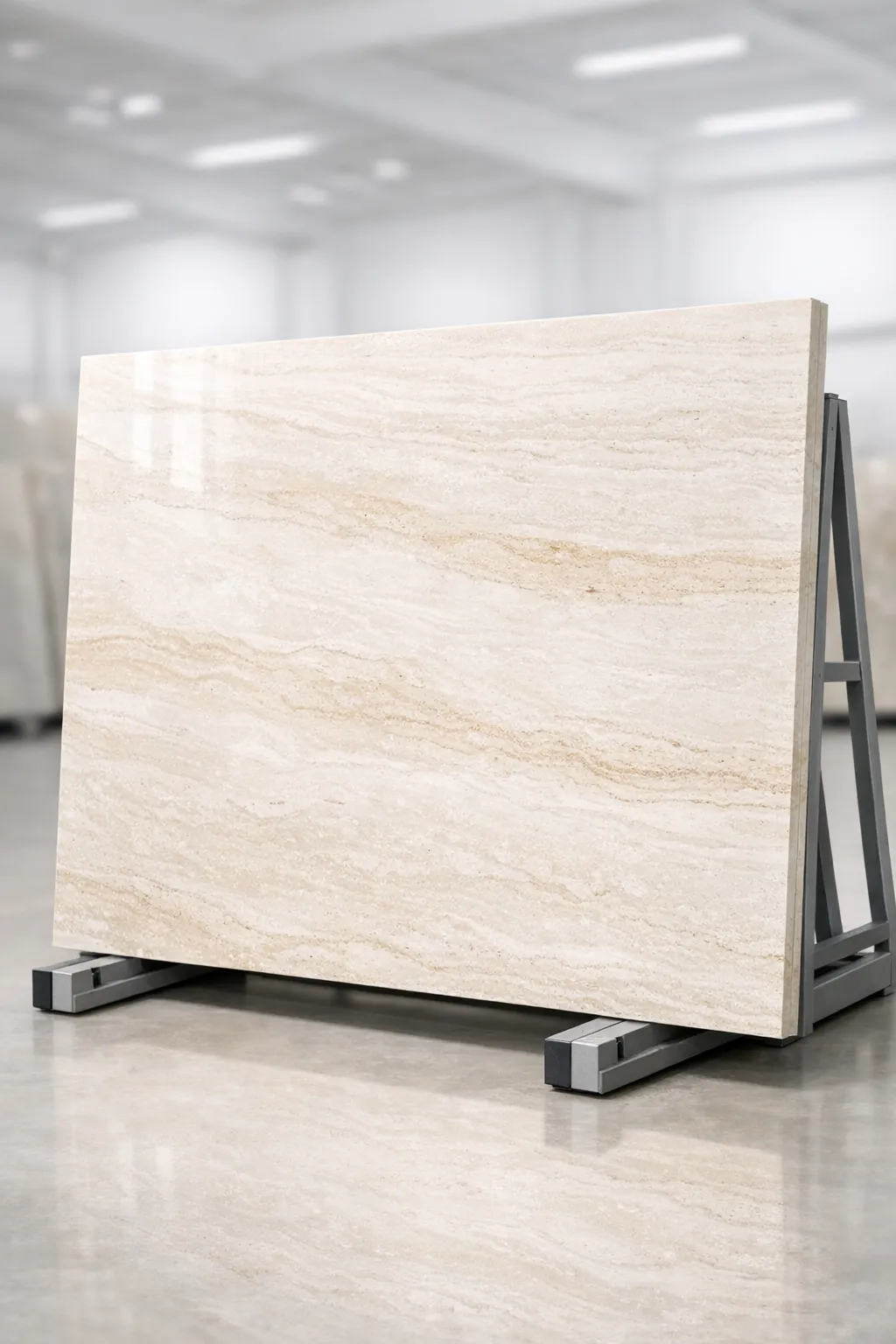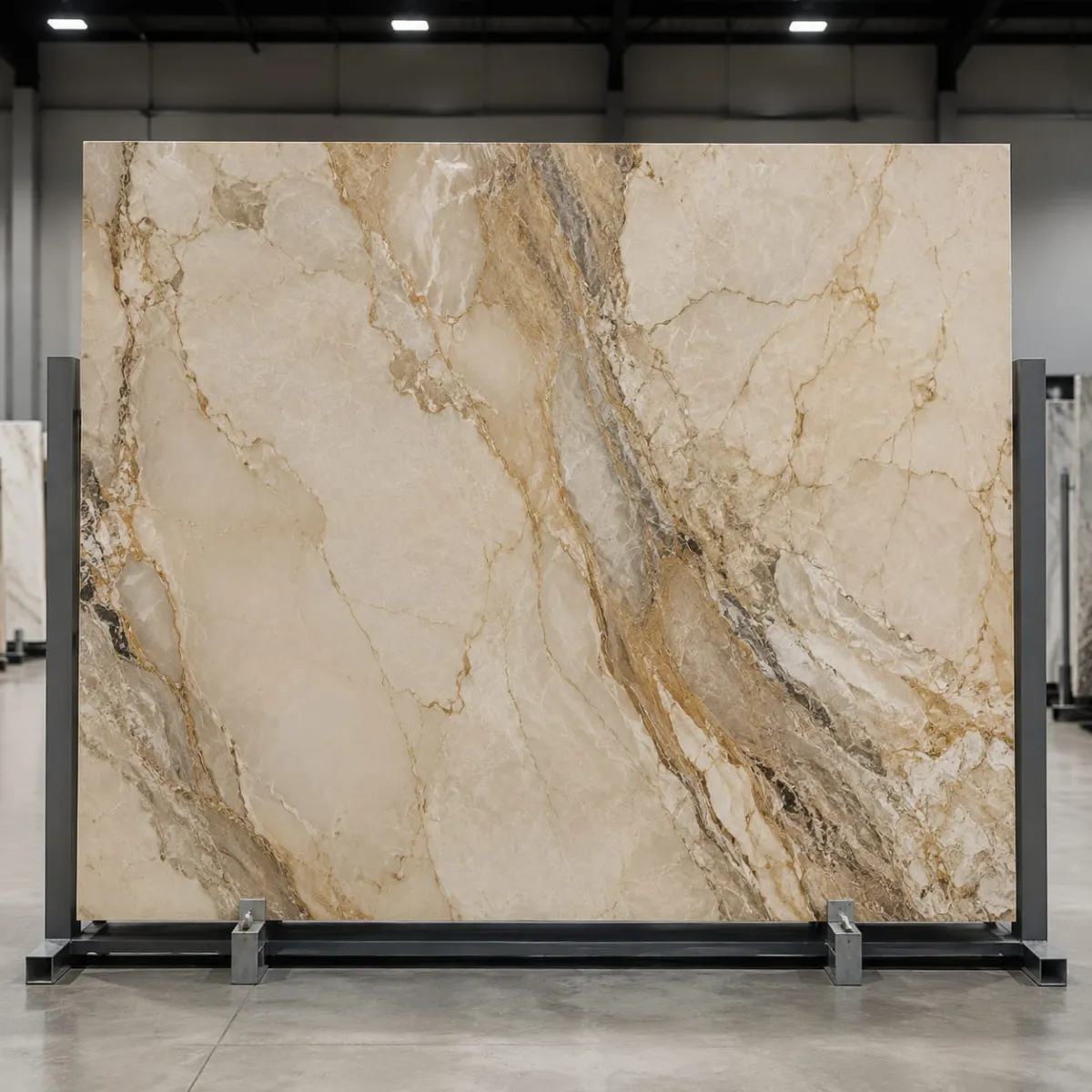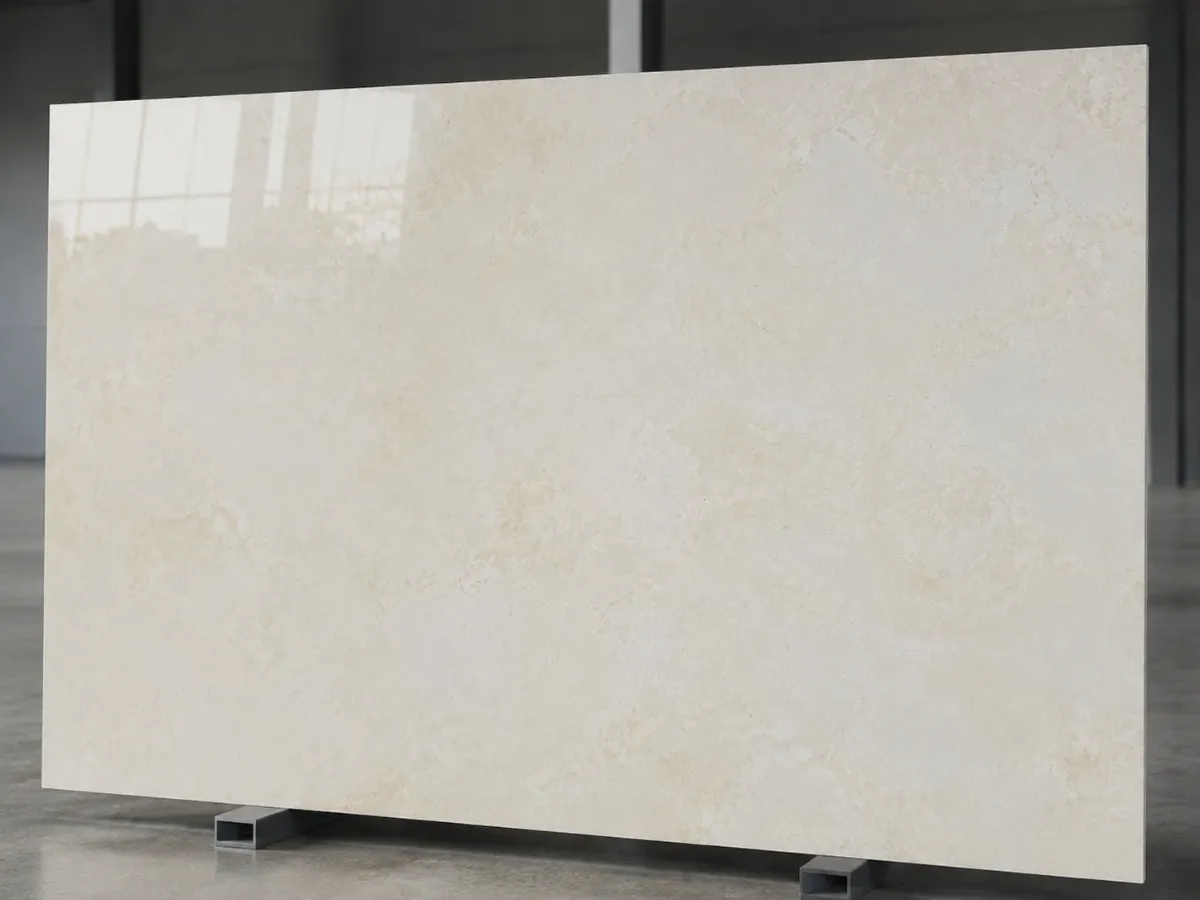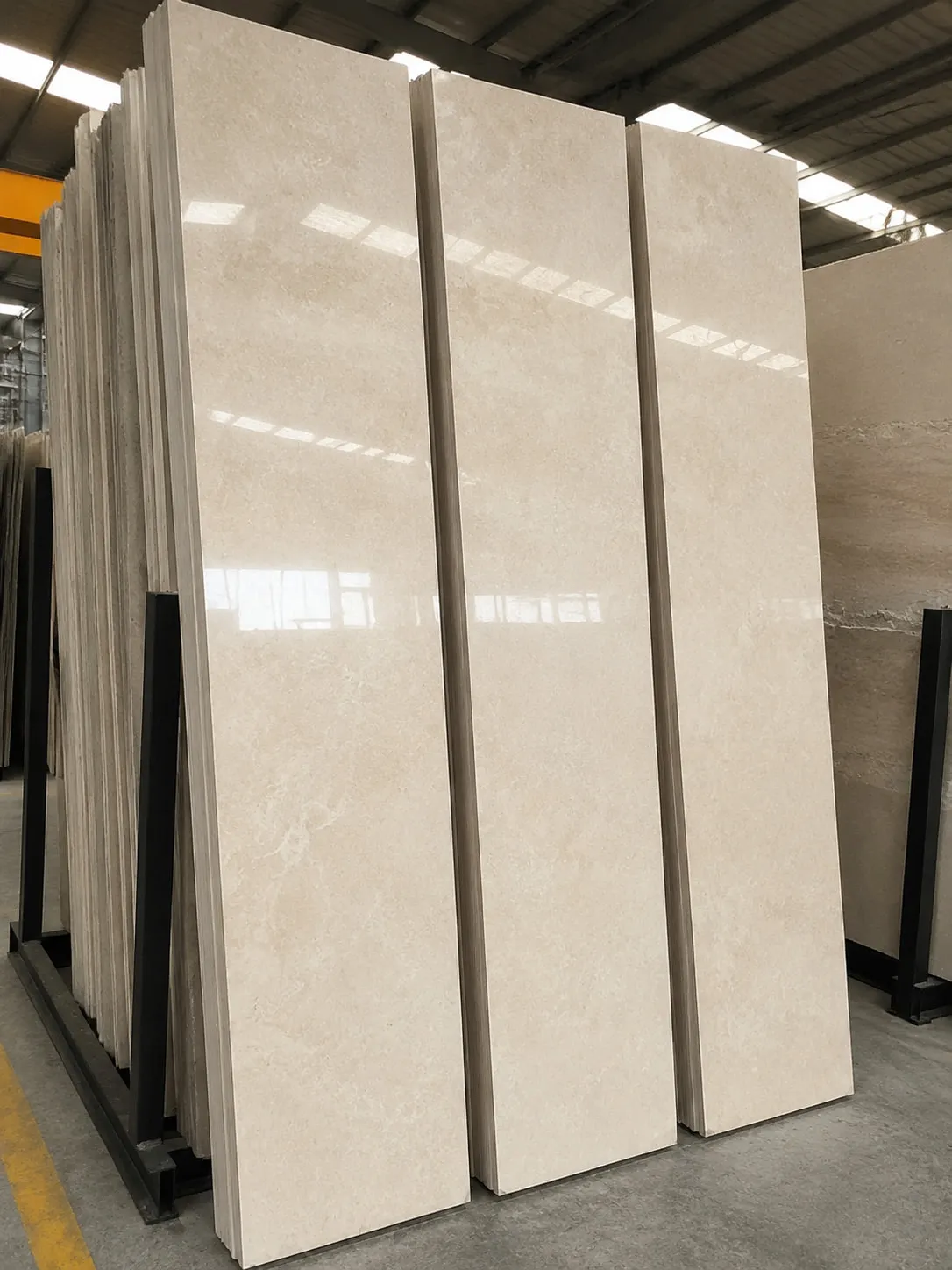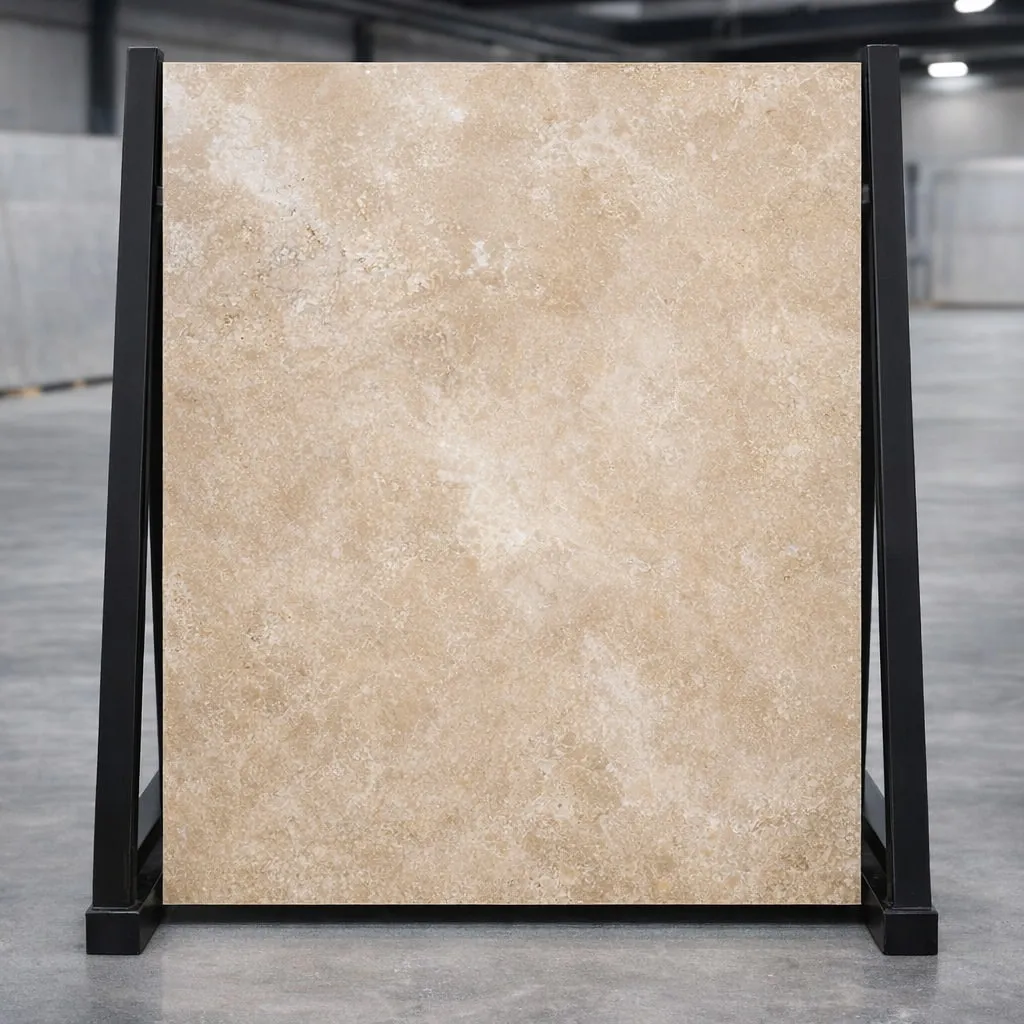
Hamedan Travertine Stone
Hamedan travertine, a layered and laminated limestone from western Iran, offers a distinct anisotropic structure that directly influences its mechanic...
Hamedan travertine, a layered and laminated limestone from western Iran, offers a distinct anisotropic structure that directly influences its mechanical performance. This natural stone is processed in polished or leather (honed) finishes and is widely specified for exterior facades, interior wall cladding, commercial flooring, stair treads, and bathroom applications. Compressive and flexural strength vary significantly with cutting direction relative to bedding planes, making bulk density and effective porosity critical parameters for thickness and dimension planning . While this directional behavior demands careful design consideration, it enables precise engineering optimization for each project.
Key Technical Characteristics
- Geological Structure: Features a layered and laminated fabric that creates anisotropic behavior. The percentage and type of matrix material and porosity have a more significant effect on mechanical properties than the rock structure itself .
- Critical Parameters: Bulk specific gravity (SSD) is the most influential factor on compressive strength, while effective porosity and pore radius are the most significant factors affecting flexural strength .
- Processing Options: Available in polished, honed (leather), and brushed finishes, processed as either flamed (wavy) or smooth cut, providing diverse design options for facades.
- Color Range: Available in cream, golden, and brown tones, allowing compatibility with various architectural styles from classical to modern.
Architectural Applications
Hamedan travertine is widely used for building facades, interior and exterior walls, commercial and administrative flooring, staircases, and bathroom applications. It is also suitable for classical and Roman-style facades, window frames, columns and capitals, and lobby interior walls. Its good weather resistance makes it an ideal choice for primary building facades in modern and minimalist designs, maintaining its natural aesthetic appeal.
Technical Comparison with Abbas Abad Travertine
Abbas Abad travertine, quarried in Markazi Province, is a notable comparable stone often specified for similar applications. While both are Iranian travertines, Hamedan travertine typically exhibits a more pronounced laminated texture, making it more sensitive to cutting direction regarding mechanical performance . Abbas Abad travertine is generally recognized for lighter, cream-to-white tones with consistent veining, often commanding a premium price for luxury projects . Hamedan travertine offers warmer cream and chocolate-brown color tones at a more economical price point, with a character that is sometimes less uniform in pattern and color . The choice between them depends on project requirements: Hamedan travertine is a practical, cost-effective option for large-scale and budget-conscious projects, while Abbas Abad travertine is often selected for projects demanding a more uniform, high-end visual appearance . This variety gives architects flexibility to select the most suitable stone based on specific design intent and project constraints.
Selection and Installation Considerations
Given the anisotropic behavior of this stone, the cutting direction significantly impacts its final strength. Bulk specific gravity and effective porosity should be key parameters when determining thickness and dimensions for any project . The percentage and type of matrix material also influence mechanical properties, requiring attention in structural designs. For exterior applications, especially in high-humidity or freeze-thaw environments, treatment with resin or epoxy to fill surface pores is recommended to enhance durability and reduce water absorption . This processing step is particularly important for Hamedan travertine, which has relatively higher porosity compared to other travertines .
In summary, Hamedan travertine combines natural beauty, versatile finishes, and predictable technical properties, making it a sound choice for architectural projects seeking a balance between engineering performance and visual appeal. Its cost-effectiveness, combined with the ability to predict its mechanical behavior through established engineering equations, provides architects with both economic and technical advantages .
| Stone Type | Travertine |
| Suitable for | Indoor & Outdoor |
| Texture | Layered & Laminated |
| Mine | Hamedan Province & Parts of Markazi Province, Iran |
| Colors | Cream، Gold، Brown |
| Qualities | Super، Grade 1، Grade 2، Commercial، Export Grade |
| Thicknesses | 2 cm، 3 cm، 4 cm |
| Compressive | Depends on cutting direction; research shows direct effect of specific gravity and effective porosity |
| Abrasion | Variable based on matrix and porosity; suitable for medium-traffic interior spaces |
| Water Abs. | Dependent on effective porosity (key parameter affecting flexural strength) |
| Porosity | Effective porosity and pore radius are key factors affecting mechanical properties |