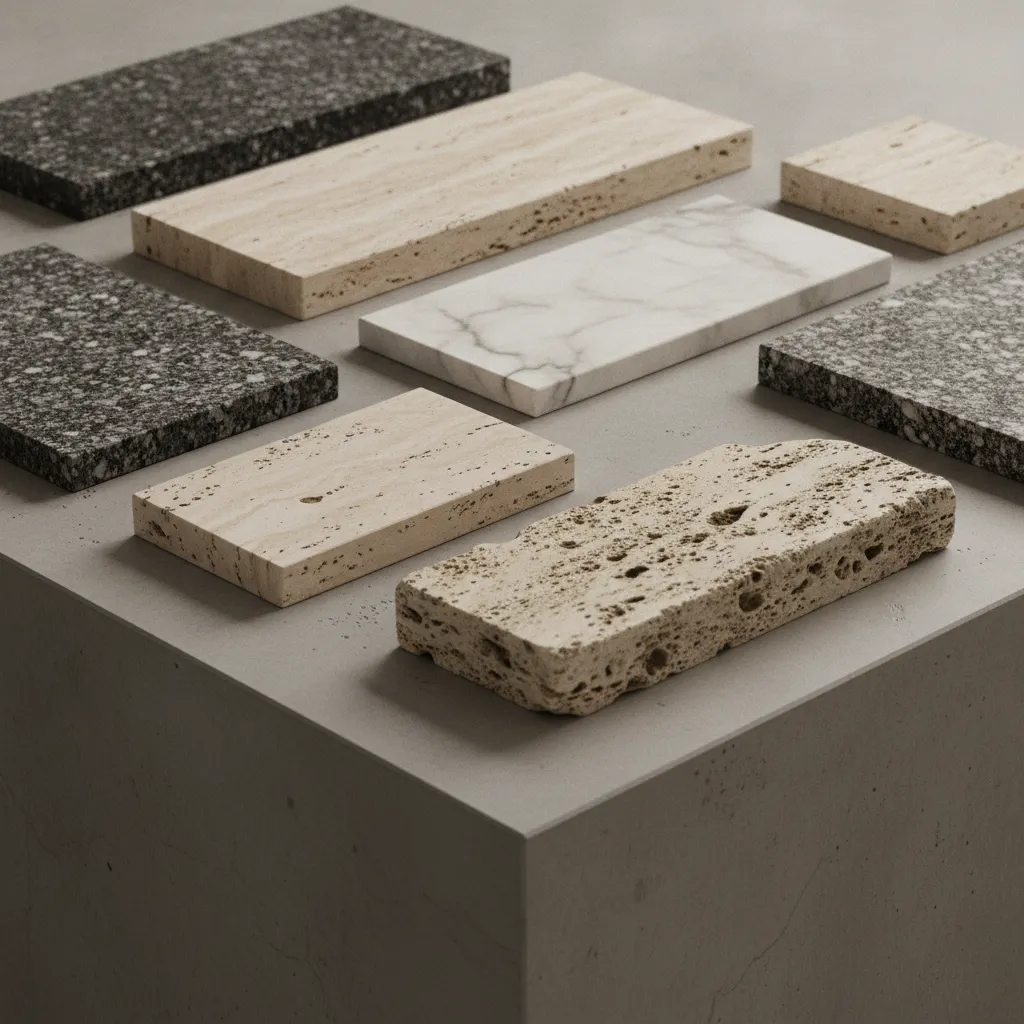
Types of Natural Building Stone: A Complete Guide to Choosing the Right Stone for Facades, Floors, and Interior Spaces
If you are planning a construction project, renovating a property, or comparing materials for a new building, one question usually comes up very quickly: which type of natural building stone is the best choice? The answer depends on much more than appearance. A stone may look luxurious in a showroom but perform poorly in exterior weather conditions, high-traffic floors, wet areas, or long-term use.
That is why understanding the types of building stone, their technical characteristics, advantages, disadvantages, and ideal applications is essential before making a final decision. In this guide, you will learn how different stones perform, where each one should be used, what common buying mistakes to avoid, and how to select the right option based on design style, durability, maintenance, and budget.
Whether you are looking for the best stone for exterior walls, a durable option for stairs and flooring, or a luxurious material for premium interior design, this article will help you make a confident and informed choice.
Why Choosing the Right Building Stone Matters
Many buyers focus only on color, pattern, or price. However, natural stone is a structural and design material that affects not only visual appeal but also long-term performance. The wrong choice can lead to problems such as water absorption, surface erosion, fading under sunlight, slippery finishes, staining, expensive maintenance, or even poor installation performance in facades.
When you understand the real differences between natural stones, you can:
- Choose the best stone for each part of the building
- Reduce repair and replacement costs over time
- Improve durability and long-term value
- Match stone performance with climate and project conditions
- Balance beauty, function, and budget more effectively
What Factors Should You Consider Before Buying Natural Building Stone?
Before comparing specific stone types, it is important to know the main criteria professionals use when selecting stone for construction and architecture projects.
1) Water Absorption
Low water absorption is essential for stone used in wet areas, exterior facades, cold climates, and places exposed to moisture. Stones with lower absorption generally perform better against staining, weathering, and long-term damage.
2) Compressive and Abrasion Resistance
For high-traffic areas such as lobbies, hallways, stairs, commercial floors, and parking areas, the stone must be strong enough to handle pressure, impact, and wear.
3) Adhesion and Installation Performance
Some stones are better suited for facades because they bond more effectively with mortar or mechanical fixing systems. This is one reason why travertine is widely preferred for exterior cladding.
4) Resistance to Sunlight and Weather
Exterior stone should be able to tolerate direct sun exposure, temperature changes, dust, wind, and rain without losing appearance or structural integrity.
5) Design Style and Surface Appearance
Each stone offers a different visual character. Some are ideal for luxury interiors, others for modern minimal spaces, and some for classic facades or natural outdoor environments.
6) Price and Total Project Cost
Stone selection should never be based on material price alone. Processing quality, transportation, thickness, installation method, waste percentage, and maintenance costs all affect the final budget.
Main Types of Natural Building Stone
Natural building stones are often classified by geological origin, but in practical construction and architectural use, they are usually compared by performance and application. Below are the most important and widely used types of natural stone in building projects.
Travertine Stone
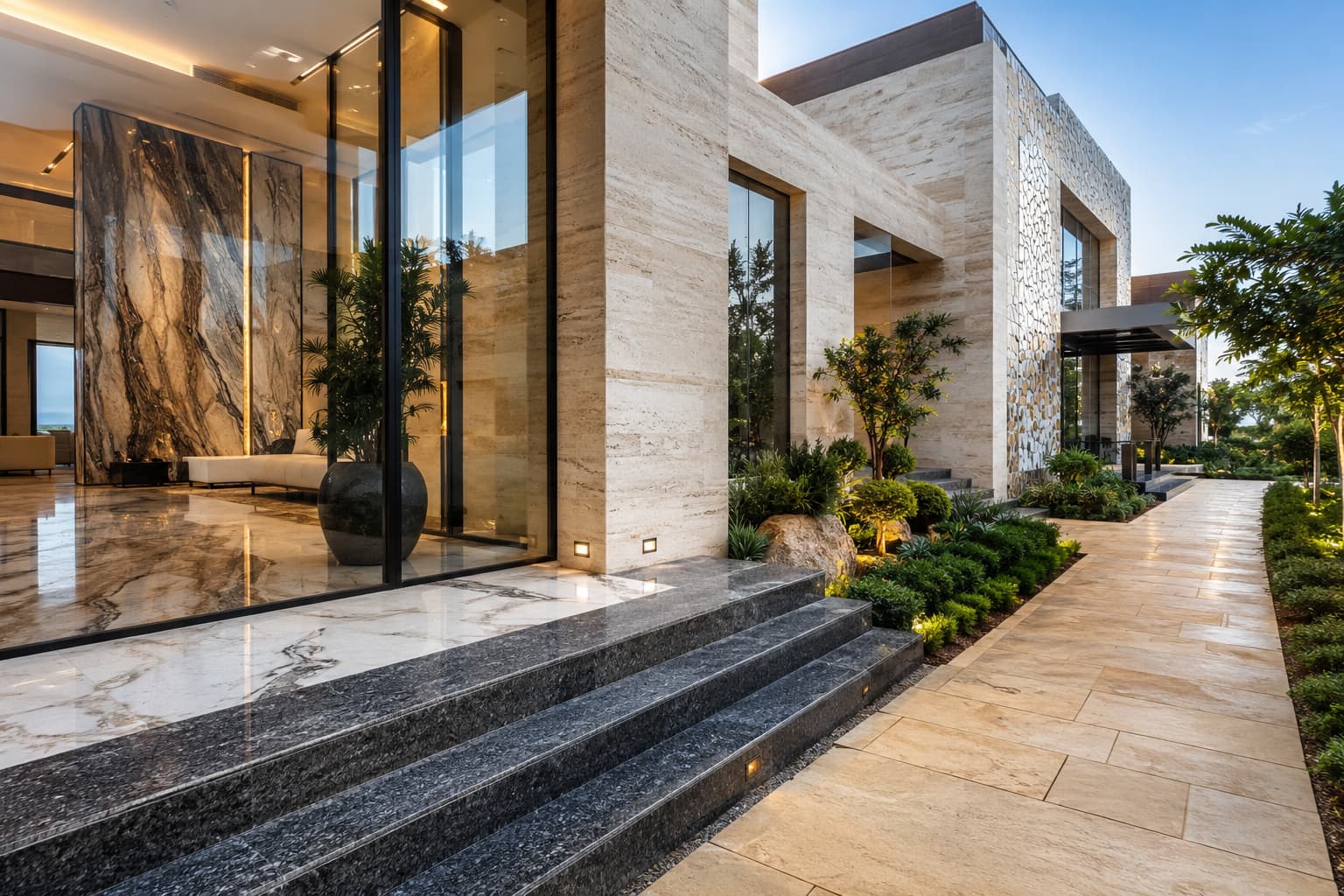
Travertine is one of the most popular stones for exterior facades, especially in residential and commercial architecture. It is known for its naturally porous texture, which helps it bond well with mortar and improves installation safety in façade applications.
Key Characteristics of Travertine
- Porous structure with strong bonding performance
- Wide color range, including white, cream, beige, silver, walnut, and brown tones
- Good resistance to sunlight
- Natural and elegant surface appearance
- Available in multiple finishes and dimensions
Advantages of Travertine
- One of the best stones for exterior facades
- Good installation performance compared to denser stones
- Suitable for both classic and modern architecture
- Wide price range for different project budgets
Disadvantages of Travertine
- Lower-quality grades may have higher porosity and weaker consistency
- Some varieties require resin filling and careful processing
- Stone quality depends heavily on quarry source and sorting grade
Best Uses for Travertine
- Exterior building facades
- Wall cladding
- Columns and decorative framing
- Some semi-outdoor architectural surfaces
If your priority is choosing the best natural stone for a building facade, travertine should be at the top of your list.
Marble Stone
Marble is one of the most elegant and high-end natural stones used in architecture. It is valued for its polished surface, rich colors, and unique veining. Marble is commonly used in interiors where visual luxury is a major design goal.
Key Characteristics of Marble
- Smooth and polished appearance
- Distinctive veins and luxurious visual texture
- Wide variety of colors and patterns
- Suitable for premium interior design
Advantages of Marble
- Creates a sophisticated and upscale look
- Ideal for lobbies, feature walls, and elegant interiors
- Highly desirable in luxury architectural projects
Disadvantages of Marble
- Generally more sensitive than granite in demanding environments
- May require more maintenance depending on finish and location
- Not always the best option for harsh exterior exposure
Best Uses for Marble
- Interior flooring
- Lobby and reception areas
- Wall cladding and decorative surfaces
- Luxury residential and hospitality spaces
If visual elegance matters most, marble remains one of the strongest choices for premium interior architecture.
Granite Stone
Granite is one of the hardest and most durable natural stones used in construction. Because of its density and strength, it performs exceptionally well in high-traffic and heavy-use environments.
Key Characteristics of Granite
- Very high compressive strength
- Excellent abrasion resistance
- Low water absorption
- Long service life
Advantages of Granite
- Excellent for heavy traffic floors and stairs
- Highly resistant to impact and wear
- Strong long-term performance in demanding environments
- Suitable for both interior and certain exterior uses
Disadvantages of Granite
- Heavier than many other building stones
- Can be harder to process and install
- For facades, proper mechanical fixing is essential
Best Uses for Granite
- Stairs and landings
- Commercial and public flooring
- Parking and utility areas
- Countertops and durable work surfaces
If your main priorities are durability, strength, and wear resistance, granite is one of the safest long-term investments.
Onyx Stone
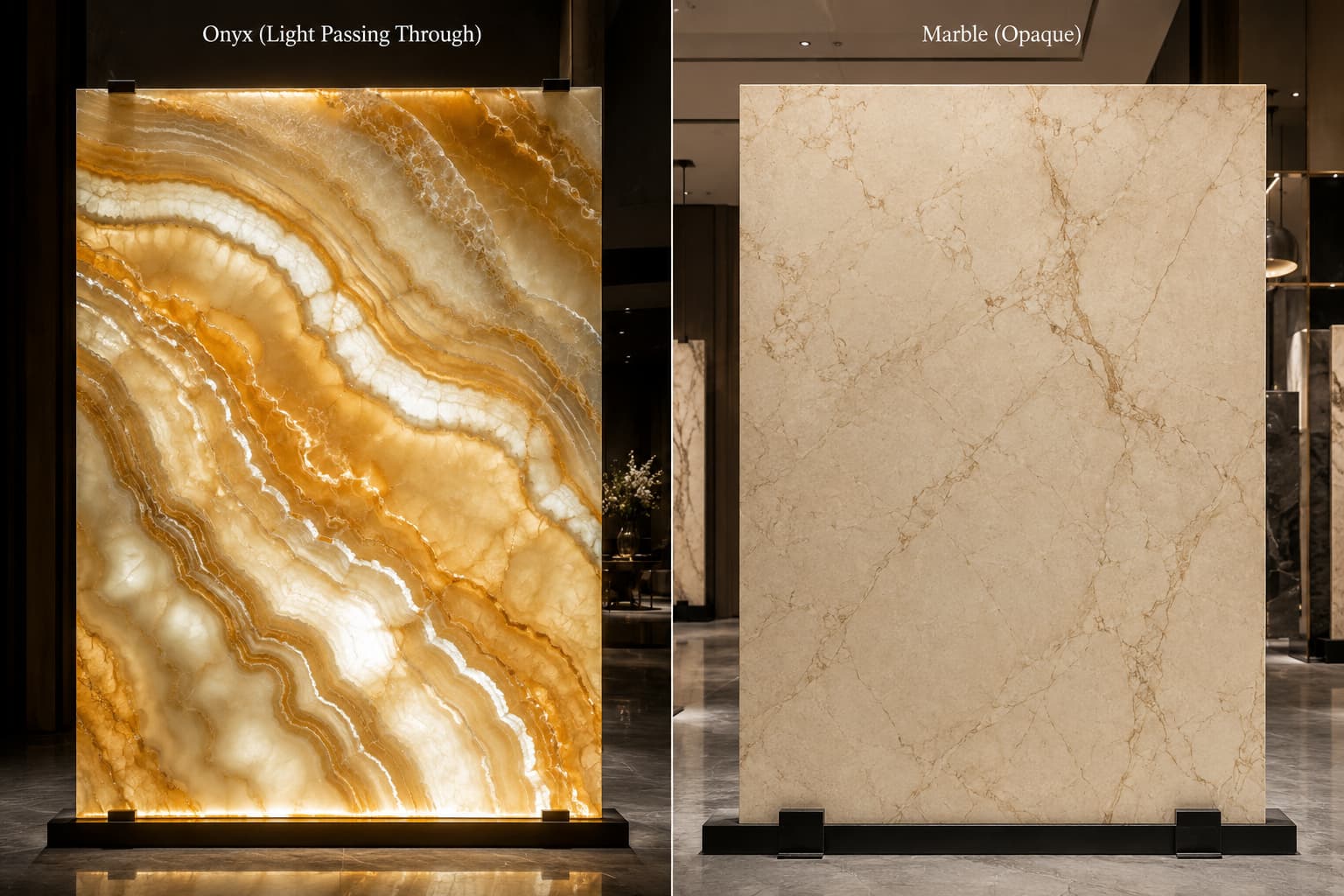
Onyx is a luxury decorative stone known for its translucency and dramatic visual impact. It is often chosen for high-end projects where lighting design and visual exclusivity are important.
Key Characteristics of Onyx
- Translucent in many varieties
- Unique colors and artistic patterns
- Highly decorative and visually striking
Advantages of Onyx
- Ideal for backlit walls and statement surfaces
- Adds exceptional luxury to interior spaces
- Creates a distinctive architectural identity
Disadvantages of Onyx
- Higher cost than more common stones
- Typically used in selective decorative areas rather than general construction
- Requires careful design, fabrication, and maintenance
Best Uses for Onyx
- Feature walls
- Luxury lobbies
- Reception counters
- Backlit design elements
Crystal or White Marble-Like Stone
Crystal stone, sometimes referred to in regional markets as a bright or crystalline building stone, is appreciated for its light color, clean appearance, and relatively low water absorption. It is often used in modern projects that favor bright, reflective surfaces.
Key Characteristics of Crystal Stone
- Light and clean appearance
- Relatively low water absorption
- Good performance in humid environments
- Suitable for modern visual styles
Advantages of Crystal Stone
- Good for bathrooms and wet areas
- Useful for bright interior palettes
- Can work in both interior and selected exterior applications
Disadvantages of Crystal Stone
- Visual variety may be more limited than marble
- Selection should depend on processing quality and actual use conditions
Best Uses for Crystal Stone
- Bathrooms and wash areas
- Interior flooring and wall cladding
- Bright modern spaces
Limestone
Limestone is a more economical natural stone often selected for projects with budget constraints or specific minimalist design requirements. It usually has a soft, uniform appearance and lighter tones.
Key Characteristics of Limestone
- Generally more affordable than premium stones
- Light and uniform color palette
- Simple and clean visual style
Advantages of Limestone
- Budget-friendly option
- Works well in some interior applications
- Suitable for understated architectural styles
Disadvantages of Limestone
- Usually more absorbent than granite or crystal stone
- Not ideal for heavy moisture exposure without proper evaluation
- Durability may be lower in harsh conditions
Best Uses for Limestone
- Interior wall cladding
- Low-stress design applications
- Projects with controlled budgets
Sandstone
Sandstone offers a warm, natural, and textured appearance. It is often used in landscaping, outdoor design, and projects that aim for a more organic or earthy architectural feel.
Key Characteristics of Sandstone
- Natural texture and warm tones
- Distinctive visual character
- Suitable for selected exterior and decorative uses
Advantages of Sandstone
- Excellent for natural-looking environments
- Pairs well with gardens, courtyards, and landscape design
- Provides a less polished, more organic aesthetic
Disadvantages of Sandstone
- Water absorption can vary significantly
- Not every variety is suitable for all climates or heavy-use applications
Best Uses for Sandstone
- Landscaping and garden walls
- Decorative outdoor surfaces
- Certain facade and courtyard elements
Quick Comparison Table of Building Stones
| Stone Type | Water Absorption | Strength | Appearance | Best Use |
|---|---|---|---|---|
| Travertine | Medium | Good | Natural and versatile | Exterior facades |
| Marble | Low to medium | Medium to good | Luxurious and polished | Interior spaces |
| Granite | Very low | Very high | Dense and durable | Floors, stairs, high-traffic areas |
| Onyx | Variable | Medium | Decorative and premium | Luxury feature areas |
| Crystal Stone | Low | Good | Bright and modern | Wet areas and interiors |
| Limestone | Moderate to high | Medium | Simple and clean | Budget-conscious interiors |
| Sandstone | Medium to high | Medium | Textured and natural | Landscape and decorative use |
Which Stone Is Best for Each Part of a Building?
If you want a faster answer before making a shortlist, use this practical summary:
- Best stone for exterior facades: Travertine
- Best stone for luxury interiors: Marble
- Best stone for high-traffic floors and stairs: Granite
- Best stone for statement luxury design: Onyx
- Best stone for bathrooms and wet spaces: Crystal stone
- Best budget-friendly option: Limestone, when used in the right environment
Common Mistakes Buyers Make When Choosing Building Stone
Many long-term performance problems begin with poor material selection. Here are some of the most common mistakes:
- Choosing stone based only on color or price
- Using interior stone in exposed exterior applications
- Ignoring water absorption and maintenance requirements
- Not checking stone grade, sorting consistency, and processing quality
- Failing to consider climate and installation method
- Overlooking total project cost beyond material price alone
Important Tips Before You Buy Natural Stone
- Define the application clearly: facade, floor, stairs, wall, bathroom, landscape, or decorative feature.
- Check the stone grade and visual consistency: variation in color or veining can affect the final result.
- Inspect processing quality: polishing, cutting accuracy, resin treatment, backing, and thickness all matter.
- Match the stone to climate conditions: moisture, sunlight, dust, and freeze-thaw cycles all affect performance.
- Think beyond initial cost: installation, maintenance, durability, and replacement risk are part of the real investment.
How to Choose the Best Natural Building Stone for Your Project
Before making your final decision, ask yourself these three questions:
- Where exactly will this stone be installed?
- Is my top priority durability, appearance, moisture resistance, or budget?
- Does the installation method and project environment support this stone properly?
These three questions will help narrow your options quickly and lead to a more confident purchase decision.
Final Thoughts
The best natural building stone is not the most expensive one or the most visually impressive one in isolation. The right choice is the one that matches your project’s function, climate conditions, design goals, traffic level, and maintenance expectations.
Travertine remains a top choice for facades, marble is ideal for refined interior spaces, granite offers unmatched strength for high-use areas, onyx delivers luxury impact, crystal stone works well in bright and wet environments, and limestone or sandstone can be excellent in the right architectural context.
When beauty, performance, and practicality are considered together, your stone choice becomes a smart long-term asset rather than just a decorative surface.
Frequently Asked Questions About Natural Building Stone
What is the best natural stone for exterior facades?
Travertine is often considered one of the best facade stones because of its natural texture, installation performance, and strong balance between appearance and practicality.
What is the difference between marble and onyx?
Marble is commonly used for elegant flooring and walls, while onyx is more decorative, more translucent, and usually reserved for premium statement features.
Is granite a good choice for exterior use?
Yes, granite is highly durable and weather-resistant, but it is heavy and should be installed with proper structural and mechanical support, especially in facades.
Which stone is best for stairs and heavy-use floors?
Granite is one of the best options for stairs, hallways, and high-traffic floors because of its hardness and abrasion resistance.
What stone works best in bathrooms and wet areas?
Crystal stone and other low-absorption stones are usually strong options for wet environments, depending on finish and slip resistance requirements.
What is the most affordable natural building stone?
Limestone is often one of the more budget-friendly options, but it should be selected carefully based on location, moisture exposure, and performance expectations.

💬 Comments & Reviews (0)
No comments yet. Be the first! 😊
✍️ Leave a Comment