Zanjan Travertine Stone
Zanjan Travertine is a high-quality limestone quarried in Dandi, Iran, celebrated for its unique porous texture and elegant range of cream and chocola...
Where to use Zanjan Travertine Stone
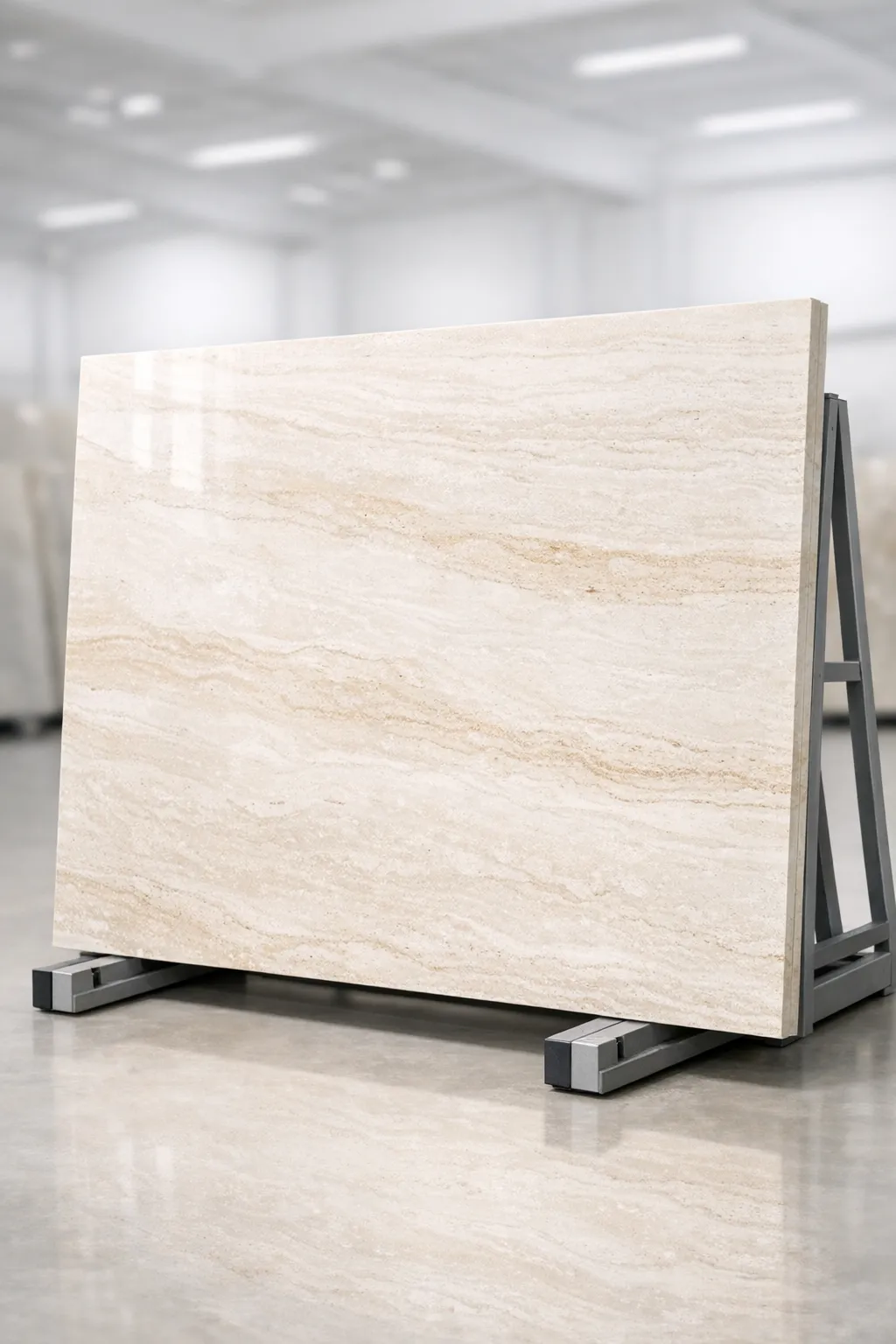
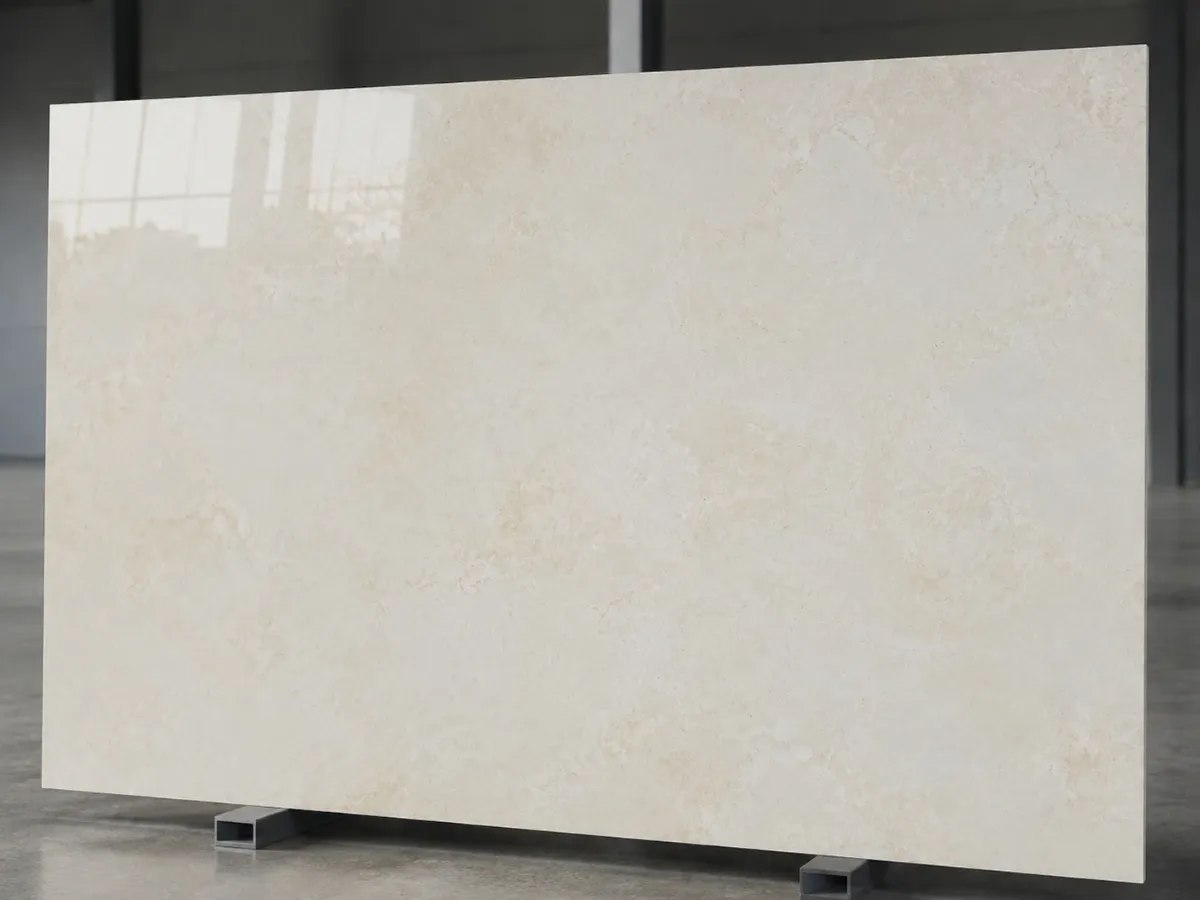
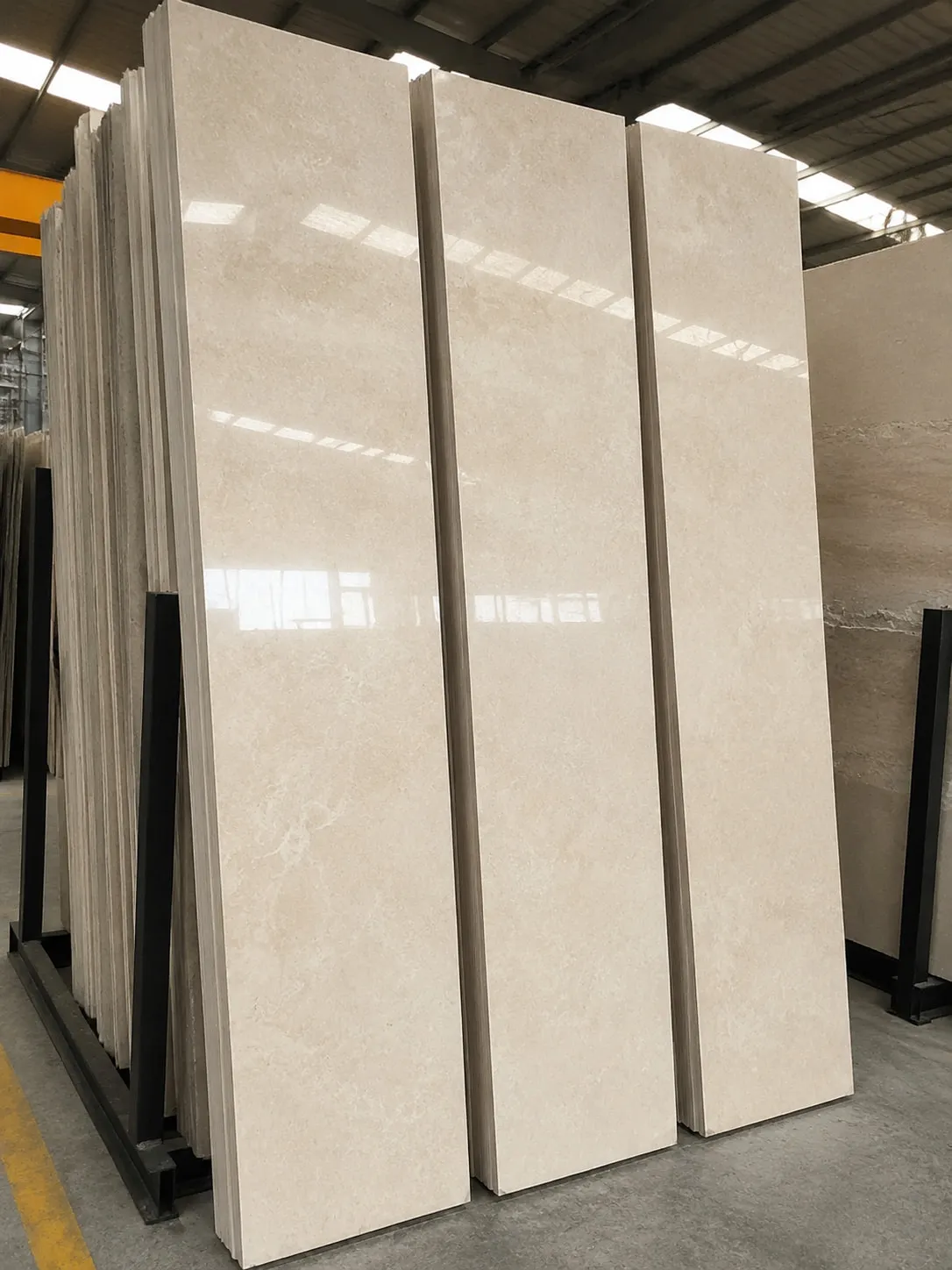
Dandi (Zanjan) travertine is a distinctive natural stone extracted from the Dandi region in the Zanjan province of Iran. Characterized by its warm, cream-colored tones and wavy texture, this stone is a staple for architectural cladding. The natural porous structure inherent to this travertine typically facilitates strong mortar adhesion, making it a practical option for both building exterior facades and interior wall applications.
Technical Specifications
| Feature | Details |
|---|---|
| Origin / Quarry | Dandi, Zanjan, Iran |
| Texture | Wavy |
| Colors | Cream |
| Thickness | 2 cm |
| Water Absorption | 1.21% to 2.19% |
| Compressive Strength | 400 to 527 kg/cm² |
| Abrasion Resistance | 3 |
| Porosity | 5% to 8.7% |
| Available Grades | Grade 1, Grade 2, Super, Commercial |
| Common Finishes | Polished (Honed and leathered available upon request) |
Technical Specifications of Zanjan Travertine Stone
The specifications below are taken as-is from the data registered for this product on our site; for project-critical items, ask for supplementary details when requesting a quote.
| Property | Value |
|---|---|
| Stone type | Travertine |
| Quarry / origin | زنجان, دندی |
| Texture | Wavy |
| Suitable space | Indoor & Outdoor |
| Colors | Cream |
| Applications | Building Exterior Facade Stone |
| Finish type | Polished |
| Processing type | Resin Treated |
| Grades | Grade 1, Grade 2, Super, Commercial |
| Thicknesses | 2 cm |
| Dimensions | طولی: طولی, نما: نما |
| Water absorption | 1.21 to 2.19% |
| Compressive strength | 400 to 527 kg/cm² |
| Abrasion resistance | 3 |
| Porosity | 5 to 8.7 percent |
Pros and Cons of Zanjan Travertine
- Pros: Naturally high porosity facilitates excellent mechanical bonding with cement-based mortars; cost-effective for large-scale cladding; widely available in 2 cm thickness for versatile use.
- Cons: Natural color and vein variations occur between batches; requires professional resin treatment to manage porosity; sensitive to acidic cleaners and environmental moisture; requires careful selection of a stone sealer for long-term maintenance.
Technical Specifications
| Property | Value |
|---|---|
| Stone Type | Travertine |
| Quarry / Origin | Zanjan (Dandi), Iran |
| Texture | Wavy |
| Primary Colors | Cream |
| Water Absorption | 1.21 to 2.19% |
| Compressive Strength | 400 to 527 kg/cm² |
| Abrasion Resistance | 3 |
| Porosity | 5 to 8.7% |
| Thicknesses | 2 cm |
| Grades | Grade 1, Grade 2, Super, Commercial |
| Dimensions | Long (linear) formats; facade (Namā) format — custom sizes on request |
Architectural Applications
Due to its natural characteristics, Zanjan Travertine is widely utilized in building exterior facades, offering a sophisticated aesthetic for both modern and classic architectural styles. Its versatile texture and cream tones also make it suitable for interior applications, such as lobby wall cladding, decorative elements, and hallway surfaces.
Pros and Cons
Pros
- Versatile Aesthetic: The warm cream tones and wavy texture complement diverse design styles from modern to Roman classical.
- Structural Reliability: Offers consistent compressive strength suitable for standard building facades.
- Customization: Available in various grades and can be processed into custom dimensions to meet specific project requirements.
Cons
- Natural Porosity: Like all natural travertine, it features inherent porosity (5% to 8.7%) which requires professional sealing to prevent staining.
- Color Variation: Natural variations in shade and veining are expected between different batches; it is recommended to review physical samples before installation.
Comparing Zanjan Travertine Stone with Similar Products
This comparison helps architects and contractors evaluate Zanjan Travertine against other professional options based on technical performance.
| Feature | Zanjan Travertine Stone | Abbas Abad Travertine Stone | Hajiabad Travertine Stone | Atashkooh Travertine | Azarshahr Travertine Stone |
|---|---|---|---|---|---|
| Stone Type | Travertine | Travertine | Travertine | Travertine | Travertine |
| Texture | Wavy | Wavy | Wavy | Porous sedimentary | Wavy |
| Primary Colors | Cream | White, Light Cream, Cream | Light Cream, Bone Cream, Wavy Cream, Beige Cream | Pearlescent White, Light Cream, Bone | Red |
| Water Absorption | 1.21 to 2.19% | Approx. 0.3 to 0.8% | 1.5% to 3% | Less than 0.3% | About 0.2% |
| Compressive Strength | 400 to 527 kg/cm² | Approx. 100 to 150 MPa | 70 to 120 MPa | 510 to 540 kg/cm² | About 660 kg/cm² |
| Porosity | 5 to 8.7% | — | Approx. 8% to 12% | 5 to 9% | About 8% |
Which one should you choose?
- If your priority is a balanced cream color for standard exterior facades, Zanjan Travertine is a reliable choice.
- If the project requires extremely low water absorption for high-moisture environments or heavy-traffic flooring, Atashkooh Travertine is technically more suitable.
- If you are working on high-rise structures requiring higher compressive strength, consider Azarshahr Travertine or Atashkooh Travertine.
- If your design calls for specific aesthetic color palettes like red, Azarshahr Travertine is the specialized option.
Installation and Maintenance Guide
Installation Tips
- Sample Approval: We strongly recommend reviewing physical samples from the specific production batch to account for natural variations in color and texture.
- Surface Preparation: Ensure the substrate is dry and stable. For exterior facades, professional mechanical fastening or high-grade mortar is advised.
- Resin-Treated Backing: Our travertine is resin-treated to enhance durability; ensure installers respect the processed surface during handling.
Maintenance and Protection
- Sealing: To protect against moisture and staining due to natural porosity, applying a high-quality stone sealer after installation is highly recommended.
- Cleaning: Use only pH-neutral cleaners. Avoid acidic products or harsh chemicals, as they can damage the stone surface.
- Routine Care: Periodic inspection of joints and sealant integrity is recommended for long-term exterior performance.
Ordering and Logistics
To receive a formal quote, please provide your project specifications, including required dimensions, thickness, and estimated quantity. Once your requirements are reviewed, our technical experts will provide a final invoice within 2 business days. Please note that all shipping, loading, and insurance costs are the responsibility of the buyer.
Technical Specifications
| Feature | Details |
|---|---|
| Origin | Zanjan (Dandi), Iran |
| Texture | Wavy |
| Colors | Cream |
| Thickness | 2 cm |
| Finish | Polished (Honed/Leathered available upon request) |
| Processing | Resin-treated |
| Grades | Grade 1, Grade 2, Super, Commercial |
| Water Absorption | 1.21% – 2.19% |
| Compressive Strength | 400–527 kg/cm² |
| Abrasion Resistance | 3 |
| Porosity | 5% – 8.7% |
| Dimensions | Long (linear) formats; facade (Namā) format — custom sizes on request |
Pros and Cons
Pros
- Distinctive wavy texture and warm cream palette for architectural depth.
- Reliable structural performance for building facades and interior cladding.
- Resin-treated for enhanced aesthetic consistency and durability.
Cons
- Higher natural porosity (5–8.7%) compared to whiter travertine varieties.
- Requires professional sealing and pH-neutral cleaning to prevent staining.
Installation and Maintenance Guide
Successful application of Zanjan Travertine depends on professional execution. We recommend requesting a physical sample from the current batch to confirm exact color and vein patterns before proceeding with large orders. For vertical facade cladding, ensure the stone is properly resin-treated and bonded using high-quality, compatible mortars.
To maintain the surface, especially in outdoor environments, apply a professional stone sealer post-installation. Avoid acidic cleaning agents; instead, use pH-neutral cleaners to protect the natural finish and prevent moisture-related discoloration.
Comparison with Abbas Abad Travertine
Comparing Zanjan Travertine to Abbas Abad Travertine involves balancing color preferences with structural needs. Abbas Abad typically offers a brighter, whiter base with lower porosity (approx. 1–3%), whereas Zanjan provides warmer cream tones and a more pronounced wavy texture. The choice between them should be dictated by the specific architectural aesthetic and project budget rather than inherent superiority.
Ordering and Logistics
To receive a formal quotation, please contact our specialists with your project dimensions and specific grade requirements. Final pricing and stock availability are confirmed upon issuance of a formal quotation. Please note that clients are responsible for selecting the carrier and managing all loading, transport, and unloading costs.
Pros and Cons
Pros
- Excellent mortar adhesion due to natural porosity (5–8.7%).
- Manageable weight for 2 cm thick slabs in facade applications.
- Warm, natural cream color palette for diverse designs.
Cons
- Natural sensitivity to acidic cleaning agents; we recommend using only pH-neutral cleaners.
- Porous structure requires professional resin treatment and post-installation sealing to manage moisture.
- Natural variations in color and veining exist between batches; we recommend confirming with a physical sample.
Installation and Maintenance Guide
Proper execution is key to the long-term performance of Zanjan Travertine. To ensure visual harmony, we recommend requesting a physical sample to confirm the specific batch's color and vein pattern before large-scale ordering. For vertical applications, ensure the use of compatible, high-quality mortars and verify that the stone has been professionally resin-treated to manage its 5–8.7% porosity.
To protect the surface from environmental degradation, such as acid rain or harsh cleaning agents, it is recommended to apply a professional-grade stone sealer after installation. Regular maintenance with pH-neutral cleaners is essential to preserve the stone's natural finish and prevent staining.
Ordering and Logistics
For precise technical details, grade availability, or to request a formal quote based on your project dimensions, please contact our specialists. Please note that final pricing and availability are subject to current quarry batches and will be provided in a formal quotation. Clients are responsible for selecting the carrier and managing all loading, transport, and unloading costs.
| Stone Type | Travertine |
| Suitable for | Indoor & Outdoor |
| Texture | Wavy |
| Mine | Zanjan, Dandi |
| Colors | Cream |
| Qualities | Grade 1، Grade 2، Super، Commercial |
| Thicknesses | 2 cm |
| Compressive | 400 to 527 kg/cm² |
| Abrasion | 3 |
| Water Abs. | 1.21 to 2.19% |
| Porosity | 5 to 8.7 percent |
What quarry origin and mineral composition define Zanjan Travertine?
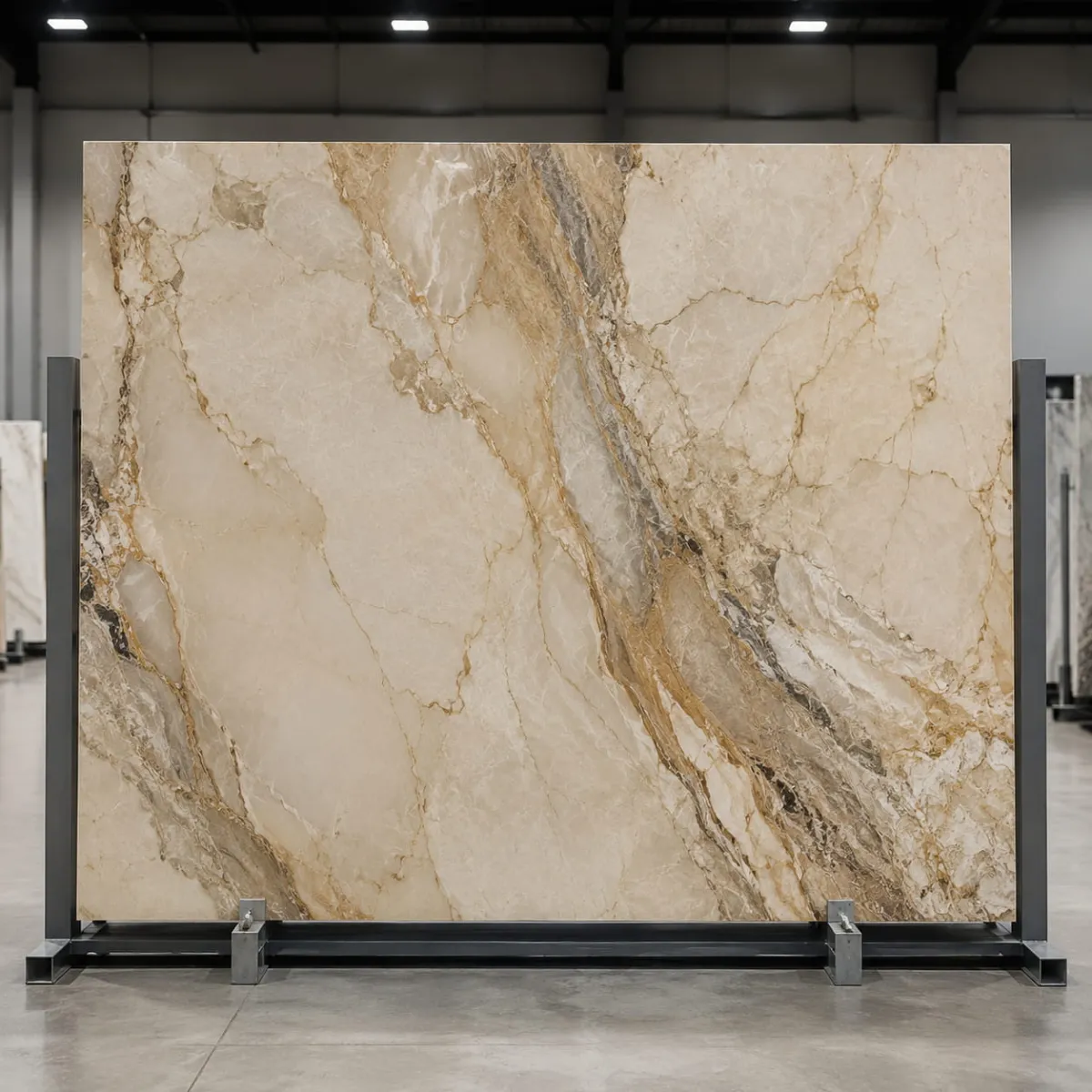
Zanjan Travertine is a natural limestone extracted from quarries in the Dandi region of Zanjan province, Iran. Geologically, it features a warm earthy spectrum ranging from light cream to deep chocolate, with a distinctive porous structure that naturally bonds with standard mortars.
What are the technical compressive strength and porosity ratings of Zanjan Travertine?
Zanjan Travertine delivers a compressive strength between 400 and 527 kg/cm2 and a natural porosity rating of 5% to 8.7%. These physical parameters provide solid structural stability for standard vertical facades, while requiring professional resin processing to seal the surface pores.
How does Zanjan Travertine differ visually and structurally from Abbas Abad Travertine?
Abbas Abad Travertine is characterized by a brighter white tone and higher natural density, whereas Zanjan Travertine offers a richer palette of warm earthy tones like chocolate and beige. This makes Zanjan a cost-effective, character-driven alternative when warm visual depth is preferred over uniform white surfaces.
What surface treatments and finishes are offered for Zanjan Travertine slabs and tiles?
The stone is processed with resin or epoxy treatments to fill open voids, and it comes in polished, honed, and leathered surface finishes. These textures accommodate diverse architectural requirements, from reflective lobby walls to matte exterior panels.
What protection is required when installing Zanjan Travertine in freeze-thaw climates?
In regions with high humidity or recurring freeze-thaw cycles, applying an exterior-grade stone sealer or nano-coating post-installation protects the stone against environmental degradation and moisture penetration. Contractors must also verify that backing mortars suit the stone porosity.