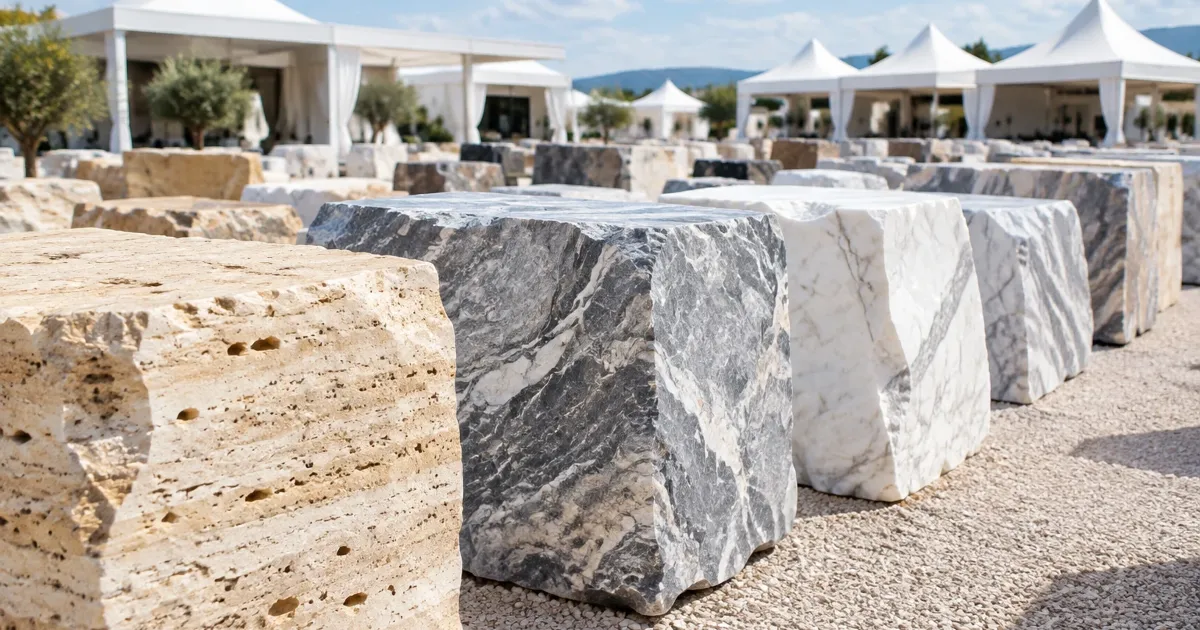
Mahallat Stone Expo: how can you compare bookmatched travertine, raw stone blocks, machinery, and building stone prices before choosing materials for a home, commercial project, or export order? The expo offers a practical setting for reviewing processed slabs, quarry blocks, stone-processing technology, and industry discussions, but the right choice depends on more than appearance. Buyers should assess structural condition, processing quality, production fit, expected yield, and after-sales support before making a decision.
What to Expect at the Mahallat Stone Expo
Also known as the Iran Stone Expo or the Nimvar-Mahallat Stone Expo, this gathering connects quarry owners, stone factories, machinery suppliers, contractors, architects, designers, exporters, and private buyers. It is an opportunity to compare natural stone at different stages, from raw blocks at the quarry level to finished slabs ready for interior or exterior use.
The event presents raw stone from different mines across Iran, with around 45,000 tonnes of raw material offered according to the available event information. The current time of the Mahallat Stone Expo should be confirmed through the official event organizer before arranging travel, meetings, or purchasing plans.
For professional buyers, the expo can support supplier evaluation and early-stage sourcing. For homeowners, it can make an unfamiliar product easier to understand. Instead of choosing only by color, buyers can ask how a stone was processed, where it is suitable for use, and how its finish may affect the final space.
How to Evaluate Bookmatched Travertine and Finished Slabs
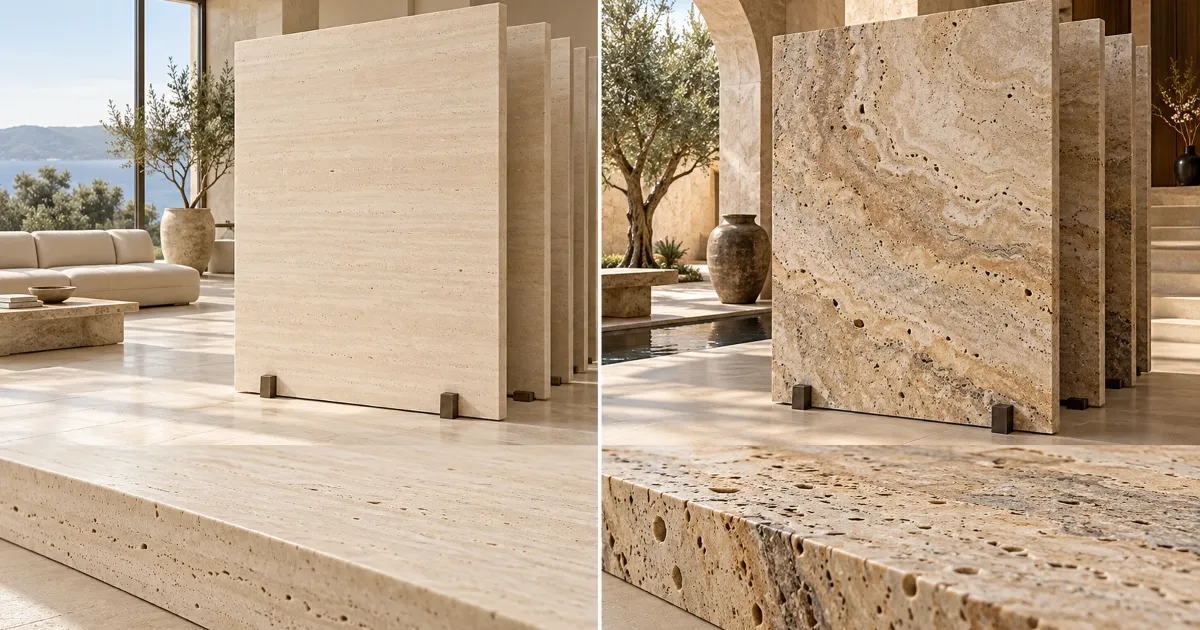
Bookmatched travertine is one of the most visually distinctive products presented at stone exhibitions. In a bookmatch arrangement, neighboring slabs are selected and placed so that the natural veining creates a balanced, mirrored, or continuous composition. This effect can bring a strong focal point to a wall, fireplace, lobby, bathroom, or other feature area.
The pattern is important, but it should not be the only factor in the decision. Inspect the slabs for layer stability, consistency of the stone texture, resin treatment, and the quality of the final finish. Travertine may be offered with a polished, leathered, or honed surface. Each finish creates a different visual feel and may suit a different design intention.
- Pattern continuity: Check whether the veining continues naturally across adjacent slabs.
- Structural condition: Look for visible cracks, unstable layers, or areas that may affect cutting and installation.
- Resin treatment: Ask what type of resin work has been applied and whether it suits the planned use.
- Surface finish: Compare polished, leathered, and honed samples in relation to the desired appearance and maintenance expectations.
- Project suitability: Confirm that the selected slab is appropriate for the intended wall, floor, kitchen, bathroom, or façade application.
For a homeowner, the key question is simple: will the stone create the look and atmosphere desired for the room? For an architect, contractor, or exporter, the review should also cover slab consistency, processing behavior, finishing requirements, and the ability to supply matching material for the full project.
Buying Directly from the Quarry: How to Assess Raw Stone Blocks
Buying directly from the quarry can help professional buyers discuss the source of the material before it reaches the factory. A raw block may offer the potential for a specific color, texture, or slab layout, but its exterior appearance alone cannot guarantee the quality of the finished product, the amount of waste, or the stone’s behavior under the saw.
When reviewing a raw block at the expo, speak with the quarry representative about the extraction face, hidden cracks, fault lines, and the most suitable processing method. These details can affect how the block should be cut and how much usable material it may produce.
It is also useful to connect the block selection to the final application. A block intended for bookmatched travertine may require a different evaluation from material planned for standard wall cladding or another architectural use. Ask whether the quarry can provide material with the required visual continuity and whether the proposed processing route matches the project’s needs.
For non-specialist buyers, direct quarry purchasing is usually easier with support from a qualified stone supplier or project professional. The supplier can help translate technical information into practical questions about color, finish, availability, processing, installation, and overall suitability.
Choosing Stone Machinery and Processing Technology
The machinery section of the expo is especially relevant to factory owners, production managers, technical supervisors, and investors planning to expand or improve a stone-processing line. Visitors can review technologies related to cutting, polishing, resin treatment, and mechanized slab production.
The right machine is not necessarily the one with the most features. It should match the factory’s stone types, production requirements, maintenance capacity, and available technical support. A machine that performs well with one material may not be the best fit for another stone with different hardness or processing behavior.
- Calibration accuracy: Ask how the equipment maintains consistent cutting or finishing performance.
- Blade compatibility: Confirm that the blades and cutting system suit the hardness and characteristics of the stone being processed.
- Wear and operating costs: Review expected depreciation, maintenance needs, consumable use, and likely downtime.
- Production compatibility: Check whether the machinery fits the existing line and the factory’s intended workflow.
- After-sales service: Clarify the availability of technical support, replacement parts, calibration assistance, and training.
These checks help buyers move beyond a machinery demonstration. A successful purchase depends on how the equipment performs within the buyer’s real production environment, not only on how it appears at the exhibition stand.
Questions to Ask Before Comparing Building Stone Prices
Building stone prices should be compared alongside quality, processing, yield, finish, availability, and delivery requirements. A lower initial quote may not represent better value if the material produces more waste, requires additional treatment, or cannot provide a consistent result across the project.
Before requesting a quotation, define the main requirements clearly. Identify the stone type, preferred color and texture, intended application, surface finish, slab or block format, and whether the order is for a residential project, a commercial development, or export supply.
- Where was the stone extracted, and what information is available about the quarry block?
- What processing and finishing methods are included in the quotation?
- Can the supplier provide matching slabs for the complete project?
- How should the material be evaluated for the intended application?
- What are the expected processing, packing, and delivery arrangements?
- For machinery, what technical service and maintenance support are available?
The expo also includes professional meetings and specialist discussions related to mining policy, trade, export requirements, technical standards, and challenges shared by private businesses and public organizations. These sessions can help industry buyers understand the wider supply chain and make more informed sourcing decisions.
Mahallat Stone Expo is most valuable when used as a structured comparison opportunity rather than a quick visual shopping trip. Whether you are looking for bookmatched travertine, direct stone purchasing from a quarry, raw stone blocks, or stone-processing machinery, careful questions will help you choose material and suppliers with greater confidence. Explore the stone products available from Sang 20, and contact the team for guidance on selecting natural stone for your residential, commercial, or export project.
💬 Comments & Reviews (0)
No comments yet. Be the first! 😊
✍️ Leave a Comment