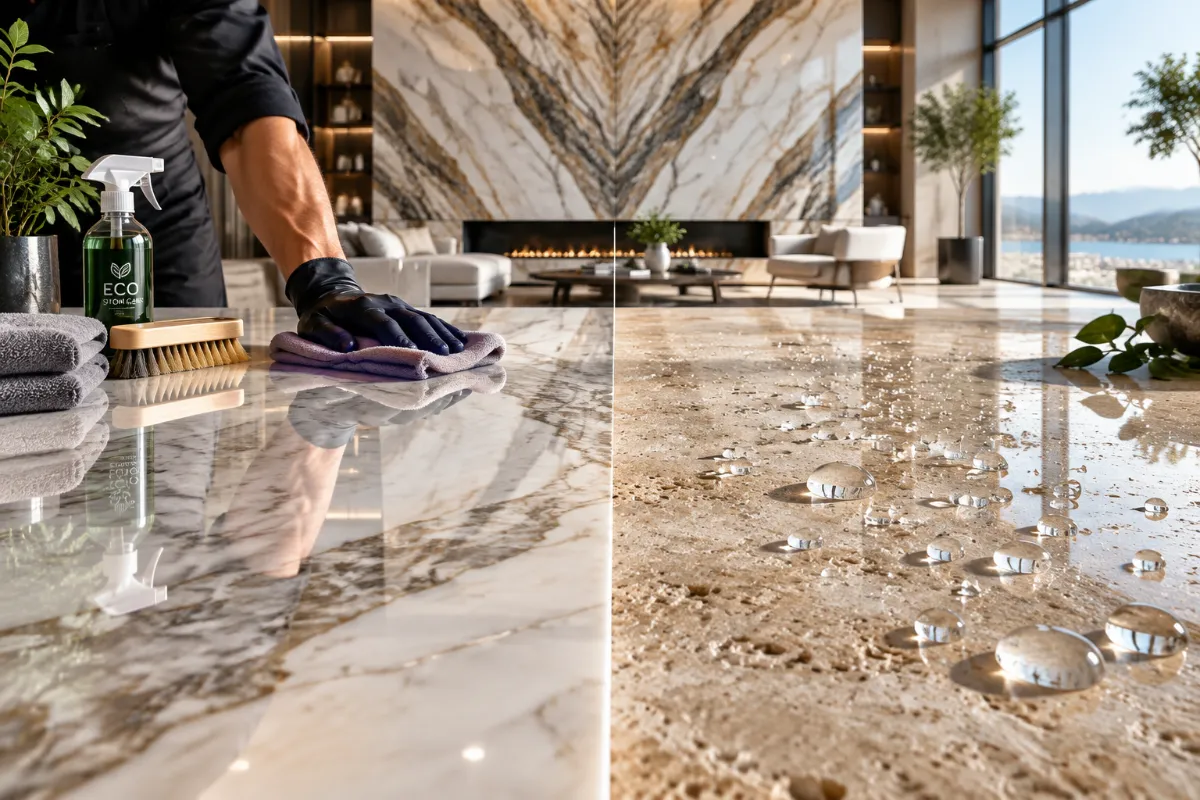
Comprehensive Scientific Guide to Natural Stone Maintenance, Cleaning, and Engineering Protection
A technical protocol for preserving marble, granite, travertine, and architectural slabs | Authored by the R&D Engineering Team at Sang20
1. Natural Stone: A Living, Dynamic Architectural Substrate
From ancient monuments to contemporary luxury architecture, natural stone stands as an enduring symbol of prestige, authenticity, and permanence. However, the widespread misconception of stone as an "impervious," "chemically inert," and "indestructible" material is the root cause of irreversible visual degradation and severe structural losses in luxury developments. Geologically and physically, natural architectural stone is an intricate, porous capillary network that constantly interacts with ambient atmospheric conditions, dissolved mineral salts, and surface chemicals.
Selecting the wrong cleaning agent or neglecting moisture intrusion cycles can permanently dull the mirror finish of an exotic slab in seconds, initiating irreversible deterioration mechanisms such as subsurface weathering, efflorescence, staining, and spalling. Standard stone preservation operates at the nexus of mineralogy, organic chemistry, and material science. In this technical manual, the R&D team at Sang20 outlines the definitive protocols for daily care, osmotic stain extraction, and nano-impregnation based on global industry standards.
2. Mineralogy and Chemical Reactivity of Architectural Stones
Maintenance procedures are fundamentally governed by the stone’s primary mineral phases. Geologically, architectural dimension stones fall into two primary classifications:
2.1. Calcareous Stones: Highly Susceptible to Acid Etching
This group encompasses key sedimentary and metamorphic rocks, including Marble, Travertine, Onyx, and limestone. According to the mineralogical database at Mindat Mineralogy Database, the defining mineral constituent of this category is Calcite, or Calcium Carbonate (CaCO3).
Calcium carbonate dissolves almost instantly upon contact with acidic hydrogen ions (H+):
CaCO3 + 2H+ → Ca2+ + H2O + CO2↑
This molecular dissolution corrodes the crystalline polish, leaving a dull, rough, chalky blemish known as an Etch Mark. Consequently, any liquid with a pH below 7.0 will cause immediate chemical burn on calcareous surfaces.
2.2. Siliceous Stones: Hard but Susceptible to Hydrocarbon Absorption
This group includes Granite, quartzite, and sandstone. The primary structural framework consists of Silicon Dioxide (SiO2) and Feldspar minerals. According to the Mohs Scale of Mineral Hardness, these stones rate 6 to 7, offering superior abrasion and chemical acid resistance. However, inter-crystalline micro-fissures can rapidly draw organic oils and hydrophobic dyes into the matrix via capillary suction.
3. Five Fatal & Irreversible Stone Cleaning Mistakes
- Using Hydrochloric Acid, Muriatic Acid, or Descaling Agents: Instantly destroys the polished crystal layer, expands the pore network, and creates a rough, highly porous surface prone to persistent fouling.
- Repeated Use of Chlorine Bleach (Sodium Hypochlorite): Its strong oxidative nature and high alkalinity (pH 11–13) break down epoxy sealers, netting reinforcement, and filling mastics, causing yellowing and discoloration on darker slabs.
- Cleaning with Vinegar, Citrus Cleaners, or Acetic Formulations: Natural does not mean safe. Acetic acid instantly etches calcium carbonate surfaces, leaving stubborn chemical burn halos.
- Scouring with Abrasive Powders or Steel Wool: Hard abrasive granules coupled with metallic filaments scratch the optical surface plane, scattering light reflection and turning polished stone lifeless and hazy.
- High-Pressure Jet Washing at Close Range: Water pressures exceeding 150 bar blast away mastic fillers and epoxy grouting, destabilizing joints and opening deep moisture pathways.
4. Periodic Cleaning Protocol: Daily, Weekly, and Monthly Routines
In accordance with engineering guidelines from the Natural Stone Institute, a sustainable maintenance program relies on controlling continuous micro-abrasion:
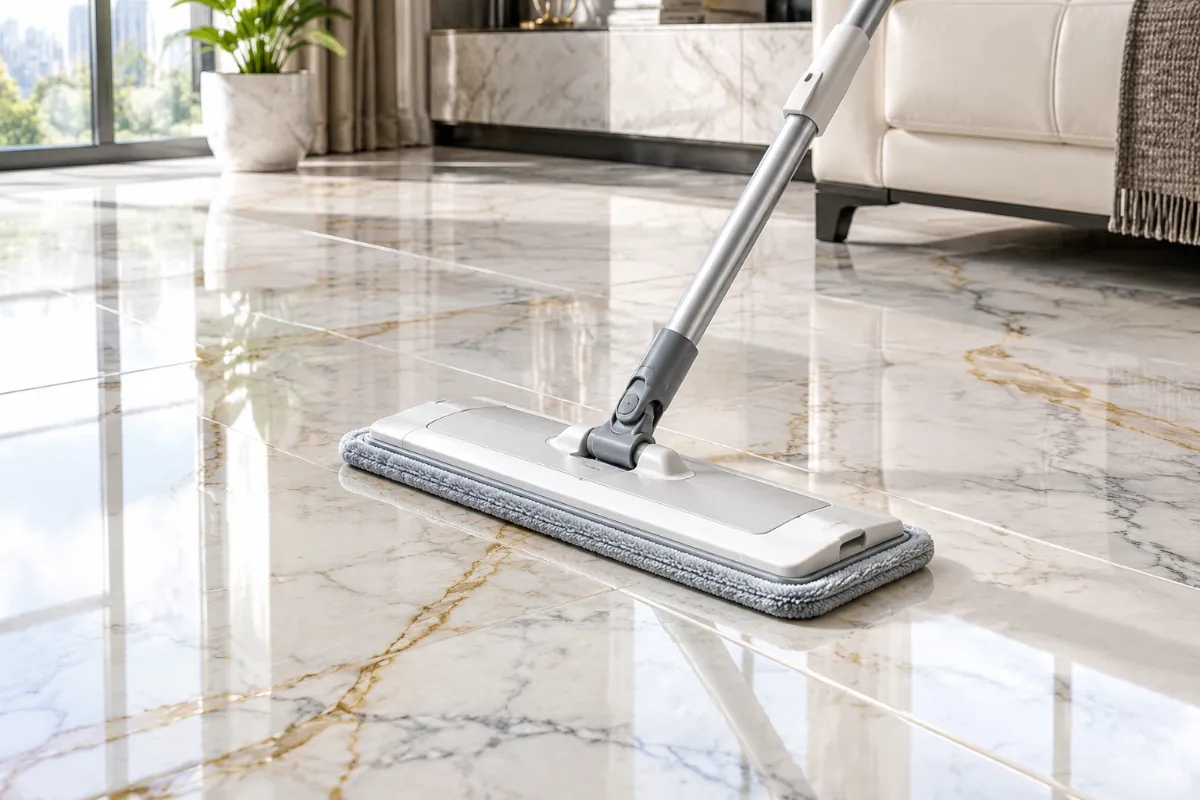
4.1. Daily Dust-Mopping with Electrostatic Microfiber
Urban airborne particulate matter contains sharp silica dust. Foot traffic pushes these particles against the stone, mimicking orbital sandpaper abrasion. Dry dusting must be performed daily using non-treated, flat microfiber mops. Vacuuming should only be executed with soft rubber wheels and horsehair brush attachments.
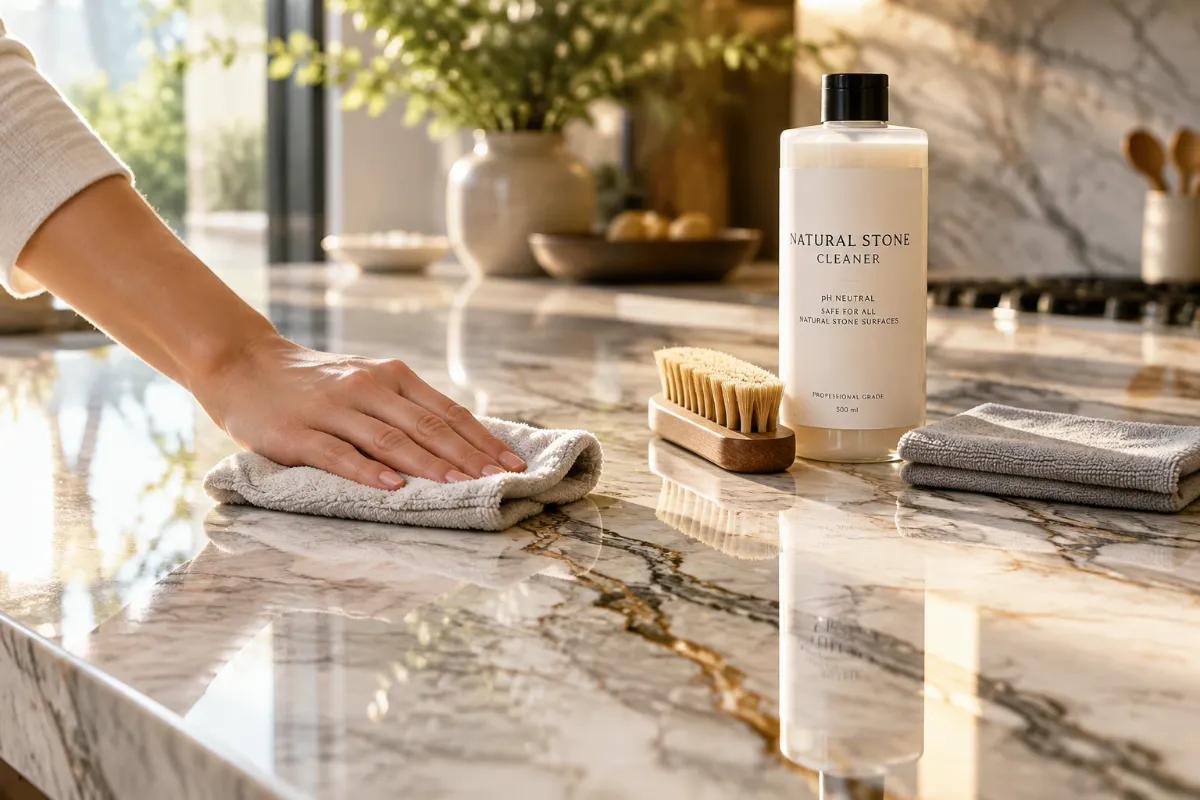
4.2. Weekly Two-Bucket Wet Mop with pH-Neutral Cleaners
Use strictly certified pH-neutral detergents (pH = 7 ± 0.5) diluted with purified or soft water. In the professional two-bucket method:
- Bucket 1: Diluted neutral cleaning solution for charging the mop head.
- Bucket 2: Clean rinse water to extract particulate dirt and soil before reloading.
Immediate Drying: Never allow water to evaporate naturally on stone surfaces. Dissolved minerals and calcium in tap water form unsightly, insoluble chalky halos upon drying. Always towel-dry immediately with plush microfiber cloths.
5. Step-by-Step Deep Stain Extraction: Osmotic Poultice Method
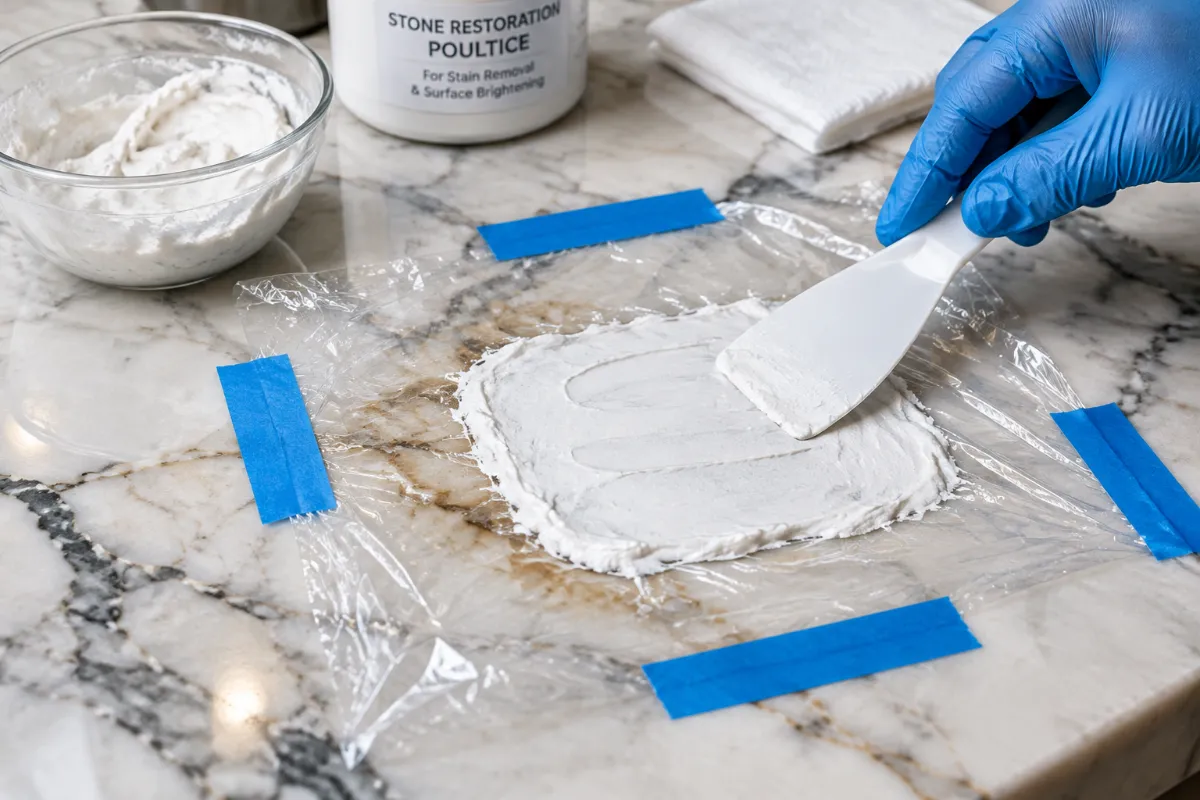
When oils, colored tannins, or inks penetrate deep into the stone matrix, surface wiping is completely ineffective. An osmotic poultice works by reversing capillary attraction, drawing deep contaminants out of the stone and absorbing them into a disposable medium.
| Stain Type | Active Chemical Solvent | Absorbent Medium | Dwell Time |
|---|---|---|---|
| Oils & Cooking Grease | Technical Acetone or Isopropyl Alcohol (IPA) | Talcum powder, Bentonite, or Cornstarch | 24 to 48 Hours |
| Coffee, Tea & Organic Tannins | Hydrogen Peroxide (12% to 20% solution) | Diatomaceous Earth or White Plaster | 24 Hours |
| Ink & Marker Dyes | Denatured Alcohol (96%) | Kaolin or Purified Talc | 24 Hours |
- Blend the active solvent with the absorbent powder until it achieves a thick, peanut-butter consistency.
- Pre-wet the stained zone with distilled water, then apply the paste evenly across the stain at a 6 mm (1/4 inch) thickness.
- Cover with polyethylene wrap, seal the edges with low-tack tape, and poke several small perforation pinholes for controlled vapor release.
- After 24 to 48 hours, when the poultice has completely dried into a cake, remove the plastic, scrape off the powder using a soft plastic spatula, and rinse with distilled water.
6. Hydrophobic Sealing Technologies and Breathable Nano-Impregnators
Legacy film-forming surface coatings (acrylics and polyurethanes) suffocate the stone, trapping subterranean moisture and inducing sub-surface spalling and cloudy delamination. Modern stone engineering mandates Deeply Penetrating, Breathable Nano-Impregnators (fluoro-polymers and silanes). These molecular agents bond within the internal capillaries, radically lowering surface energy without altering the stone's color, vapor permeability, or natural breathability.
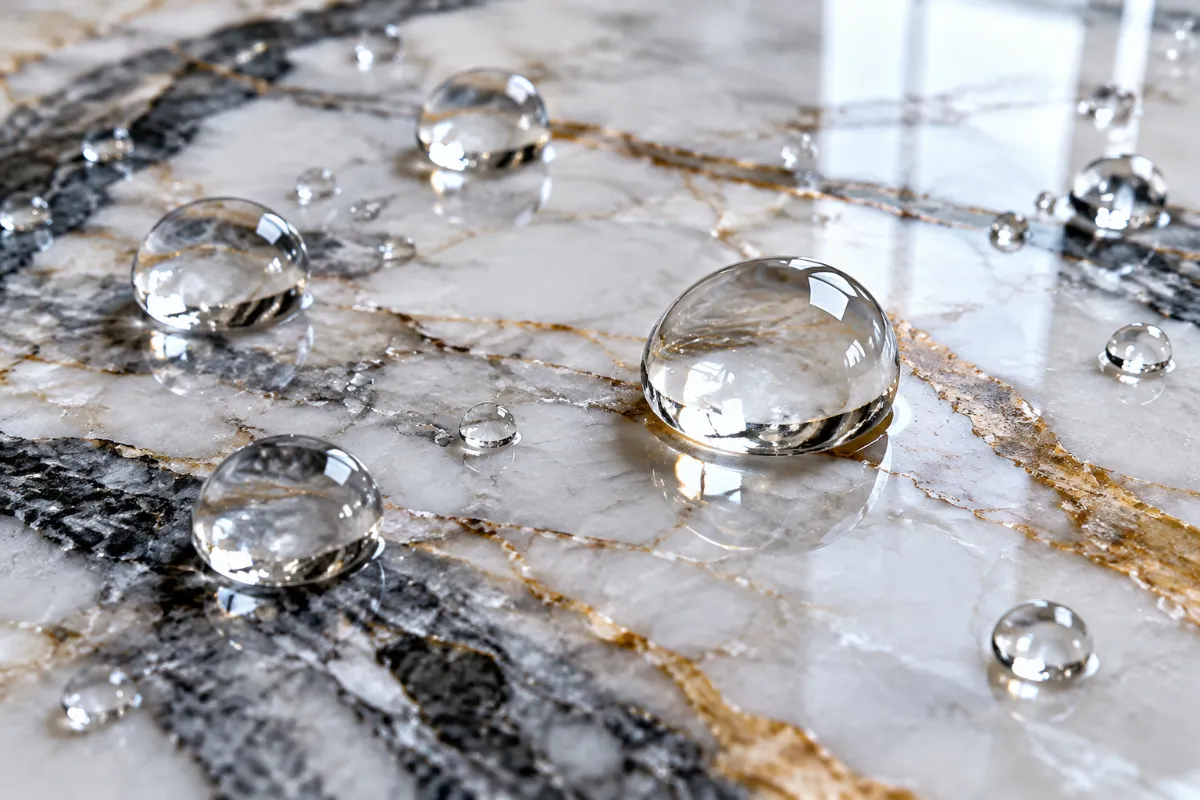
The Water Droplet Test
Place several droplets of water across different sections of the slab and observe for 10 minutes:
- Spherical beads remain tight: The hydrophobic nano-shield is intact and fully operational.
- Droplets spread flat or darken the stone: Capillaries are open and immediate re-application of penetrating nano-sealer is required.
7. Preserving Luxury Book-Matched Slabs and Mechanical Restoration
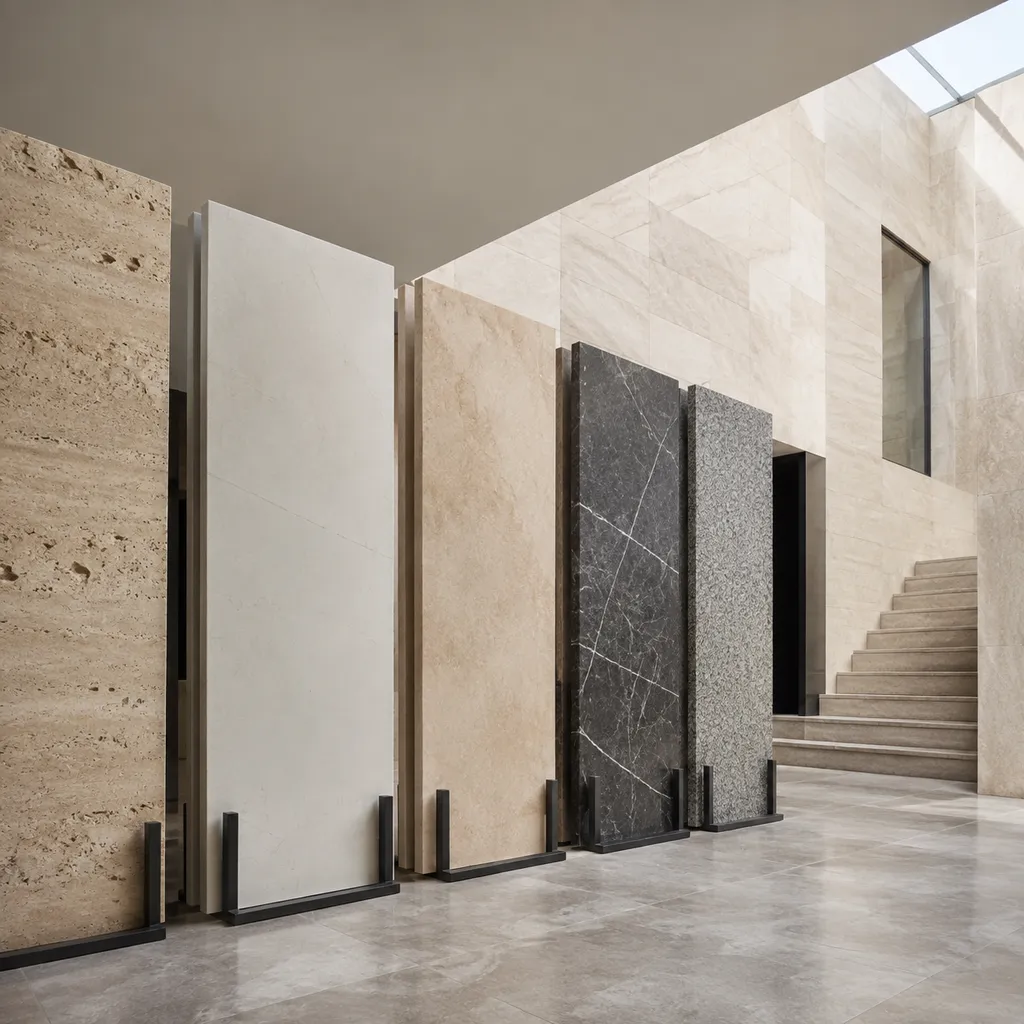
Designing architectural feature walls and floors with Natural Stone Slabs arranged in continuous book-matched and quad-matched patterns requires elevated precision. Any uneven tile lippage or localized dulling destroys the geometric continuity of the natural veining.
When is Italian Mechanical Grinding & Diamond Polishing Required?
When deep acid burns, severe scratch trails, or widespread micro-pitting develop, chemical washing is no longer sufficient. In such cases, planetary diamond floor grinders utilizing progressive grit resin diamonds (from 50 to 3000 grit), followed by tin-oxide Italian polishing crystallization compounds, must be deployed to shave away microscopic damaged layers and restore factory-grade optical gloss.
Preview Your Stone in Real-Time with Sang20 AI Visualizer
Experience the architectural impact, vein alignment, and lighting harmony of our natural stone collection before purchasing! Simply upload a photo of your living room, kitchen, bathroom, or facade, and Sang20’s smart AI rendering engine will instantly project dozens of premium marble, granite, and travertine slabs onto your space with photorealistic precision.
Launch AI Stone Visualizer Tool


💬 Comments & Reviews (0)
No comments yet. Be the first! 😊
✍️ Leave a Comment