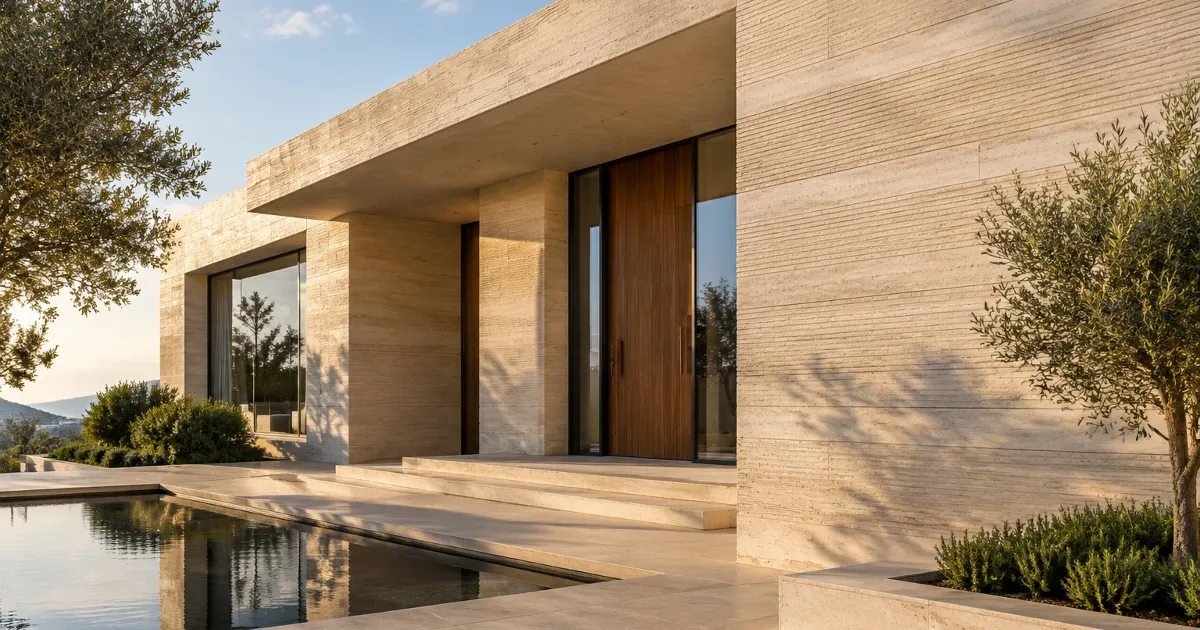
Understanding scratched stone finishes: types, machinery, and uses begins with recognizing this mechanical surface treatment as a disciplined way to turn natural stone slabs into rhythmically textured architectural elements defined by continuous parallel channels. Moving beyond conventional honed or polished surfaces, this tactile profile introduces deliberate relief that interacts dynamically with natural raking light and shadow. For modern architectural concepts, grooved natural stone bridges raw geological permanence with clean geometric detailing.
Specifying a linear stone texture provides functional and visual advantages across residential and commercial envelopes:
- Breaks monolithic planar surfaces to accentuate vertical or horizontal sightlines.
- Establishes dependable surface friction for safe foot traffic.
- Delivers an authentic tactile character in vertical feature cladding or flatwork that synthetic alternatives cannot match.
What Is a Scratched Stone Finish and How Is It Produced?
A scratched stone finish is engineered through continuous mechanical incision, where high-speed diamond abrasive discs cut calibrated, parallel micro-channels across the face of calibrated stone slabs. Unlike thermal flamed or chemical acid-etched treatments that erode stone organically, this profile delivers absolute dimensional regularity.
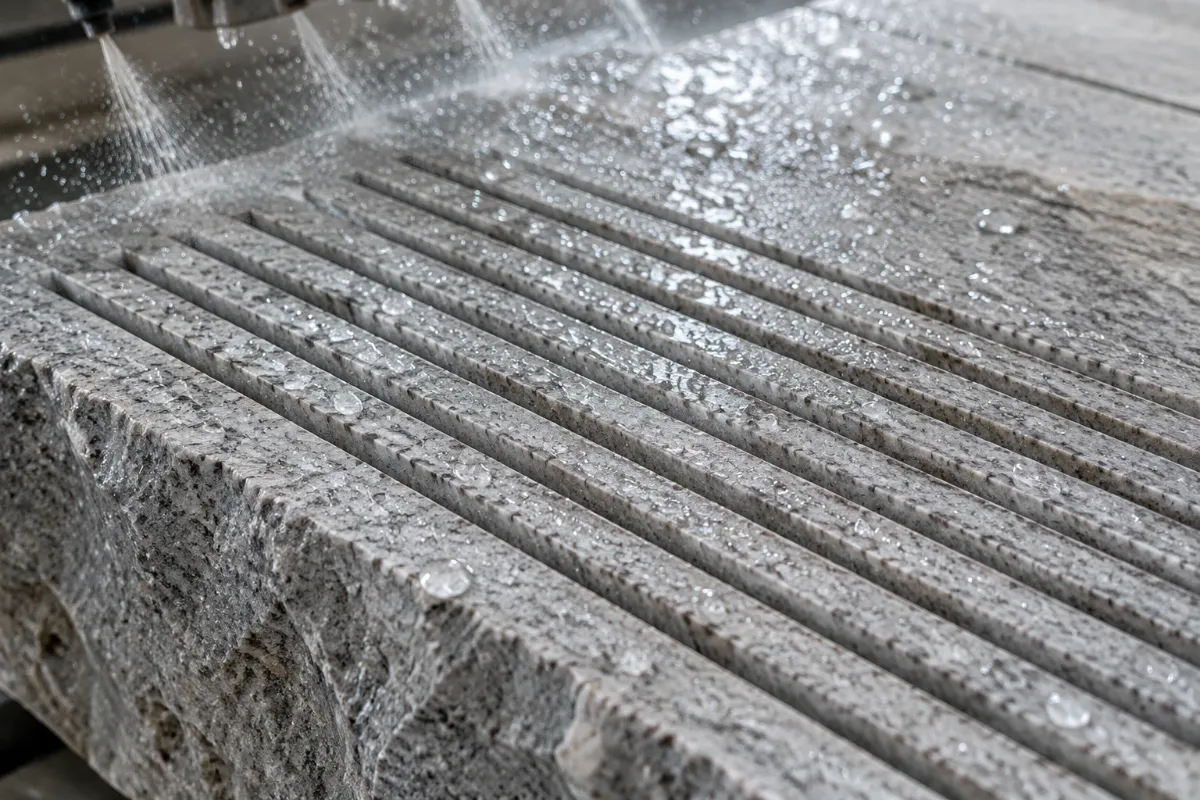
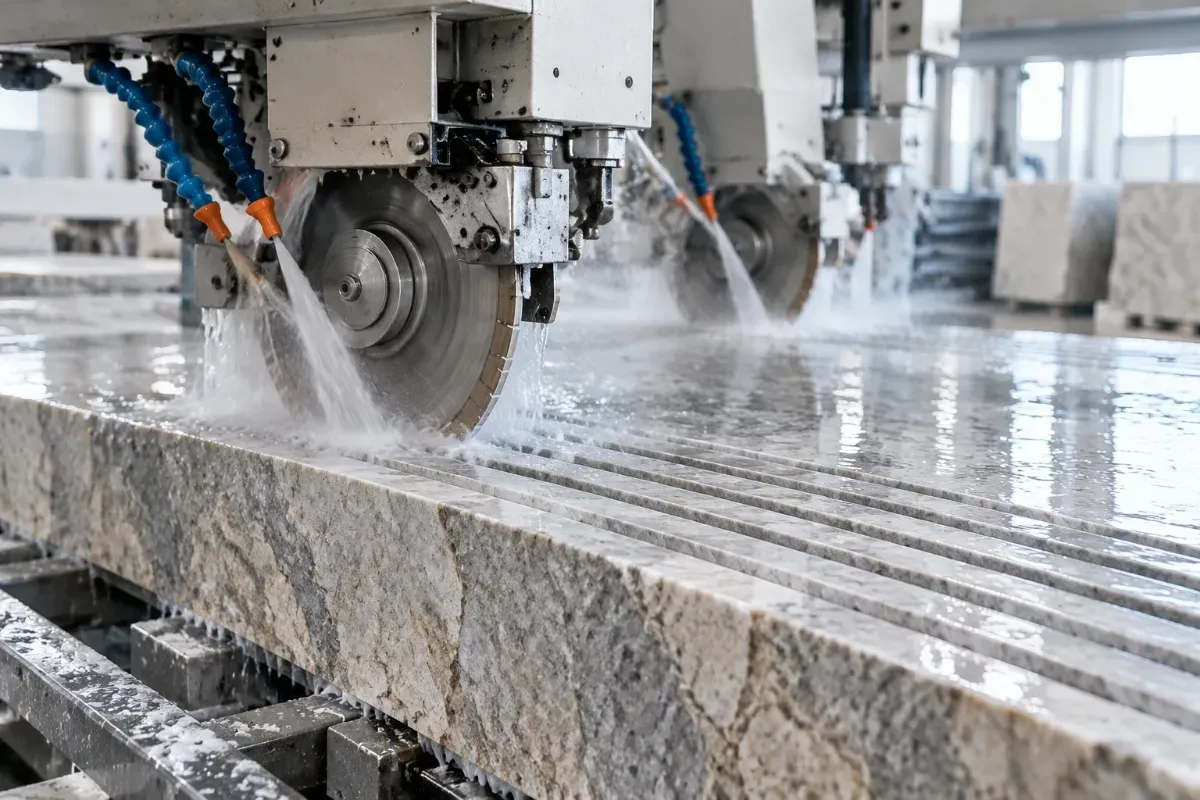
The Linear Grooving Process via Calibrated Milling Machines
Fabrication relies on an automated stone grooving machine equipped with adjustable diamond-tipped milling blades arranged on a motorized arbor. Before cutting begins, slabs undergo primary gauge calibration to ensure uniform thickness, preventing blade chatter or uneven groove depths across the panel.
- Blade Configuration: High-density diamond cutting segments are spaced across the spindle at uniform intervals according to the designated profile specification.
- Continuous Wet Milling: Constant water injection cools the diamond tooling, flushes stone slurry immediately from the cut line, and prevents micro-fissuring from localized thermal stress.
- Feed Rate Synchronization: Mechanical conveyor systems maintain a consistent linear pass speed, delivering continuous, uninterrupted lines without surface gouges or stutter marks.
Linear vs. Cross-Hatch Patterns: Groove Pitch and Depth Parameters
Surface variations depend on groove pitch (center-to-center spacing between cuts), channel width, and vertical cutting depth:
- Unidirectional Linear Patterns: Parallel incisions run along the panel length or width to establish strong geometric orientation, commonly specified for fluted stone cladding.
- Cross-Hatch Configurations: A secondary milling pass runs perpendicular to the initial grooves, generating a functional micro-grid or waffle pattern.
Choosing the right configuration balances design intent with practical demands: standard shallow grooves (1 to 2 mm) offer refined indoor tactile relief, whereas wider, deeper channel pitches (3 to 5 mm) improve exterior grip and dynamic shadow casting.
Types of Scratched Natural Stone by Material Grade
Natural stone varieties respond differently to diamond scratch milling based on mineral density, cleavage planes, and intrinsic tensile strength. Travertine, granite, marble, and crystalline stone represent the primary material categories specified for this treatment.
Linear Scratched Travertine for Contemporary Facades
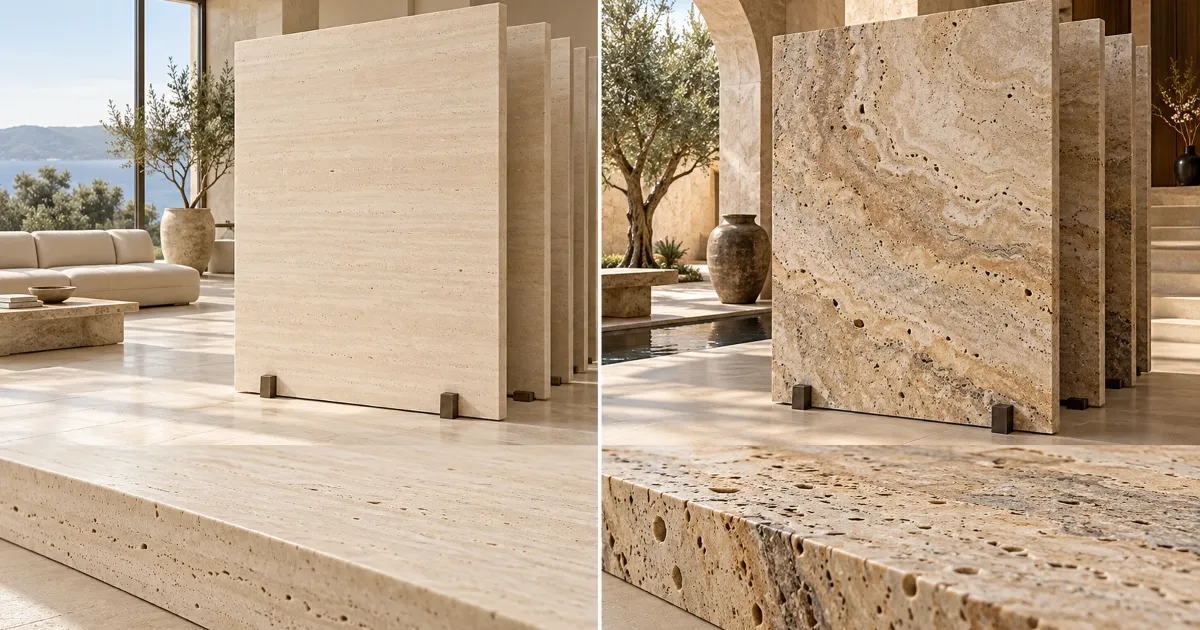
Linear scratched travertine pairs natural sediment voids with clean, machine-cut linearity, making it a leading choice for modern building facades. The scratching process shears cleanly across travertine's calcium carbonate matrix without inducing broad spalling along structural bedding planes.
When milled along the vein cut direction, linear grooves align with native sedimentary bands, visually accentuating wall height. Unfilled scratched travertine highlights organic cavities alongside geometric channels, whereas cementitious or resin-filled variants produce a sleeker, continuous architectural panel suited for high-specification cladding systems.
Scratched Granite for Heavy-Traffic Paving and Walkways
Scratched granite paving leverages the quartz and feldspar hardness of igneous stone to deliver an exceptionally durable, wear-resistant surface. Granite requires heavy-duty industrial cutting heads and slower conveyor feed rates to prevent blade deflection during cutting.
This texture yields dependable slip resistance without harsh chemical etching that can dull the stone's crystalline sparkle. Granite's tight interlocking grain prevents micro-chipping along groove edges, ensuring outdoor steps, high-traffic commercial walkways, and perimeter paving retain crisp channel definitions under heavy vehicular and pedestrian loads.
Scratched Marble and Crystalline Stone for Interior Accent Walls
Scratched marble and dense crystalline stone (porcelain/chini stone) bring refined texture to interior feature walls, bathroom vertical surrounds, and reception backdrops. Marble's fine mineral grain accepts sharp, delicate incision profiles without edge crumbling.
In crystalline limestone and white crystalline marble, scratch milling exposes unpolished sub-surface crystals, creating a two-tone interplay between raised crests and matte, light-diffusing recesses. This contrast produces clear shadow plays under downlighting while preserving the innate veining and mineral depth of the underlying slab.
Scratched vs. Bush Hammered Stone: Which Surface Profile Fits Your Project?
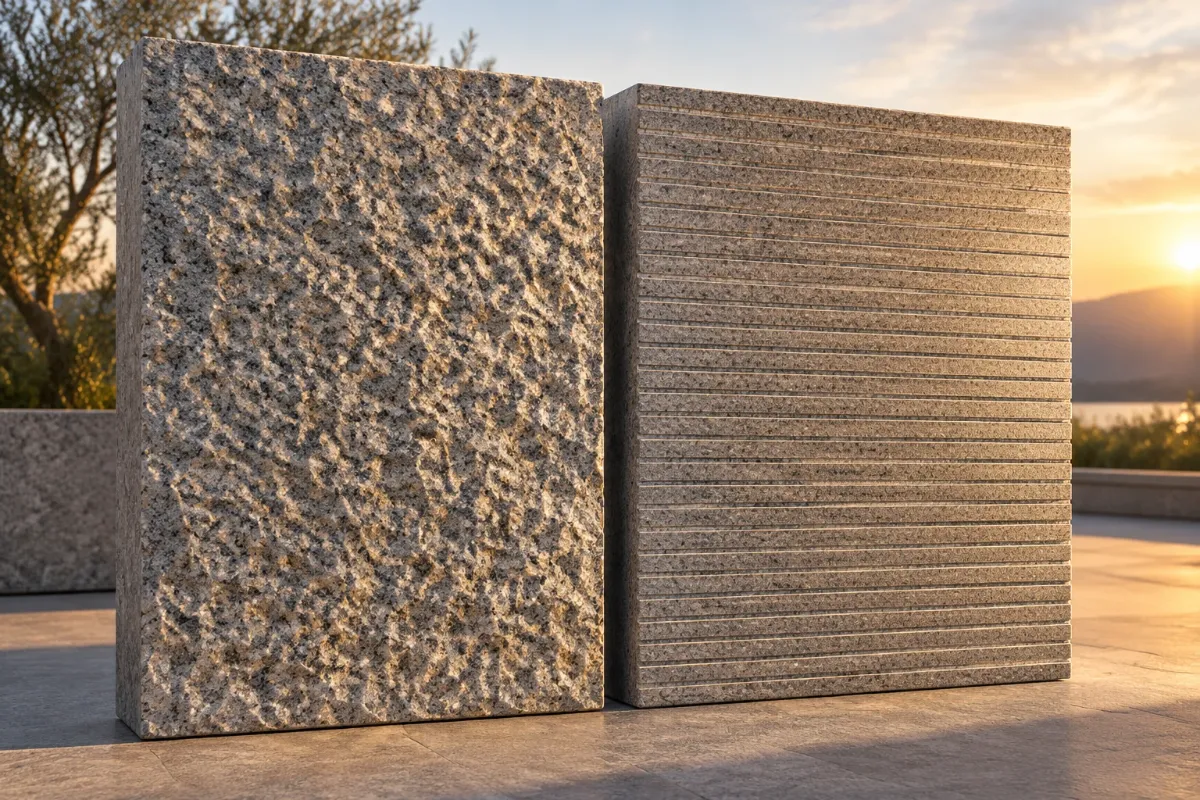
Choosing between a scratched finish and a bush hammered profile comes down to aligning visual geometry with slip resistance and maintenance requirements. While bush hammering breaks the stone face with repeated mechanical impacts to form an organic, stippled roughness, scratching uses precision cutting discs to incise continuous, parallel linear channels across the slab.
Aesthetic Differences: Linear Geometry vs. Organic Pitted Texture
The visual distinction between these two mechanical finishes determines how an architectural surface interacts with natural light and surrounding volumes:
- Directional Alignment: Scratched surfaces introduce directional lines that visually lengthen horizontal paving runs or accentuate the vertical height of exterior facades.
- Organic Non-Directional Scatter: Bush hammering produces a randomized, cratered texture that scatters light evenly in every direction, helping conceal minor natural stone color variations.
- Hybrid Synergy: Combining both techniques produces bush hammered scratched stone, where linear incisions cut across a previously stippled substrate to deliver both deep geometric relief and fine micro-roughness.
Slip Resistance, Friction Ratings, and Surface Maintenance
Both profiles serve as an effective anti-slip stone finish, but their micro-topography impacts drainage and dirt collection differently under real-world conditions:
| Performance Metric | Scratched Stone Profile | Bush Hammered Profile | Bush Hammered Scratched (Hybrid) |
|---|---|---|---|
| Directional Traction | High friction perpendicular to lines; guided water runoff parallel to grooves | Omnidirectional slip prevention across dry and wet conditions | Superior omnidirectional grip with enhanced macro-channel drainage |
| Debris Accumulation | Dust settles along groove beds; clears easily with directional washing | Fine particulate packs into micro-craters over time | Requires periodic pressure washing along continuous channels |
| Primary Specification | Ramps, modern building podiums, feature accents | Heavy civic plazas, exterior steps, pool surrounds | Steep vehicle inclines, industrial pedestrian zones |
For outdoor paving, parallel grooves facilitate linear surface runoff when aligned with the natural slope. In contrast, bush-hammered micro-pits can retain standing water longer, increasing efflorescence risks if unsealed stone remains persistently damp in shaded exposures.
Key Architectural Applications: From Facades to Non-Slip Ramps
A scratched stone finish transitions effortlessly between decorative vertical elements and high-stress horizontal footings, serving dual roles as an architectural accent and a safety surface.
Exterior Cladding and Textured Accent Walls
In modern exterior stone cladding, linear grooved panels break the visual monotony of monolithic stone envelopes. Architects specify fine-pitch scratched travertine or granite panels to establish rhythm, cast shifting shadows through the day, and mask panel joints within the grooved profile.
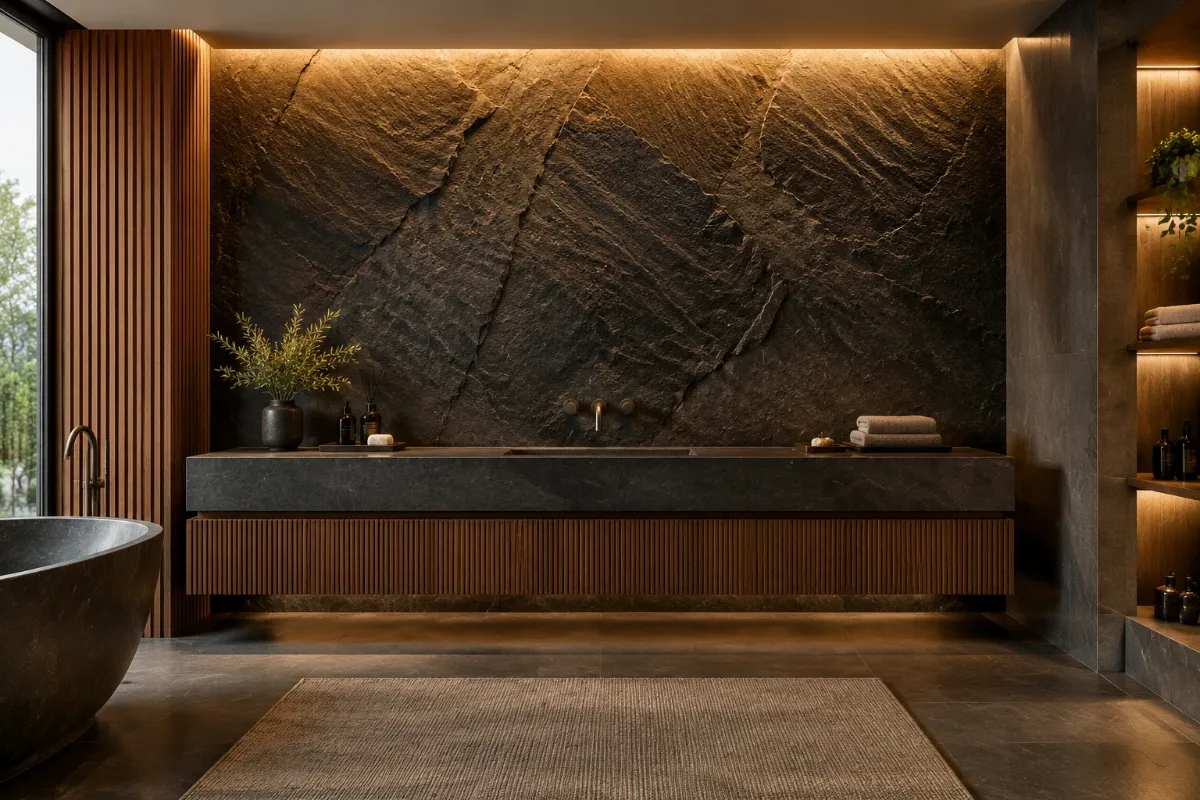
For interior spaces, a grooved textured accent wall behind a reception desk or within a double-height residential atrium adds tactile warmth. The incised stone surface pairs naturally with direct grazing illumination or recessed perimeter LED strips, amplifying the contrast between polished ridges and shadow-filled troughs.
Ramps, Wet Surrounds, and Exterior Stair Treads
Safety engineering drives the selection of grooved surfaces for exterior pedestrian infrastructure. On stone ramp paving, orienting incisions perpendicular to foot and vehicular traffic maximizes mechanical traction, particularly during rain or light frost.
- Stair Treads and Nosings: Three to four linear grooves machined near the leading edge provide reliable slip-resistant treads without requiring secondary abrasive strips.
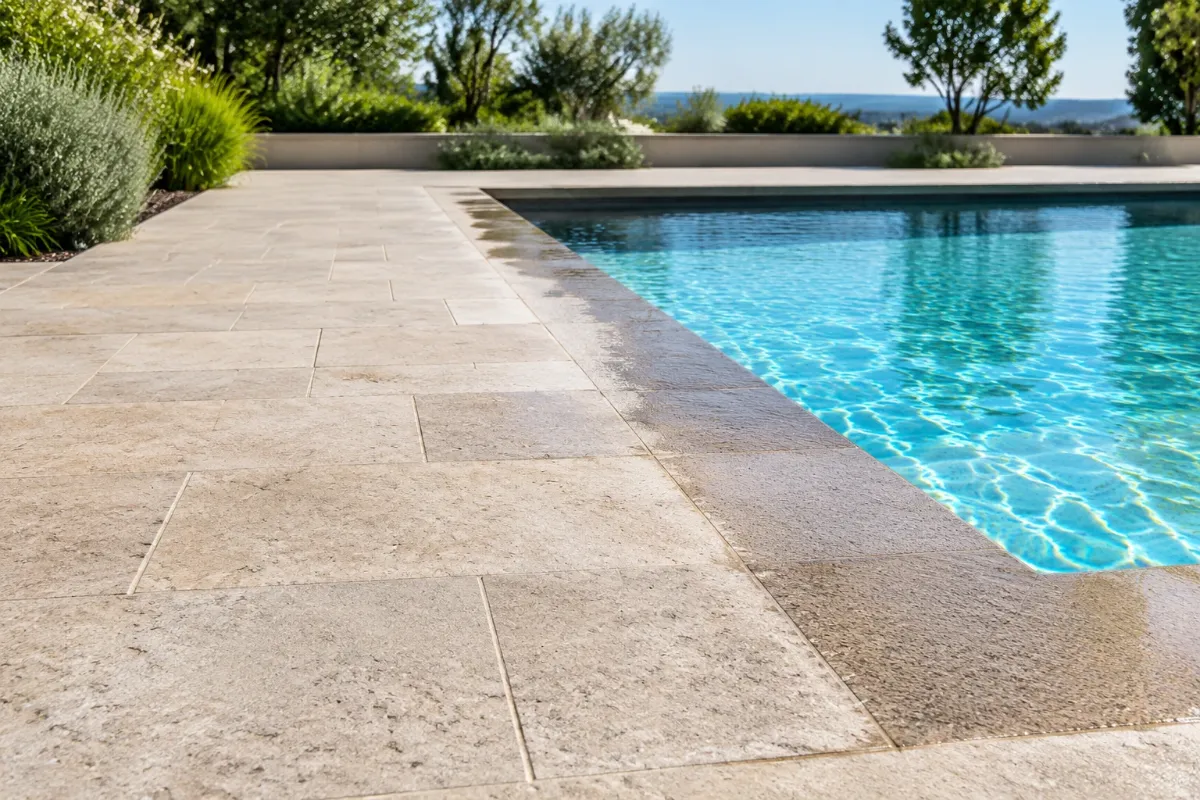
- Pool Surrounds and Water Features: Grooved slabs channel surface splashes away from walking paths while helping prevent barefoot hydroplaning.
- Covered Driveways and Porte-Cochères: Scratched granite absorbs tire abrasion and surface scuffing far better than smooth-honed stone tiles.
Frequently Asked Questions About Scratched Stone
Here are concise, practical answers to common technical inquiries regarding the specification, durability, and upkeep of grooved stone profiles.
Do the linear grooves in scratched stone trap dirt and dust?
While open channels can collect airborne particulates over time, routine scratched stone maintenance is straightforward using standard water pressure washing or directional stiff-bristle sweeping along the groove axis. Vertical facade installations shed dust naturally with rainfall, requiring significantly less surface care than horizontal exterior paving.
Does the scratch milling process weaken stone slabs or cause cracking?
Calibrated scratch cutting does not compromise stone slab structural integrity when proper slab thickness thresholds are maintained. Slabs specified for grooving are typically milled on minimum 20 mm or 30 mm stock, ensuring the uncut substrate retains ample compressive and flexural strength for both cladding and flatwork applications.
What is the advantage of a combined bush-hammered and scratched finish?
A combined bush hammered scratched finish unites the non-directional micro-pitting of percussive impact with the crisp directional lines of diamond saw incisions. This hybrid technique delivers enhanced anti-slip friction while producing a deeper, multi-dimensional shadow contrast that conceals environmental grime and surface wear.
Which climate zones are best suited for exterior scratched stone?
As a resilient, weather-resistant finish, scratched natural stone performs reliably across arid heat, high-humidity coastal settings, and freeze-thaw temperate zones. In regions subject to sub-zero temperatures, applying a breathable penetrating hydrophobic sealer prevents trapped water from freezing and expanding within the micro-channels.
Specify and Source Custom Scratched Stone with Sang20
Achieving crisp visual alignment and reliable slip resistance requires exacting fabrication tolerances from quarry block to finished slab. As a direct quarry supplier and manufacturing partner, Sang20 provides specialized custom stone finishing across travertine, granite, marble, and crystalline stone varieties. Our advanced multi-blade machinery calibrates precise groove width, channel depth, and pitch parameters to match your exact architectural drawings.
Whether you are designing a high-profile commercial facade or sourcing non-slip pedestrian paving, our technical team supports your project from material specification to supply logistics. Explore groove textures directly on your project elevation photos through our AI space visualizer, or contact Sang20 today to request a quotation and submit your architectural schedules for quarry-direct supply with verified dimensional accuracy.
💬 Comments & Reviews (0)
No comments yet. Be the first! 😊
✍️ Leave a Comment