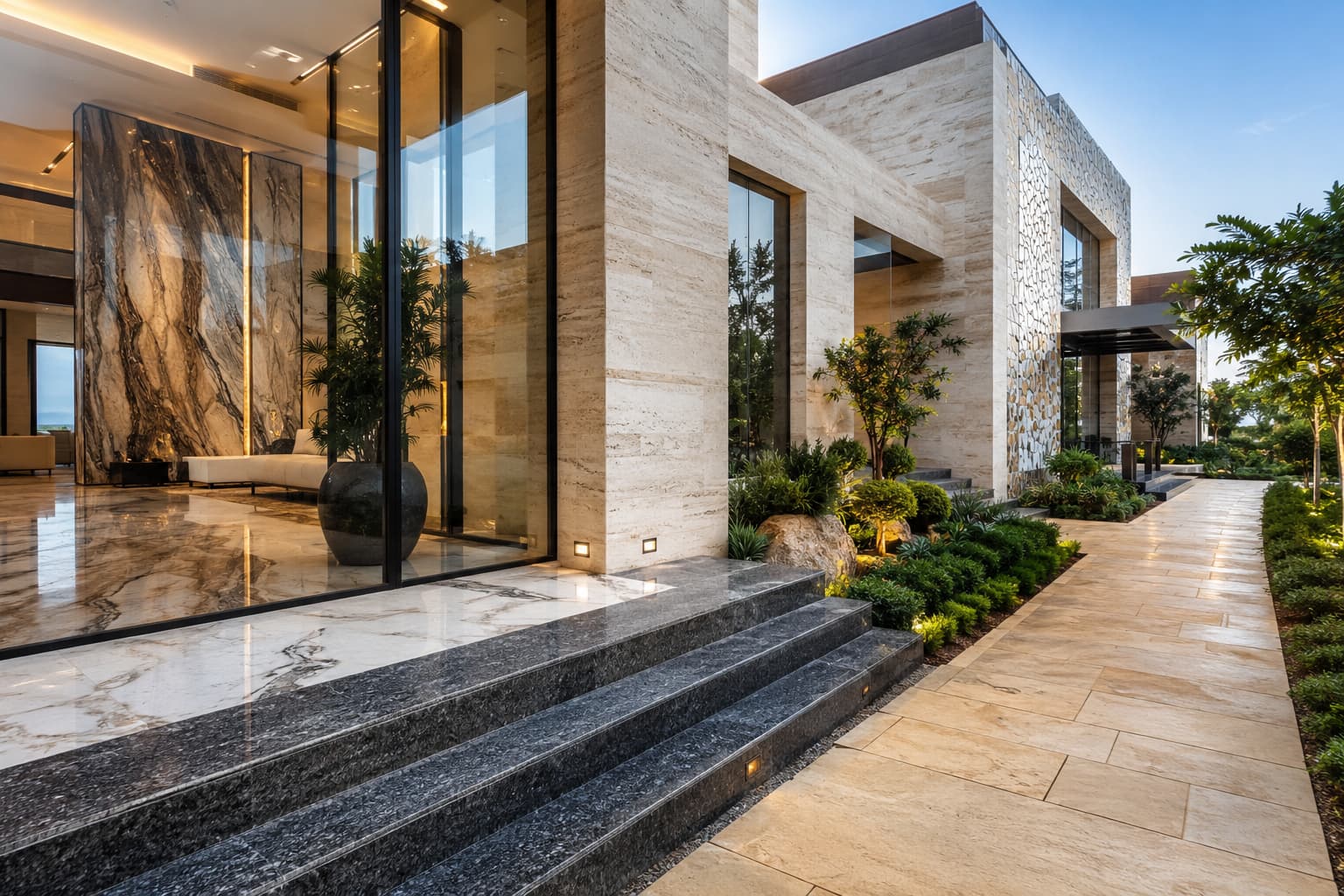
What Is Natural Building Stone and What Is It Used For?
Natural building stone refers to rock quarried from the earth and processed into functional architectural elements such as cladding, slabs, tiles, and masonry units. In contemporary construction, selecting the appropriate stone requires balancing visual character with technical performance, including weather exposure, load-bearing demands, surface treatment, and ongoing care. This guide outlines the primary categories of building stone, their typical applications, and the practical criteria architects, contractors, and property owners evaluate when specifying stone for specific environments.
Direct Answer: What Is Building Stone and Where Is It Used?
Building stone is natural geological rock quarried, cut, and finished for structural or decorative architectural purposes. It is commonly used across exterior facades, interior flooring, stair treads, wet areas, wall cladding, and paving, with specific stone selections guided by moisture exposure, mechanical wear, and environmental conditions.
What Is Natural Building Stone?
Natural building stone is quarried rock shaped through sawing, honing, polishing, flaming, or brushing into architectural products tailored to particular building zones.
These stones originate across three geological classifications—sedimentary, igneous, and metamorphic—each presenting distinct mineral structures, density levels, and porosity profiles. As a result, performance varies significantly: a material well-suited for a covered interior wall may perform poorly on an exterior wall exposed to severe freeze-thaw cycles or acid exposure.
Why Is Natural Building Stone Important in Construction?
Beyond aesthetic appeal, natural building stone delivers functional permanence and structural integrity. When specified to match environmental demands and installed according to sound building practices, it serves as a long-term architectural solution capable of handling compressive forces, everyday abrasion, and atmospheric exposure with minimal structural degradation.
- Structural resilience under sustained compressive loads and physical wear
- Material longevity that often matches or exceeds the design life of the surrounding assembly
- Inherent visual variation, giving facades and interiors unique mineral textures
- Versatility across building assemblies, from vertical cladding to heavily trafficked horizontal paving
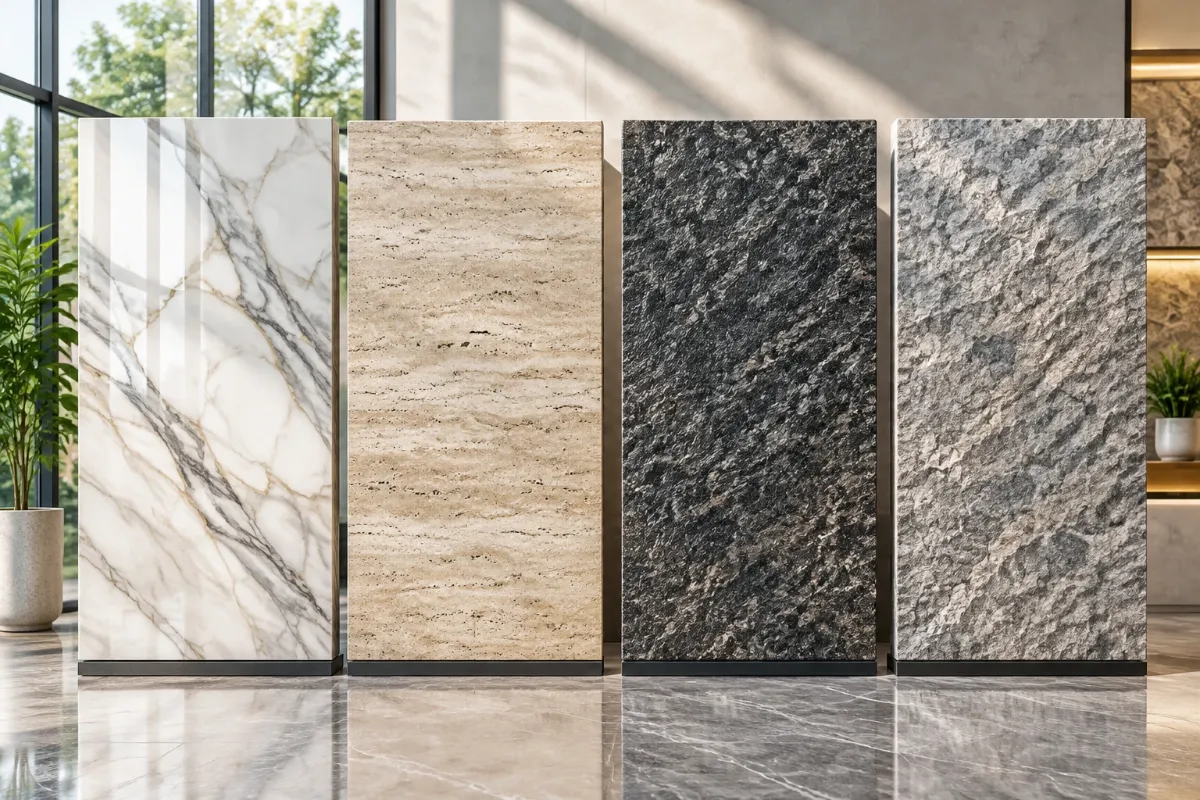
Types of Natural Building Stone
Different stone varieties possess distinct physical attributes that dictate where they can be reliably deployed in residential and commercial architecture.
1) Travertine
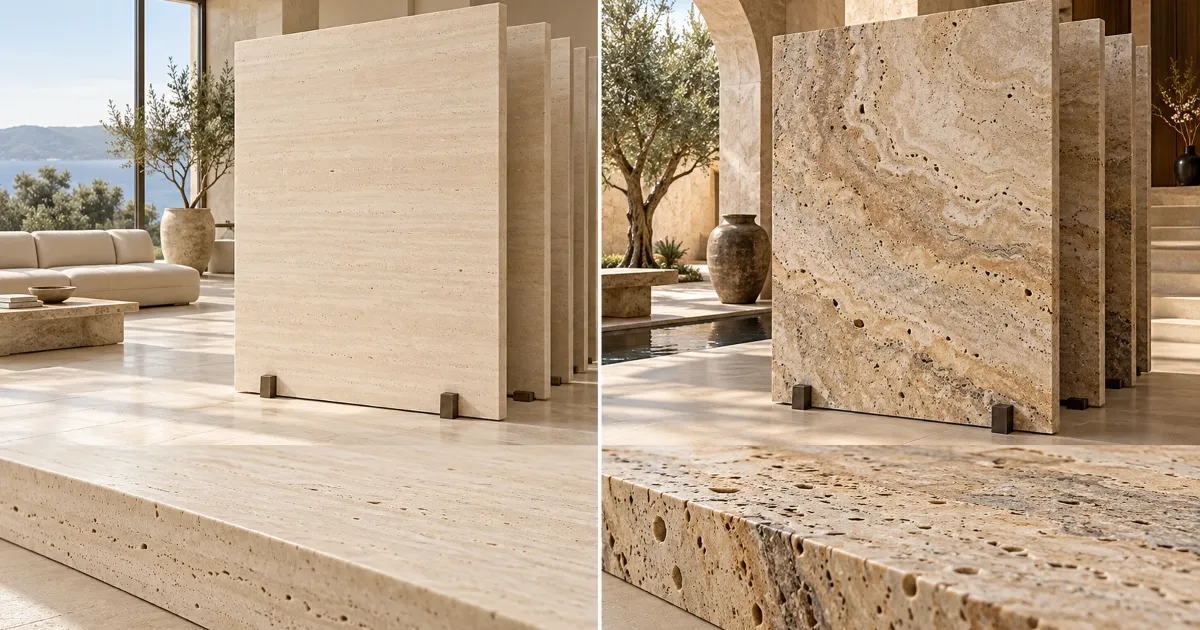
Travertine is a sedimentary stone characterized by natural voids and cavities. In commercial construction, it can be installed unfilled to highlight its organic texture or filled with cementitious or resinous compounds for a more uniform surface. Its porosity contributes to a dependable mechanical bond with mortar beds, making it a widely utilized option for exterior elevations and interior wall surfaces. However, for exterior wall cladding, mortar adhesion alone is insufficient; mechanical fastening, anchoring, or engineered attachment systems suited to the building structure must be incorporated.
Common Applications:
- Exterior facades and cladding panels
- Architectural columns, moldings, and trim elements
- Interior feature walls and lobby cladding
- Covered entrance halls and courtyard walls
Key Performance Advantages:
- Reliable mechanical keying and adhesion with mortar
- Adaptability to various edge profiles, fillings, and surface finishes
- Proven architectural suitability for vertical wall assemblies
Limitation: Acidic atmospheric exposure or improper exterior anchoring can compromise performance, requiring engineered fixings and appropriate sealing.
2) Marble
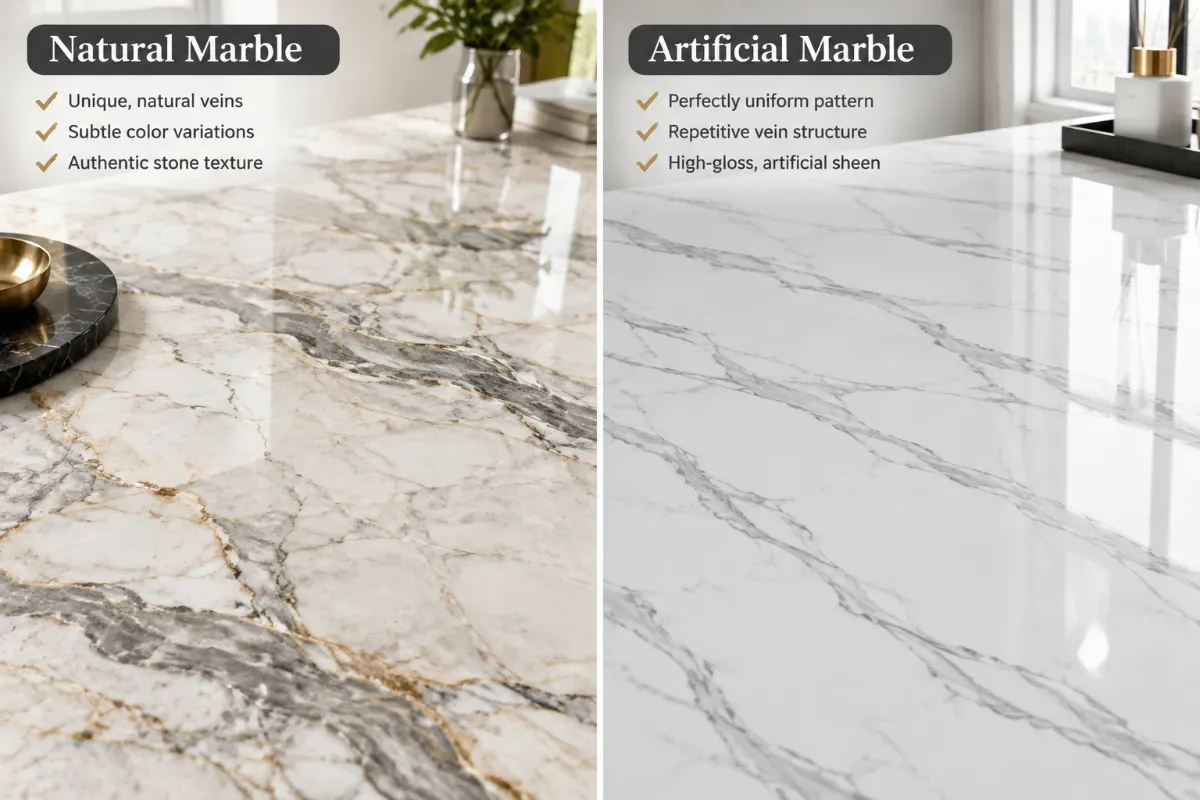
In commercial building practice, the term marble generally designates compact carbonate stones capable of taking a smooth or high-gloss polish. It is primarily specified for interior finishes where its veining and surface clarity can be highlighted in controlled indoor settings. Because it is carbonate-based, marble reacts to acidic substances and household chemicals, which can cause surface etching or dulling over time.
Common Applications:
- Interior residential and commercial flooring
- Feature walls, reception surrounds, and corridor cladding
- Interior stairs and decorative thresholds
Key Performance Advantages:
- Refined surface finish and distinct natural veining
- High polishability for reflective architectural interiors
- Well-suited for regulated indoor climates
Limitation: Sensitive to acidic liquids and harsh cleaning chemicals, making it less suitable for unprotected exterior applications or high-acid service areas.
3) Granite
Granite is an igneous stone characterized by high mineral hardness, low water absorption, and substantial resistance to mechanical abrasion. These characteristics make it a dependable standard for high-traffic environments, public infrastructure, and heavy-use horizontal surfaces.
Common Applications:
- Heavy-traffic flooring in transit hubs, lobbies, and commercial corridors
- Interior and exterior stair treads
- Exterior plaza paving and entryway steps
- Work surfaces and kitchen countertops
Key Performance Advantages:
- Exceptional resistance to scratching, abrasion, and compressive pressure
- Low porosity and reduced moisture penetration
- Stable long-term performance under demanding physical wear
Limitation: In countertop and food-preparation settings, long-term stain resistance depends on periodic surface sealing and correct routine maintenance.
4) Crystalline Marble (Often Commercially Referred to as Crystalline Stone)
Crystalline Marble (often commercially referred to as crystalline stone) is a dense, recrystallized metamorphic stone characterized by interlocking calcite or dolomite crystals. Typically presenting light white or grayish tones, it features low moisture absorption and solid structural cohesion, allowing for reliable deployment across both exterior cladding and interior wet zones.
Common Applications:
- Building facades and outdoor vertical surfaces
- Interior flooring and stair risers
- Bathrooms, vanity surrounds, and wet areas
- Wall cladding requiring a bright, light-reflective surface
Key Performance Advantages:
- Low water absorption relative to softer sedimentary stones
- Uniform crystalline density and bright architectural appearance
- Adaptable to diverse indoor and outdoor exposures
Limitation: Smooth or polished variants become slippery when wet, requiring textured finishes when installed on exterior walkways or stair treads.
5) Onyx
Onyx is a translucent, banded calcium carbonate material valued for its decorative visual qualities. Because of its structural delicacy and light-transmitting capacity, it is primarily specified for accent features, backlighting systems, and protected interior focal points rather than high-traffic paving.
Common Applications:
- Backlit architectural feature walls and reception desks
- Hospitality lobbies and custom decorative panels
- Interior furniture tops and ornamental accents
Limitation: Structurally softer and more brittle than standard flooring stones, restricting its practical use to protected, low-impact interior installations.
6) Limestone
Limestone offers muted, uniform tones suited to minimalist and classical architectural styles. Because its porosity and density vary widely across sources, its use on exterior facades is typically restricted to dry, stable climates or protected elevations, while interior use requires careful consideration of moisture and stain exposure.
Limitation: Susceptible to weathering, staining, and moisture ingress if installed in damp or freezing exterior conditions without proper protective planning.
7) Sandstone
Sandstone is a granular sedimentary stone that provides a naturally textured surface and earthy palette, fitting rustic, landscaped, and civic environments. Because of its granular composition, selecting appropriate grades and textured finishes is essential for outdoor pedestrian paths and walling.
Limitation: Typically exhibits higher permeability than crystalline stones, requiring verified drainage and exposure checks when used in freeze-thaw climates.
Which Stone Is Commonly Used for Each Area?
When starting the material selection process, design and construction teams commonly begin evaluations with these standard pairings:
- Exterior Facades: Travertine (with project-appropriate mechanical anchoring), Crystalline Marble, or durable Granites selected for weather exposure.
- Interior Flooring: Commercial Marble for climate-controlled spaces, or Granite and Crystalline Marble where foot traffic is heavy.
- Stairs and Ramps: Granite or textured Crystalline Marble, utilizing honed, flamed, or bush-hammered finishes to provide slip resistance.
- Bathrooms and Wet Areas: Crystalline Marble or Granite chosen for low water absorption and manageable surface maintenance.
- Decorative Interior Features: Translucent Onyx or distinctive veined Marbles specified for backlit walls, focal cladding, and low-wear vertical surfaces.
Uses of Natural Stone in Different Parts of a Building
Using Stone in Facades
Facade stone should be chosen with exposure in mind, including sunlight, rain, pollution, and temperature changes. Travertine and Crystalline Marble (often commercially referred to as crystalline stone) are among the common options for this use. Travertine’s natural porosity can help with mortar bonding, but that advantage alone is not a substitute for safe facade installation; for exterior use, fastening, anchoring, or mechanical fixing should be considered according to the project system.
Using Stone in Flooring
Flooring stone should match the level of use in the space and hold up well under abrasion and regular foot traffic. Marble, granite, and crystalline stone are all used for flooring, but the right choice depends on whether the area is decorative, residential, or more heavily used.
Using Stone in Stairs
Stair stone should resist wear, impact, and edge damage in daily use. Granite is a common choice because of its abrasion resistance, and some durable marble types are also used in interior staircases. Surface finish matters as much as stone type: highly polished finishes may not be suitable for exposed stairs or wet areas, while more textured finishes are often preferred where slip resistance is a concern.
Using Stone in Interior Walls
For interior walls, visual effect is often the main priority. Marble, onyx, travertine, and crystalline stone are commonly used in these areas because each creates a different architectural character, from quiet and uniform to more decorative and expressive. Onyx is generally more suitable for interior decorative use than for demanding functional areas.
Using Stone in Bathrooms
In bathrooms and other wet areas, it is generally better to start with stones that have lower water absorption and a suitable finish for the intended use. Crystalline stone and granite are commonly considered in such spaces because they can be easier to maintain when properly selected for the area.
Using Stone in Landscaping and Outdoor Areas
For landscaping and outdoor areas, the stone should suit weather exposure and the way the surface will be used. Finish selection is especially important: highly polished surfaces may not be suitable for wet outdoor areas, ramps, or exposed stairs, while textured finishes such as flamed, bush-hammered, brushed, or some honed surfaces are often preferred depending on the project.
Comparison Table of Natural Building Stone Types
| Stone Type | Strength Level | Water Absorption | Main Uses | Suitable for Outdoors |
|---|---|---|---|---|
| Travertine | Medium to Good | Medium | Facades and walls | Yes |
| Marble | Medium | Medium | Interior floors and walls | Not typically recommended for unprotected exterior use |
| Granite | Very High | Low | Stairs, parking areas, and flooring | Yes |
| Crystalline Stone | Good | Low | Facades, flooring, and bathrooms | Yes |
| Onyx | Medium | Variable | Decorative interior applications | Mostly interior decorative use |
What Are the Characteristics of Good Building Stone?
- Strength that suits the intended use, especially in floors, stairs, and other high-use areas
- Water absorption that is appropriate for the installation area and exposure conditions
- No visible cracks, weak points, or fractures that may affect performance or appearance
- Consistent finishing and processing quality for a cleaner result after installation
- Accurate dimensions and proper thickness for better fit and execution
- Overall suitability for the specific area, rather than choosing based on appearance alone
How to Choose the Right Building Stone?
The right choice depends on where the stone will be used, how much wear it will face, and how much maintenance is practical for the project. A stone that works well on a facade may not be the right option for flooring, stairs, or bathrooms.
Application
Start with the exact area of use. Facades, flooring, stairs, interior walls, and bathrooms each place different demands on the stone, so the first filter should always be function rather than appearance alone.
Moisture and weather exposure
Consider whether the stone will be exposed to rain, humidity, temperature changes, or regularly wet conditions. Exterior areas and bathrooms usually require more careful selection than dry interior decorative surfaces.
Traffic and wear
In areas with regular foot traffic or repeated impact, abrasion resistance becomes more important. This is one reason granite is often considered for stairs, parking-related areas, and heavily used flooring.
Surface finish
The finish affects both appearance and day-to-day performance. Polished surfaces may suit some interior spaces, while more textured finishes are often a better starting point for stairs, outdoor areas, and places where slipping is a concern.
Maintenance
Some stones are easier to keep in good condition than others depending on where they are installed. It is worth choosing a stone and finish that match the level of maintenance the project can realistically support.
Budget and long-term suitability
Budget matters, but it should be weighed alongside service life, installation conditions, and how appropriate the stone is for the area. A lower initial cost does not always mean a better overall choice if the stone is poorly matched to the application.
Architects usually focus on appearance and how the stone supports the design language. Contractors tend to look closely at installation conditions and finish selection. Owners often care most about durability, maintenance, and whether the material is truly suitable for the space over time.
Advantages of Using Natural Stone in Construction
- Distinct natural character that is difficult to replicate with manufactured finishes
- Long service life when the stone is well matched to the application
- A wide range of colors, textures, and visual patterns
- Compatibility with both traditional and contemporary architectural styles
- Use across different parts of a building, from facades to interior surfaces
Disadvantages of Natural Stone in Construction
- It is heavier than some manufactured alternatives, so handling and installation need more care.
- Some stone types can be more expensive, which makes application-based selection more important.
- Installation quality has a direct effect on the final result and long-term performance.
- Some stones, especially marble used in commercial building applications, are better suited to interior use and can be sensitive to acidic materials.
- Highly polished surfaces may be slippery in some locations, especially where moisture is present.
Many of these risks can be reduced through better selection rather than overcomplicated solutions: choose a stone that fits the exposure conditions, use a finish appropriate for the area, rely on professional installation, and follow suitable maintenance guidance after installation.
Frequently Asked Questions About Natural Building Stone
What is natural building stone?
It is stone extracted from quarries and processed for use in parts of a building such as facades, floors, stairs, walls, and other interior or exterior areas.
What is the best stone for exterior facades?
Travertine is one of the most common starting points for facades because its porosity can help with mortar bonding and it works well in many architectural styles. Crystalline stone is also used in some facade designs, but the final choice should still reflect exposure conditions and the project’s installation system.
What is the best stone for flooring?
That depends on the space. Marble and crystalline stone are commonly used for interior flooring, while granite is often preferred where higher traffic and abrasion resistance are more important.
What is the difference between travertine and marble?
Travertine is more commonly considered for facades, partly because of its porous structure and common use in exterior cladding. Marble, in commercial building use, usually refers to interior carbonate stones chosen more often for interior floors and walls; it offers a refined appearance but is generally better suited to indoor spaces and can be sensitive to acidic cleaners.
Is granite suitable for stairs?
Yes, granite is commonly used for stairs because it handles abrasion and regular use well. As with other stair materials, the finish should also be chosen carefully for the location.
Is natural stone suitable for both indoor and outdoor use?
Sometimes yes, but not every stone is suitable for every location. The right choice depends on the stone type, surface finish, exposure conditions, and installation method.
Quick starting points
- For facades, many projects start by comparing travertine and crystalline stone.
- For interior flooring, marble, granite, and crystalline stone are common starting options depending on use.
- For stairs, granite is often one of the first stones considered, especially in more heavily used areas.
- For bathrooms, it usually makes sense to begin with stones that have lower water absorption and a suitable finish.
- For decorative interiors and feature walls, marble, onyx, travertine, and crystalline stone are frequently reviewed first.
Conclusion
Natural stone remains a practical and architecturally versatile material for facades, floors, stairs, walls, and selected wet or outdoor areas. The key is not to look for one stone that does everything, but to compare options based on use, exposure, surface finish, and maintenance needs so the final choice fits the real conditions of the project.

💬 Comments & Reviews (0)
No comments yet. Be the first! 😊
✍️ Leave a Comment