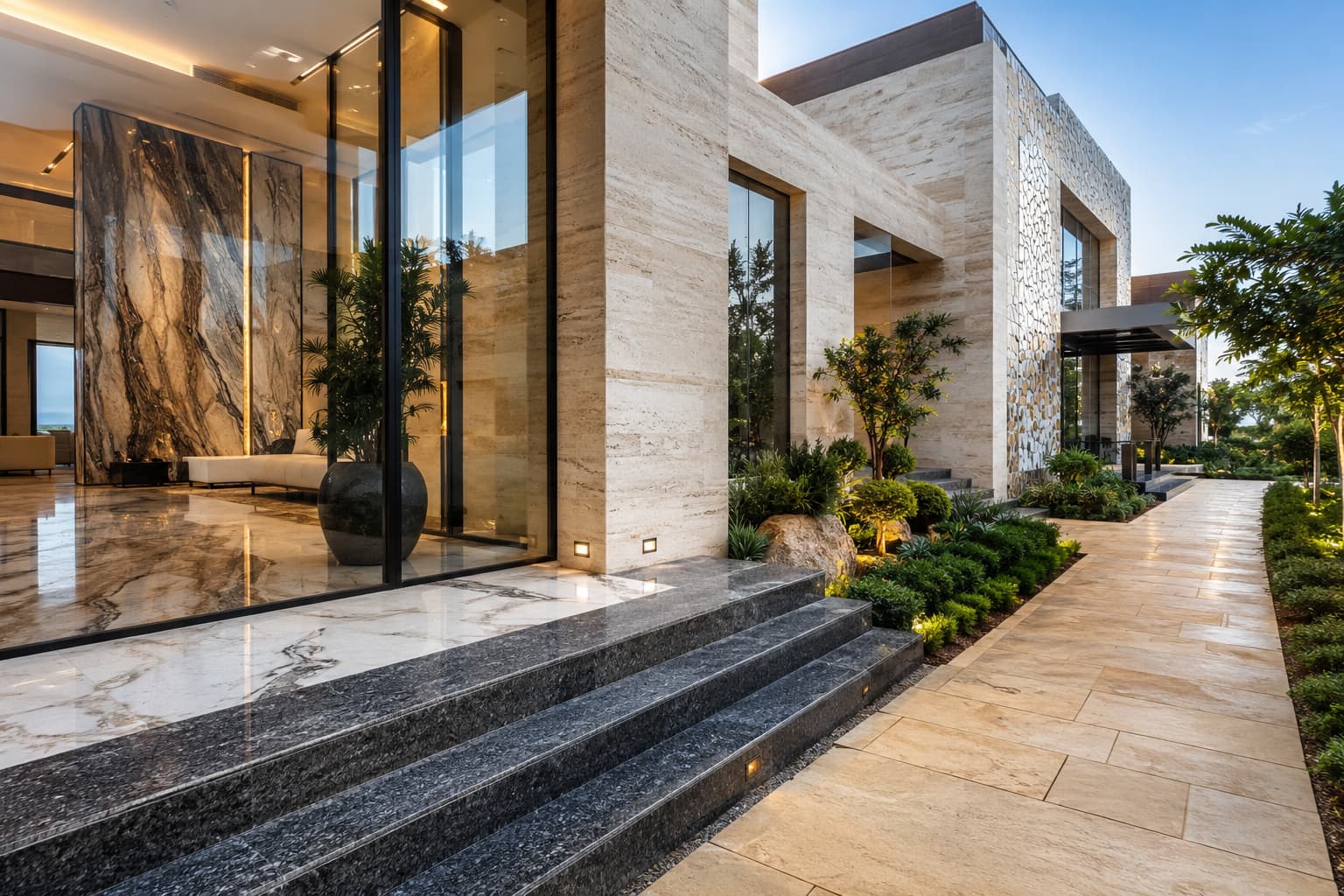
What Is Natural Building Stone and What Is It Used For?
Natural building stone is one of the oldest and most important construction materials used by humans. Even today, it remains one of the most widely used materials for facades, flooring, stairs, wall cladding, and both interior and exterior design. This is due to its natural beauty, high durability, wide variety of colors and textures, and its ability to give a building greater aesthetic value and a longer lifespan.
If you want to choose the right stone for your project, it is important to understand the types of natural building stone, the uses of each type, their advantages and disadvantages, and the factors to consider before buying. In this article, we explain in detail what natural building stone is and its most important applications.
What Is Natural Building Stone?
Natural building stone is stone extracted from quarries and then processed through various methods such as cutting, polishing, honing, texturing, and surface finishing to make it ready for use in different parts of a building.
The types of this stone vary according to their geological formation. They may be sedimentary, igneous, or metamorphic, and each type has different technical and visual characteristics. Therefore, choosing the right stone depends on where it will be used, the climate, the level of traffic, and the available budget.
Why Is Natural Building Stone Important in Construction?
The importance of natural stone is not limited to its luxurious appearance. It also offers durability, a long service life, and resistance to pressure and wear. In addition, when selected and installed correctly, it increases the aesthetic and market value of a property.
- Elegant and luxurious natural appearance
- Long service life
- Wide variety of colors and patterns
- Good resistance to pressure and abrasion
- Suitable for both indoor and outdoor use
- Increases property value
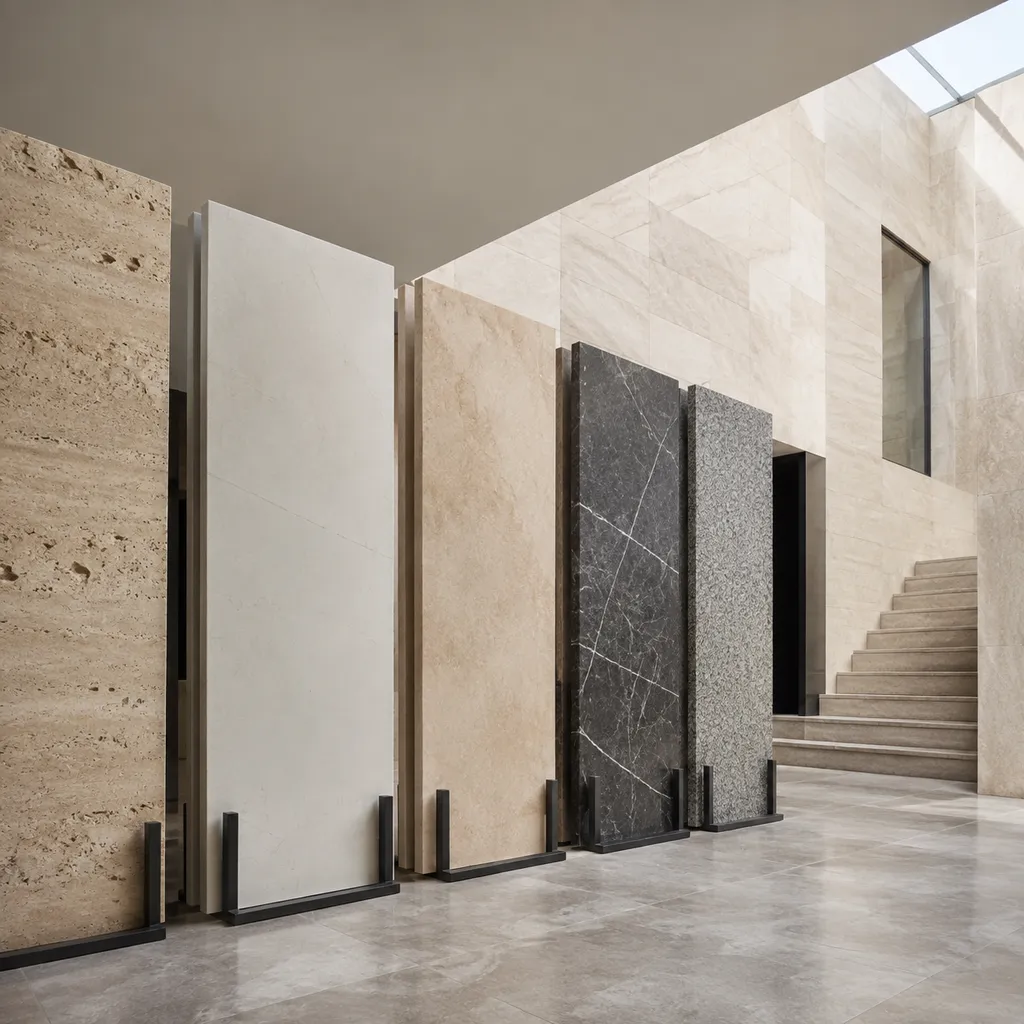
Types of Natural Building Stone
There are many types of natural stone used in construction, and each type has characteristics that make it suitable for specific applications. Below are the most common types used in residential and commercial projects.
1) Travertine
Travertine is one of the most widely used stones for building facades, especially in markets where natural stone is highly popular. It is characterized by natural pores that help it bond well with mortar, making it an excellent option for both classic and modern building exteriors.
Uses of Travertine:
- Building facades
- Columns and decorative stone elements
- Interior wall cladding
- Entrances and lobbies
- Landscaping and courtyards
Advantages of Travertine:
- Good bonding with mortar
- Suitable color variety
- Easy to shape and finish
- Ideal for exterior facades
2) Marble
Marble is widely used in interior spaces. It has a polished surface and an elegant appearance, making it suitable for flooring, interior wall cladding, and certain types of interior stairs.
Uses of Marble:
- Residential floors
- Interior walls
- Indoor stairs
- Halls and corridors
Advantages of Marble:
- Luxurious and diverse appearance
- High polishability
- Suitable for interior spaces
3) Granite
Granite is one of the strongest natural stones used in construction. It is known for its high hardness, excellent abrasion resistance, and low water absorption, making it ideal for high-traffic areas.
Uses of Granite:
- Stairs
- Parking areas
- Flooring in high-traffic spaces
- Outdoor courtyards
- Kitchen countertops and counters
Advantages of Granite:
- High compressive strength
- Low water absorption
- Long-lasting durability
- Suitable for heavily used areas
4) Crystalline Stone
Crystalline stone is a suitable option for facades, flooring, and wet areas. It is often characterized by light colors, low water absorption, and a clean, bright appearance.
Uses of Crystalline Stone:
- Building facades
- Interior flooring
- Bathrooms
- Stairs
- Wall cladding
5) Onyx
Onyx is considered one of the most luxurious natural stones. It is known for its light-transmitting quality, which is why it is often used in high-end projects and distinctive decorative designs.
Uses of Onyx:
- Backlit walls
- Luxury lobbies
- Counters and tables
- Decorative interior details
6) Limestone
Limestone is known for its light color and calm appearance. It is often used in interior decoration or in facades in dry climates, while taking its absorption characteristics and environmental conditions into account.
7) Sandstone
Sandstone is suitable for certain facades, landscaping works, and walkways. It features a warm natural character that fits rustic and organic design styles.
Uses of Natural Stone in Different Parts of a Building
Using Stone in Facades
Facade stone must have good resistance to sunlight, rain, pollution, and temperature changes. Travertine and crystalline stone are among the common and suitable choices for this use.
Using Stone in Flooring
For flooring, it is important to choose a stone that can withstand abrasion and pressure while maintaining its appearance under frequent use. Stones such as marble, granite, and crystalline stone are commonly used depending on the nature of the space.
Using Stone in Stairs
Stair stone should be strong and resistant to wear, impact, and edge chipping. Granite is therefore one of the best options, and some durable types of marble can also be used in interior spaces.
Using Stone in Interior Walls
For interior walls, the decorative and aesthetic aspect is usually the priority. For this reason, stones such as marble, onyx, travertine, and crystalline stone are used to add a luxurious touch to the design.
Using Stone in Bathrooms
In wet areas, it is important to choose a stone with low water absorption and a suitable finish, such as crystalline stone or granite, to ensure durability and easy maintenance.
Using Stone in Landscaping and Outdoor Areas
In outdoor spaces, the stone should be able to withstand weather conditions and have a surface that is not overly slippery, such as thermally treated granite or certain types of rough-finished travertine.
Comparison Table of Natural Building Stone Types
| Stone Type | Strength Level | Water Absorption | Main Uses | Suitable for Outdoors |
|---|---|---|---|---|
| Travertine | Medium to Good | Medium | Facades and walls | Yes |
| Marble | Medium | Medium | Interior floors and walls | Usually No |
| Granite | Very High | Low | Stairs, parking areas, and flooring | Yes |
| Crystalline Stone | Good | Low | Facades, flooring, and bathrooms | Yes |
| Onyx | Medium | Variable | Luxury decoration | Limited |
What Are the Characteristics of Good Building Stone?
- Suitable resistance to pressure and use
- Low or balanced water absorption depending on the application
- Free from visible cracks and fractures
- Good finishing and polishing quality
- Proper thickness and accurate dimensions
- Suitability for the installation area
How to Choose the Right Building Stone?
Choosing the right natural stone depends on the type of use, installation location, environmental conditions, traffic level, and budget. A stone suitable for a facade is not necessarily suitable for floors or bathrooms.
- Determine the exact area of use
- Consider the climate, humidity, and temperature
- Evaluate the level of traffic and abrasion
- Check the quality of finishing and processing
- Compare price, quality, and service life
Advantages of Using Natural Stone in Construction
- Natural beauty that is hard to imitate
- Luxurious value for the project
- Durability and long service life
- Wide variety of colors and textures
- Suitable for both classic and modern designs
Disadvantages of Natural Stone in Construction
- Heavier than some manufactured alternatives
- Higher cost for some premium types
- Requires professional installation
- Some types are sensitive to acidic materials
- Highly polished surfaces may become slippery
Frequently Asked Questions About Natural Building Stone
What is natural building stone?
It is stone extracted from quarries, then processed and prepared for use in facades, floors, stairs, walls, and indoor and outdoor spaces.
What is the best stone for exterior facades?
Travertine is considered one of the best choices for facades because it bonds well with mortar, looks attractive, and suits different architectural styles. Crystalline stone is also used in some modern facades.
What is the best stone for flooring?
That depends on the nature of the space, but marble and crystalline stone are suitable for interior flooring, while granite is better for high-traffic areas.
What is the difference between travertine and marble?
Travertine is more commonly used for facades because of its porosity, which helps with installation, while marble is more commonly used indoors because of its polished surface and luxurious appearance.
Is granite suitable for stairs?
Yes, granite is one of the best stones for stairs because it can withstand abrasion and pressure and offers a long service life.
Conclusion
Natural building stone is one of the essential materials that combines beauty, durability, and variety. For this reason, it is widely used in facades, flooring, stairs, walls, and interior and exterior decoration. Choosing the right type should depend on the installation area, climate conditions, processing quality, and budget to achieve the best result in terms of appearance, longevity, and performance.

💬 Comments & Reviews (0)
No comments yet. Be the first! 😊
✍️ Leave a Comment