Loshan Travertine Stone
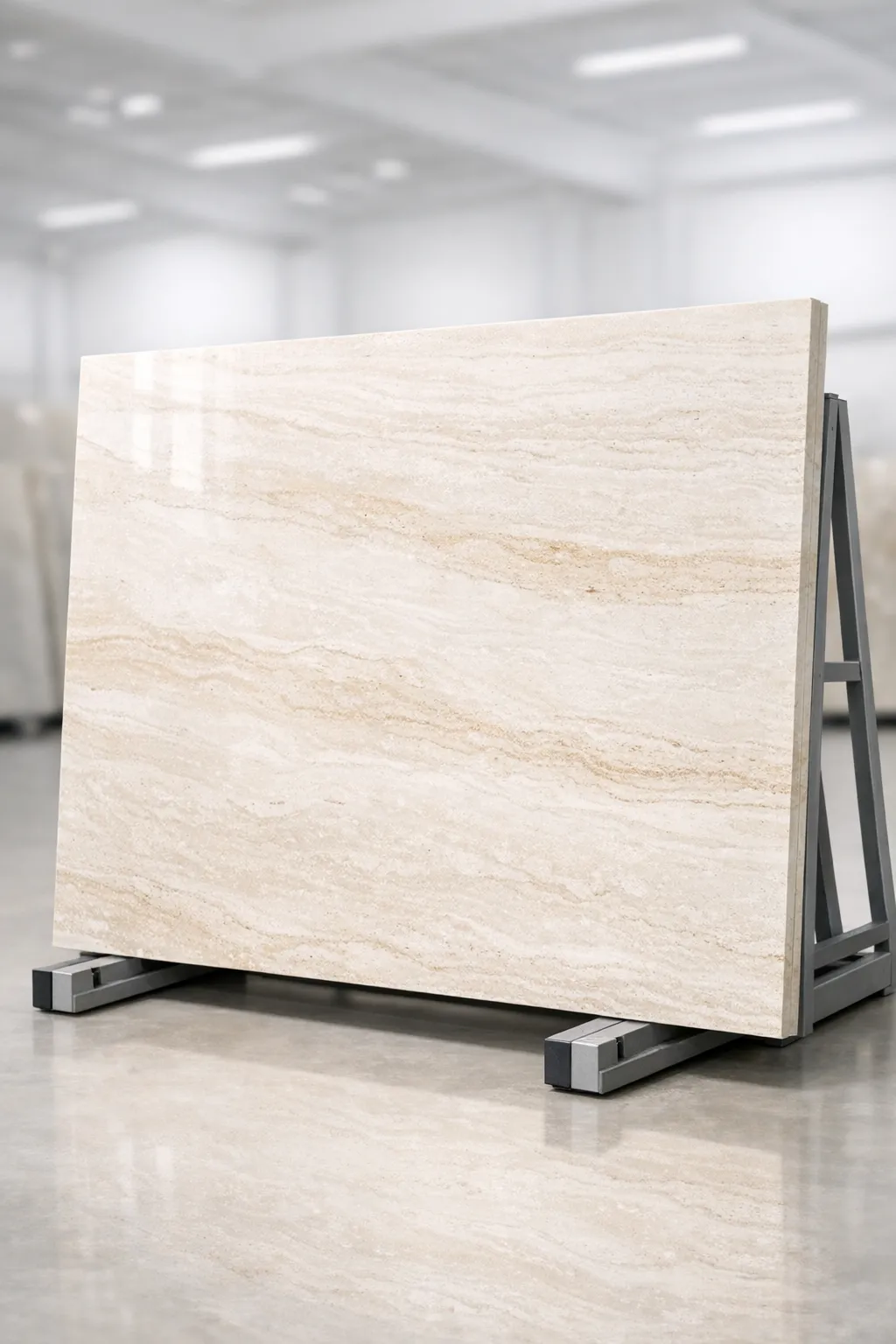
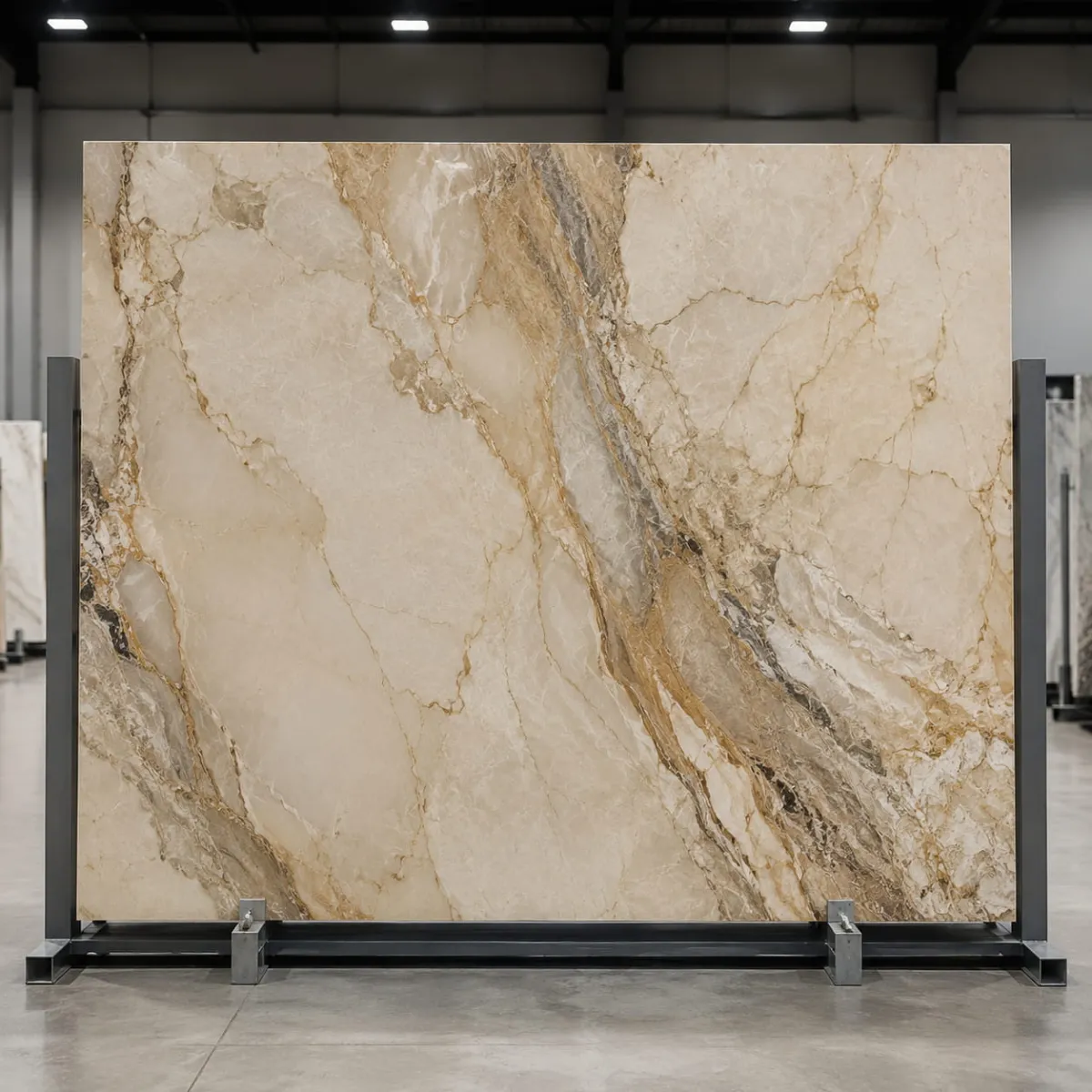
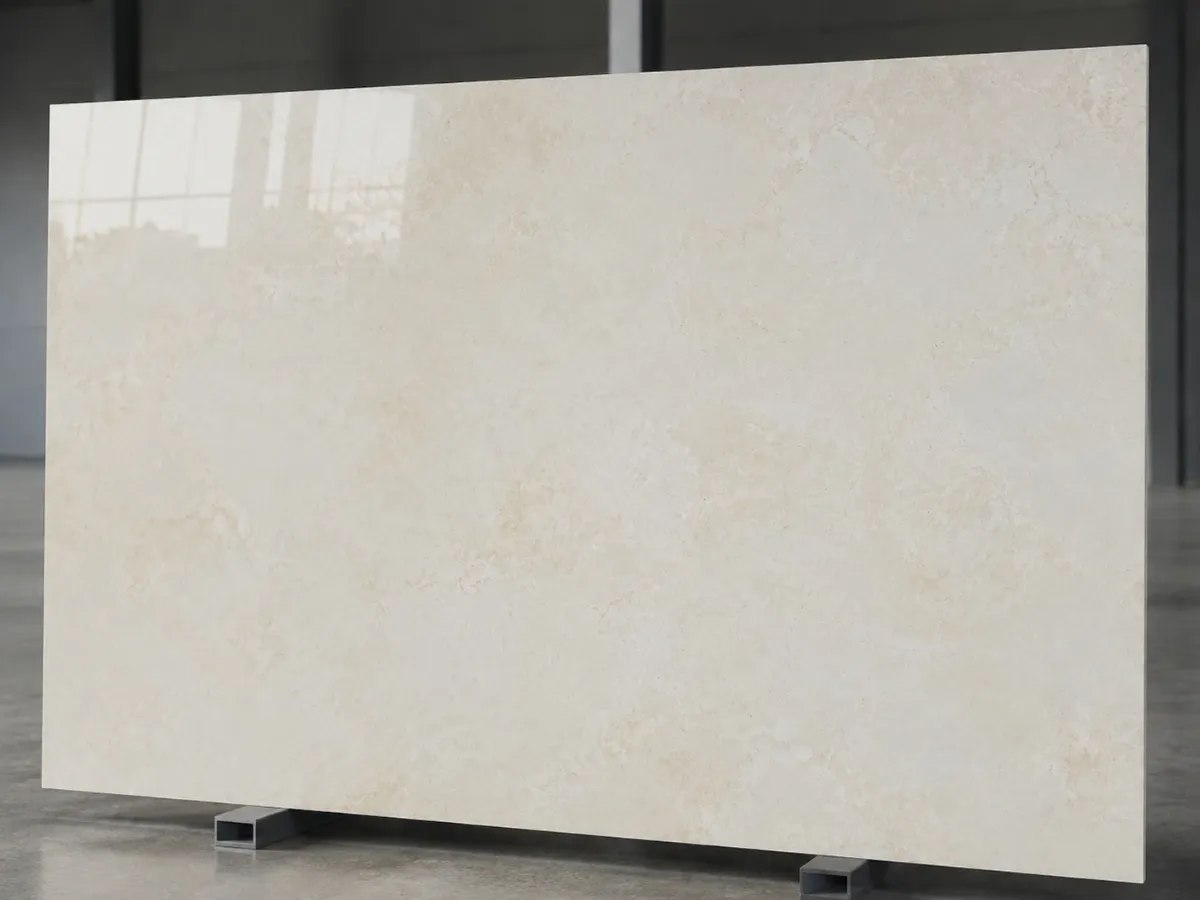
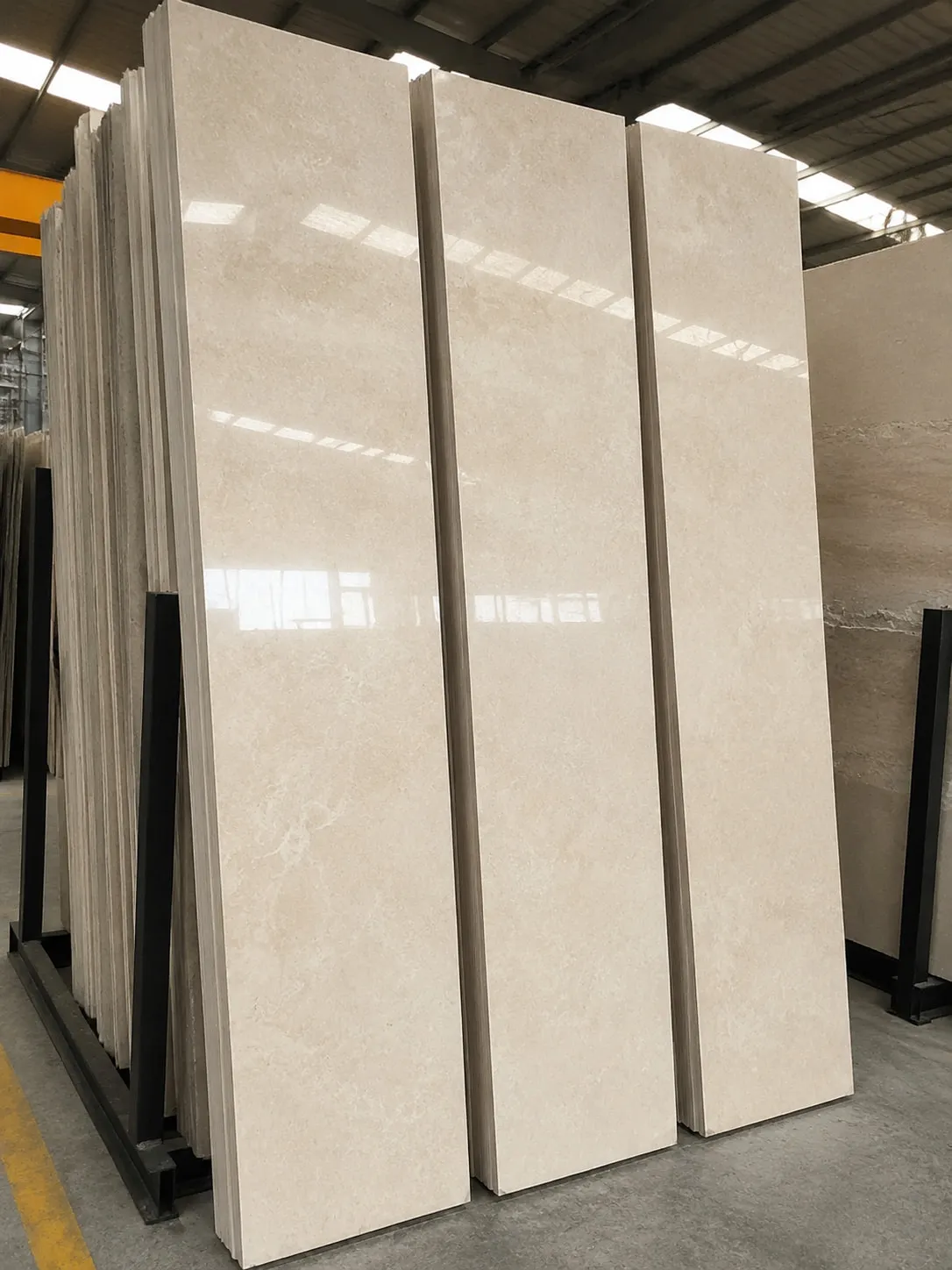
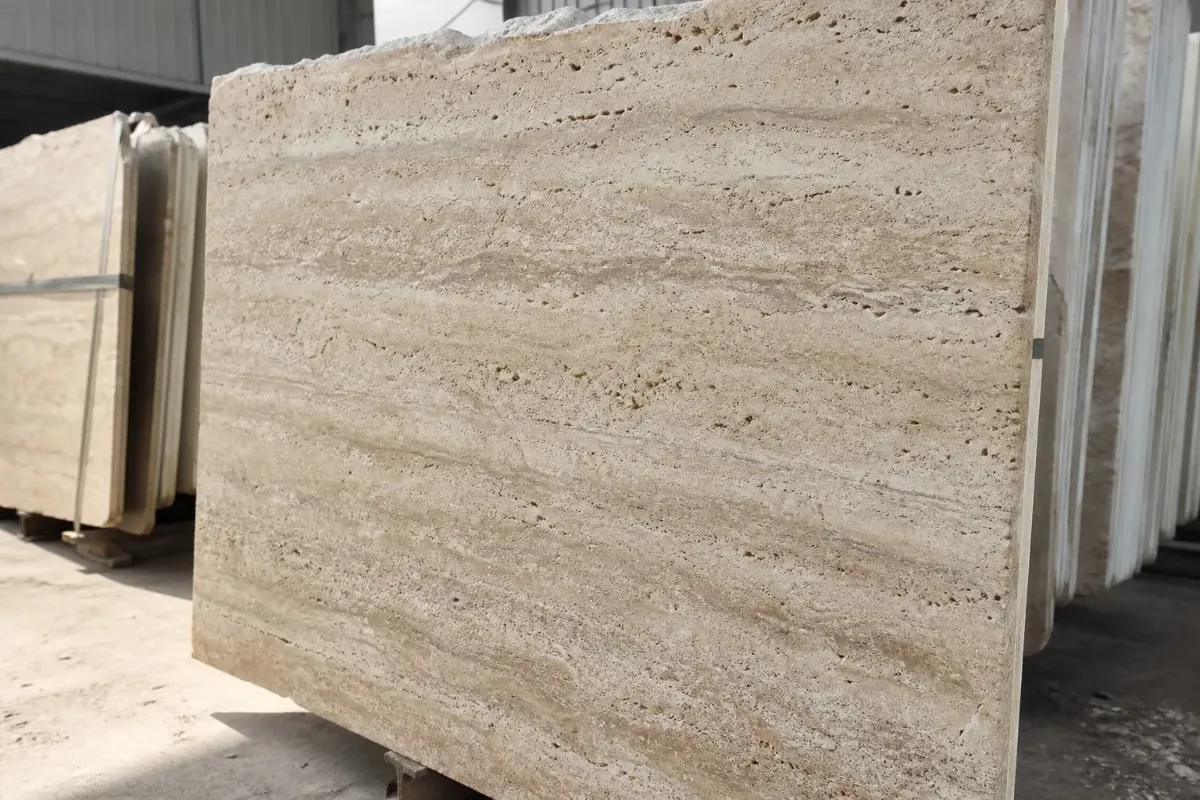
Loshan Travertine Stone is a natural travertine quarried in Jirandeh near Loshan in Gilan, valued for its light cream to honey tones and porous textur...
Where to use Loshan Travertine Stone
Technical Specifications
| Property | Typical Value / Characteristic |
|---|---|
| Stone Type | Travertine |
| Origin | Jirandeh and Looshan, Gilan Province |
| Texture | Wavy |
| Color Spectrum | Cream, Beige, Gold, and occasionally Chocolate tones |
| Water Absorption | Approximately 2.18% |
| Compressive Strength | Approximately 47 MPa (~480 kg/cm²) |
| Porosity | Approximately 10% to 18% |
| Finishes | Polished, Honed, Leathered, Sandblasted |
| Processing | Cut, Resin & Epoxy Treated, Calibrated, Polished |
| Thicknesses | 1.5 cm, 2 cm, 3 cm |
Pros and Cons
Advantages
- Visual Versatility: The warm cream-to-honey tones allow for seamless integration into both classical and minimalist modern designs.
- Natural Aesthetic: The characteristic wavy texture provides a unique, organic look that distinguishes it from synthetic alternatives.
- Reliability for Facades: With a compressive strength of approximately 47 MPa, it is a dependable option for building exteriors.
Considerations
- Natural Variation: As a natural stone, color tones, vein patterns, and porosity levels can vary between batches; consistency should be reviewed during the selection process.
- Maintenance Requirements: Given its inherent porosity (10%–18%), applying professional-grade sealants is recommended, especially for exterior facades exposed to moisture.
Recommended Applications
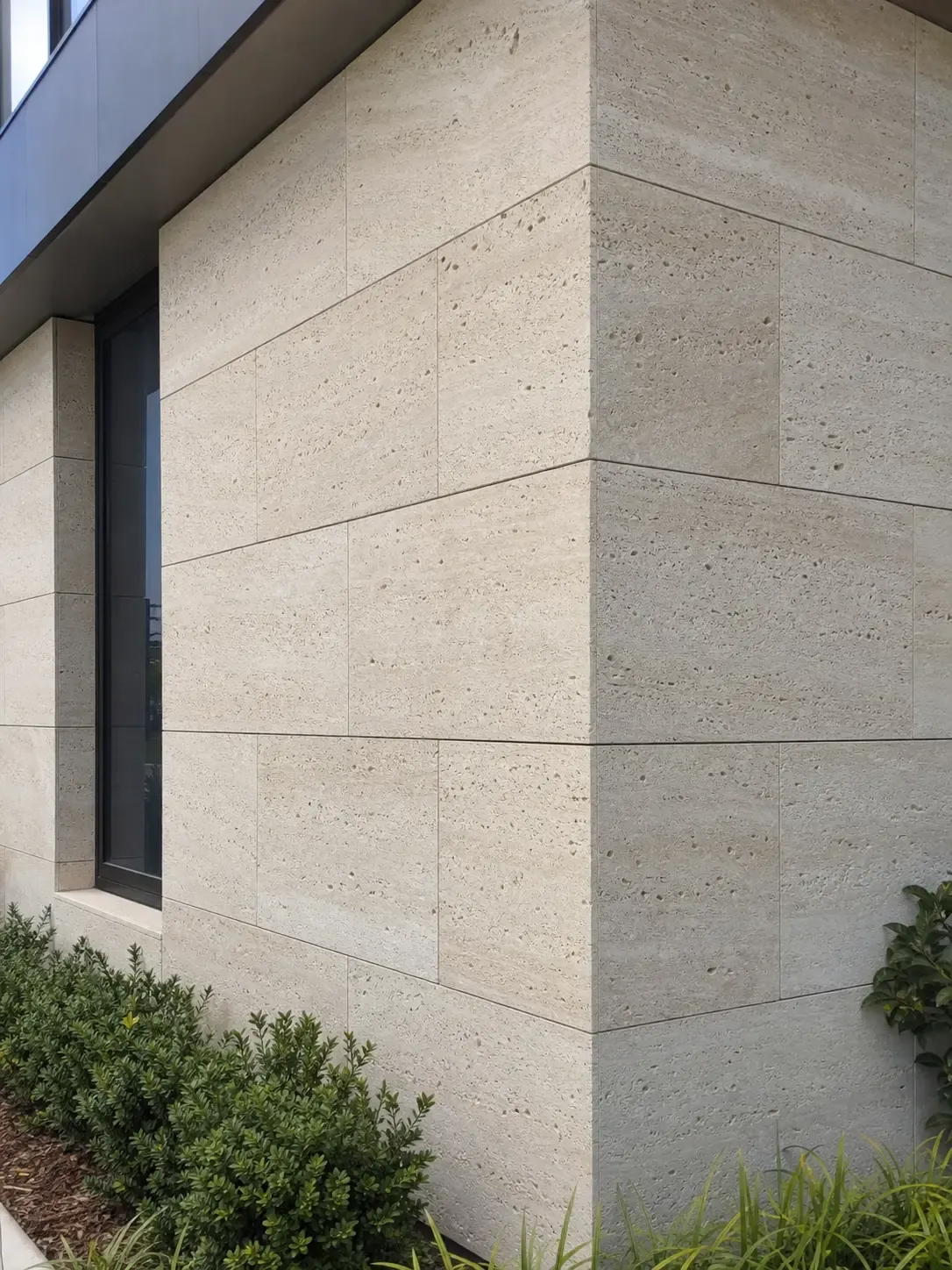
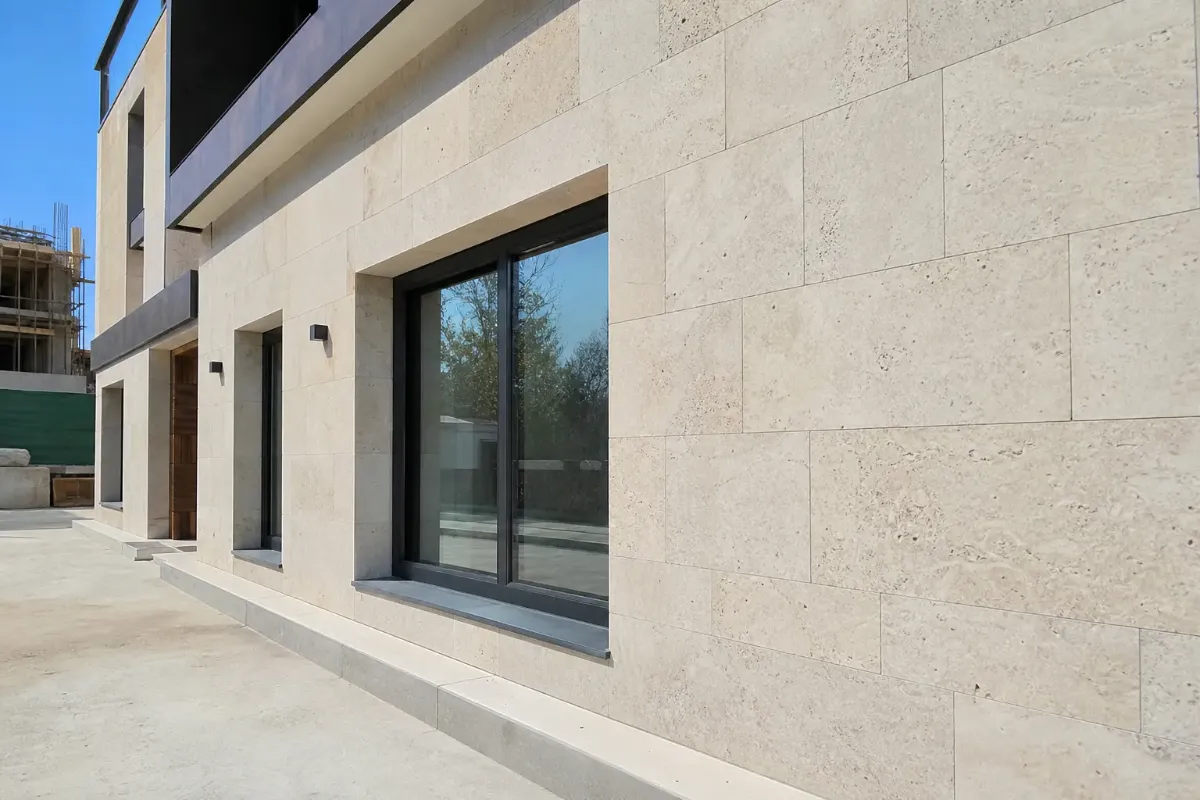
- Building Exteriors: Suitable for Roman-style facades, modern minimalist facades, window frames, and decorative columns or capitals.
- Interior Spaces: Often used for lobby walls, staircase cladding, partition walls, and decorative feature walls.
- Flooring: Applicable for interior floor slabs and yard flooring (depending on the chosen finish and expected traffic).
Comparison with Similar Products
| Stone Name | Key Technical Properties | Optimal Application |
|---|---|---|
| Hajiabad Travertine | Higher compressive strength (70–120 MPa) and lower water absorption. | High-traffic flooring and premium exterior facades. |
| Targh Travertine | Distinctive wavy texture with cream and beige tones. | Commercial flooring and modern residential facades. |
| Abarkooh Travertine | Moderate porosity with versatile thickness options. | General building cladding and interior decoration. |
| Yazd Nabavi Travertine | High density and superior abrasion resistance. | Heavy-duty commercial flooring and exterior cladding. |
Which one should you choose?
The ideal choice depends on your specific project environment and traffic needs. For high-traffic areas or extreme weather exposure, Yazd Nabavi or Hajiabad Travertine are recommended due to their higher compressive strength and lower water absorption. If your goal is a warm, natural aesthetic for residential facades, Looshan Travertine offers an excellent balance of visual impact and value.
Selection and Installation Notes
- Batch Consistency: We recommend inspecting samples from the same batch to ensure color and texture uniformity prior to installation.
- Surface Protection: For outdoor or humid environments, applying a high-quality stone sealer is essential to mitigate moisture absorption and prevent staining.
- Professional Installation: To ensure long-term structural stability, we advise using professional-grade adhesives and precise leveling techniques.
Inquiry Process and B2B Terms
- Quotations: Contact our experts with your required dimensions and finishes to receive a formal proforma invoice. All quotes are valid for 3 working days.
- Ordering: Sales are finalized upon receipt of the official invoice. We do not provide direct online payment gateways.
- Logistics: The buyer is responsible for selecting the carrier and all costs related to loading, transport, and unloading.
- Liability: Once the shipment is loaded and departs our facility, claims regarding quantity, dimensions, color, or texture variations cannot be accepted.
Pros and Cons
- Pros: Natural, warm aesthetic suitable for Roman and classical facades; excellent mortar adhesion due to inherent porosity; versatile in multiple finishes.
- Cons: Higher porosity necessitates professional sealing in humid or outdoor settings to mitigate moisture sensitivity.
Recommended Applications
Looshan travertine, characterized by its distinctive wavy texture and warm cream, brown, and gold color palette, offers versatile solutions for diverse architectural styles, ranging from classic Roman facades to modern exterior and interior designs.
- Building Exterior & Roman Facades: Widely used for main building facades, classical Roman designs, window frames, columns, capitals, and specialized architectural stone tools.
- Interior Walls & Lobbies: Suitable for interior lobby walls, common area walls, staircase walls, and decorative partition walls.
- Flooring: Applied in parking floors, yard flooring, and slab installations subjected to medium traffic conditions.
Note: Considering the natural porosity (approx. 10% to 18%) and water absorption (~2.18%) of Looshan travertine, professional sealing and proper technical installation practices are recommended for outdoor or moisture-prone environments.
Comparison with Similar Products
Evaluate how Looshan Travertine performs against other professional-grade travertine options to select the most suitable stone based on your project's technical requirements.
| Technical Feature | Looshan Travertine | Hajiabad Travertine | Targh Travertine | Abarkooh Travertine | Yazd Nabavi Travertine |
|---|---|---|---|---|---|
| Quarry / Origin | Jirandeh, Loshan, Gilan | Hajiabad, Markazi | Torgh, Isfahan | Abarkooh, Yazd | Yazd, Iran |
| Primary Colors | Cream, Brown, Gold | Light Cream, Bone, Beige | Cream, Brown, Gold | Cream, Brown, Gold | Cream, Gold, Brown |
| Water Absorption | About 2.18% | 1.5% to 3% | About 1.5% to 3% | About 1% to 5% | 1% to 3% |
| Compressive Strength | About 47 MPa | 70 to 120 MPa | About 400 to 600 kg/cm² | About 39 to 59 MPa | 80 to 110 MPa |
| Porosity Range | About 10% to 18% | Approx. 8% to 12% | Medium (Resin filled) | About 8% to 15% | 5% to 15% |
| Typical Applications | Facade, Wall, Staircase | Facade, Stair, Window | Flooring, Slab, Cabinet | Facade, Yard, Wall | Facade, Flooring, Slab |
| Available Thickness | 1.5 cm, 2 cm, 3 cm | — | 2 cm, 3 cm | 2 cm, 3 cm | 2 cm, 3 cm |
Which one should you choose?
- For High-Traffic Flooring: If your project requires superior durability for heavy pedestrian areas, Hajiabad Travertine Stone or Yazd Nabavi Travertine are recommended due to their higher compressive strength.
- For Classic & Roman Facades: Looshan Travertine is an ideal choice for designing classic facades, provided that its natural porosity (10%–18%) is managed with appropriate professional sealing during installation.
- For Decorative & Interior Details: If you require stone with minimized visible porosity for indoor applications, Targh Travertine Stone is a specialized option due to its epoxy resin treatment.
- For Cladding Versatility: Looshan Travertine offers greater dimension flexibility for cladding projects, specifically with its availability in thinner 1.5 cm profiles.
Technical Specifications
Looshan travertine is a natural stone quarried in the Jirandeh region of Gilan province, characterized by its wavy texture and a warm color palette ranging from cream to gold.
| Property | Typical Value / Range |
|---|---|
| Water Absorption | Approximately 2.18% |
| Compressive Strength | Approximately 47 MPa (approx. 480 kg/cm²) |
| Porosity | 10% to 18% |
| Texture | Wavy |
| Primary Colors | Cream, Brown, Gold |
Note: Technical values are indicative based on typical batch data. For precise engineering requirements, please request the specific batch-tested technical data sheet.
Pros and Cons of Looshan Travertine
As a natural product, Looshan travertine offers unique aesthetic advantages alongside specific maintenance requirements that architects and contractors should consider.
- Pros:
- Aesthetic Versatility: The warm, golden-to-cream tones provide a sophisticated look for both contemporary and classical designs.
- Textural Depth: The characteristic wavy patterns add natural visual interest to large-scale facades and interior feature walls.
- Workability: Its manageable hardness allows for diverse finishes, including polished, honed, or sandblasted surfaces.
- Cons & Practical Solutions:
- Natural Porosity: Due to its inherent porosity (typically 10-18%), the stone is susceptible to moisture penetration. Solution: We recommend applying a professional-grade impregnating sealer to minimize absorption, especially in humid or high-rainfall environments.
- Environmental Sensitivity: In regions with intense freeze-thaw cycles, moisture ingress can cause issues. Solution: Ensure professional installation with proper drainage and regular maintenance of the protective sealer.
Recommended Applications
Due to its durability and aesthetic range, Looshan travertine is ideal for:
- Building exterior facades (Roman and Modern styles)
- Interior feature walls and lobby partitions
- Staircase walls and decorative architectural elements
- Interior flooring for low to medium traffic areas when properly sealed
Comparison with Similar Products
| Feature | Looshan Travertine | Hajiabad Travertine | Targh Travertine | Abarkooh Travertine |
|---|---|---|---|---|
| Primary Texture | Wavy | Wavy | Wavy | Wavy |
| Typical Color | Cream, Gold, Brown | Light Cream, Bone Cream | Cream, Gold | Cream, Brown |
| Water Absorption | ~2.18% | 1.5% – 3% | 1.5% – 3% | 1% – 5% |
| Compressive Strength | ~47 MPa | 70 – 120 MPa | ~400 – 600 kg/cm² | 39 – 59 MPa |
Which one should you choose?
The ideal choice depends on your specific project requirements: choose Looshan Travertine for its distinctive wavy patterns and warm golden tones in decorative facades; select Hajiabad Travertine for lighter, bone-cream aesthetics; opt for Targh Travertine if higher compressive strength is required for medium-traffic flooring; or consider Abarkooh Travertine for diverse color palettes in various architectural applications.
Selection and Installation Notes
When selecting Looshan travertine, we recommend verifying the specific batch's technical data to ensure color consistency and porosity levels meet your project's standards. As with all natural stone, inherent variations in wavy texture and color shading are characteristic features of the material.
For large-scale exterior facades, professional installation using mechanical supports is essential. Given the stone's natural porosity (10%–18%), it is highly recommended to apply a professional-grade sealer after installation to mitigate moisture absorption and staining, particularly in humid or outdoor environments.
Inquiry Process and B2B Terms
To provide an accurate quotation, please submit your required dimensions, stone type, and desired finish to our technical team. Our specialists will provide a formal quotation within 2 working days. Please note that all final orders are subject to a formal invoice, and pricing remains valid for 3 working days from the date of issuance. Shipping, loading, and insurance costs are the responsibility of the buyer.
Technical Specifications
| Property | Approximate Value |
|---|---|
| Water Absorption | ~2.18% |
| Compressive Strength | ~47 MPa (approx. 480 kg/cm²) |
| Porosity | 10% – 18% |
| Origin | Jirandeh & Looshan, Gilan, Iran |
| Common Finishes | Polished, Honed, Leathered, Sandblasted |
| Thicknesses | 1.5 cm, 2 cm, 3 cm |
Pros and Cons of Looshan Travertine
Advantages
- Aesthetic Versatility: The natural wavy texture provides a sophisticated, distinctive look suitable for both modern and traditional architectural facades.
- Customization Options: Available in various thicknesses (1.5 cm, 2 cm, 3 cm) and finishes—including Polished, Leathered, Honed, and Sandblasted—to match specific project requirements.
Considerations
- Porosity & Moisture Sensitivity: With a natural water absorption of approximately 2.18% and a porosity ranging between 10% and 18%, this stone is sensitive to moisture. Professional sealing is essential, especially in high-humidity environments.
- Natural Material Variations: Due to its unique geological formation, batch-to-batch variations in color shading, wavy patterns, and vein textures are characteristic and expected.
Recommended Applications
Due to its structural integrity and distinctive wavy texture, Looshan travertine is a versatile choice for both architectural cladding and functional surfaces. It is particularly recommended for:
- Exterior Cladding: Ideal for building facades, Roman-style facades, and decorative architectural elements such as window frames, columns, and capitals.
- Interior Walls: Perfect for creating sophisticated atmospheres in lobbies, common area walls, staircase cladding, and ornamental partitions.
- Flooring & Surfaces: Suitable for yard flooring, slab-based architectural features, and low-to-medium traffic interior spaces.
Comparison with Similar Stones
| Feature | Looshan Travertine | Hajiabad Travertine | Targh Travertine | Abarkooh Travertine |
|---|---|---|---|---|
| Primary Origin | Gilan, Iran | Central (Mahallat), Iran | Isfahan (Torgh), Iran | Yazd (Abarkooh), Iran |
| Texture Style | Wavy | Wavy | Wavy | Wavy |
| Water Absorption | ~2.18% | 1.5% – 3% | ~1.5% – 3% | 1% – 5% |
| Compressive Strength | ~47 MPa | 70 – 120 MPa | ~400 – 600 kg/cm² | ~39 – 59 MPa |
| View Product | - | View Details | View Details | View Details |
Which one should you choose? The choice depends on your project's technical needs. For instance, Hajiabad travertine offers higher compressive strength for heavy-load areas, while Looshan is often preferred for its specific aesthetic wavy patterns from the Gilan region.
Selection and Installation Notes
When selecting Looshan travertine, we recommend reviewing the specific batch’s technical data to confirm color consistency, pore patterns, and resin treatment levels. As natural stone is inherently unique, subtle variations in wavy texture and color tones are characteristic features of the material.
For large-scale exterior facades, particularly in high-rise or high-traffic environments, professional installation using mechanical supports is advised. In regions with high humidity or freeze-thaw cycles, it is essential to verify the water absorption and porosity levels of your specific lot. We highly recommend applying a professional-grade sealer after installation to protect the stone's natural surface from environmental moisture and potential staining.
Inquiry Process and B2B Terms
To receive a precise final invoice, please contact our specialists with your project's detailed specifications. Please note that all initial quotes are subject to verification and are valid for 3 working days. Final pricing and availability will be confirmed via an official invoice. Shipping, loading, and insurance costs are the responsibility of the buyer.
Inquiry Process and B2B Terms
Please note that all prices provided are preliminary estimates for inquiry purposes only. A final, binding quotation will be issued by our sales specialist within 2 business days. All shipping, loading, and unloading costs, as well as insurance, are the responsibility of the buyer. Once the shipment has left our facility, we cannot accept claims regarding quantity, quality, or dimensional variations. For detailed B2B terms and to request a final invoice, please contact our sales team.
Inquiry Process and B2B Terms
To ensure technical accuracy for large-scale architectural and construction projects, our specialists provide a "Pro-forma Invoice" based on your specific requirements. Please note that a pro-forma invoice serves as a formal price inquiry and is not a binding contract; a final, binding invoice will be issued by our technical team within 2 working days following a detailed review of your specifications.
- Pricing & Confirmation: Due to market volatility, all quotes are subject to change. A final price is only guaranteed upon the issuance of the official, binding invoice.
- Logistics & Insurance: The buyer is responsible for arranging transport and covering all costs associated with loading, shipping, and insurance.
- Inspection & Liability: It is mandatory for the buyer or an authorized representative to inspect the shipment's quantity, quality, dimensions, and color before departure. Once the cargo has been loaded and dispatched, no claims regarding discrepancies in quantity, quality, or specifications will be accepted.
| Stone Type | Travertine |
| Suitable for | Indoor & Outdoor |
| Texture | Wavy |
| Mine | Jirandeh, Lowshan, Gilan Province |
| Colors | Cream، Brown، Gold |
| Qualities | Grade 1، Grade 2، Super، Commercial، Export Grade |
| Thicknesses | 1.5 cm، 2 cm، 3 cm |
| Compressive | About 47 MPa (equivalent to 480 kg/cm²) |
| Abrasion | About 2.5 to 3 mm - Suitable for medium traffic |
| Water Abs. | About 2.18 percent |
| Porosity | About 10 to 18 percent |
Where is Loshan (Looshan) Travertine quarried from in Iran?
It is quarried in the Jirandeh area near Looshan in Gilan province. Knowing the exact origin helps importers and specifiers align sourcing with project documentation and regional consistency.
What color range should I expect from Loshan Travertine lots?
Expect warm tones from light cream and beige to honey, with some lots showing deeper chocolate shades. This range is useful when you want a softer, natural facade instead of a very bright white look.
Which finishes and cutting formats are available for Loshan Travertine?
It can be supplied as polished, honed, leathered, or natural surface finishes, and it is commonly processed in both wavy and cross cut formats. This flexibility supports matching the stone to the project’s style and glare needs.
Why does Loshan Travertine bond well with mortar or stone adhesive systems?
Its natural pores support good adhesion with mortar and stone adhesive systems. Because pore distribution varies by sort and processing, checking the specific batch helps control the final visual and installation outcome.
What should I check before specifying Loshan Travertine for a facade package?
Review the sort, color consistency, pore pattern, resin treatment (if any), and cutting accuracy before specification. This reduces surprises in shade matching and surface texture across delivered batches.
What installation approach is recommended for exterior facades on taller buildings?
For taller exterior facades, consider mechanical anchoring or proper stone fixing support as part of the installation strategy. This helps address execution risks associated with facade height and site conditions.
What are the key moisture-related considerations for exterior use of Loshan Travertine?
Its water absorption and open porosity should be checked carefully for exterior use in wet climates. In rainy or moisture-exposed zones, careful sealing, proper backing preparation, and secure fixing details are advised.
How does Loshan Travertine differ visually and texturally from Abbas Abad Travertine?
Loshan shows a warmer cream–beige–honey range and typically a more open travertine texture, while Abbas Abad is linked to whiter tones and is often regarded as denser in many grades. The choice depends on design language and site conditions.